Drought was tough on farmers, but good for moose
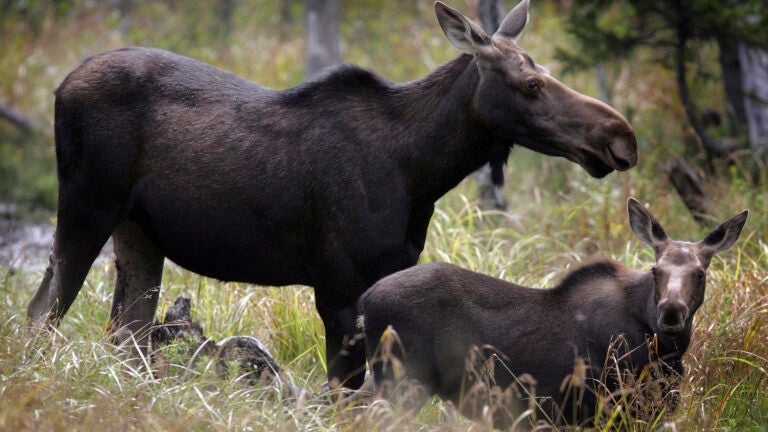
CONCORD, N.H. (AP) — Last year’s drought in New Hampshire was tough on farmers and towns. But it turns out to have been good for moose.
Preliminary numbers from a project that puts tracking collars on moose show that only one of the calves — the most vulnerable group — died from winter ticks this year. A year ago, nearly 75 percent of the calves tracked died.
Moose biologist Kristine Rines says many of the blood-sucking ticks died because they were deprived of moisture. But the ticks still have a long-term advantage, with shorter winters and moose density on their side.
The latest findings come as a state commission prepares to vote Wednesday on a proposed 51 permits for the annual moose hunt, the lowest in nearly 30 years.
Permits have declined, partly because of the impact of parasites, both ticks and brainworm, on moose.