
Once-robust effort to prevent shaken-baby syndrome appears to be weakening
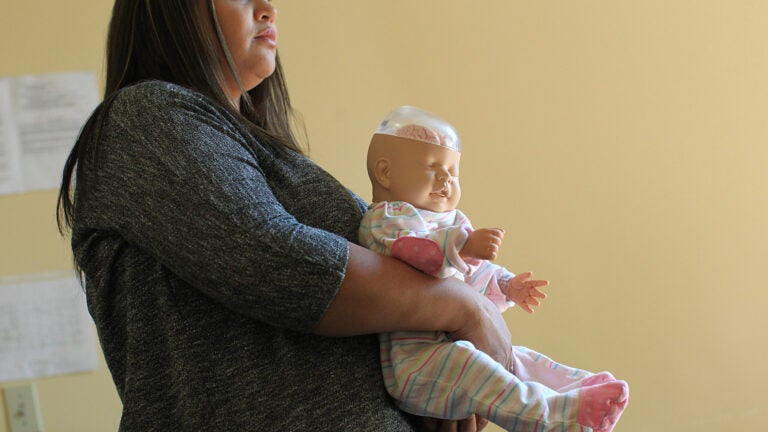
When Stacey Nee delivered her second child, nurses talked to her about breastfeeding, safe sleeping practices and post-partum depression, but she took note of what they did not mention: The potentially angry emotions, even dangerous actions, that can be stirred by a chronically crying baby.
The omission was particularly jarring to Nee, who works at the Children’s Trust in Boston, an agency that helped implement a 2006 state law calling on maternity wards to train parents, prior to discharge, about the dangers of shaken baby syndrome.
“Nobody talked to me about this,” said Nee, who remembers, at most, receiving a brochure on the topic at the hospital two years ago.
Her experience reflects fears among many child-protection specialists that the state’s once-robust prevention efforts around this issue have weakened, relegated to pamphlets or a topic only faintly touched upon as part of stress-reduction advice given to new moms.
The evaporation of state funds is one major cause. But some also wonder if recent publicity over some highly-contested shaken-baby prosecutions in Massachusetts has raised questions about the diagnosis, and undermined the prevention message. Others say warnings about mishandling infants are being crowded out by other new intiatives in the past decade, such as safe sleeping practices, post-partum depression and even stronger promotion of breast feeding.
Read the complete story at BostonGlobe.com.
Don’t have a Globe subscription? Boston.com readers get a 2-week free trial.



To comment, please create a screen name in your profile
To comment, please verify your email address
Conversation
This discussion has ended. Please join elsewhere on Boston.com