
Here’s what’s next for the Boston Grand Prix’s unique bankruptcy case
"I can't remember any local case like this before," said the bankruptcy trustee appointed to administer the case.
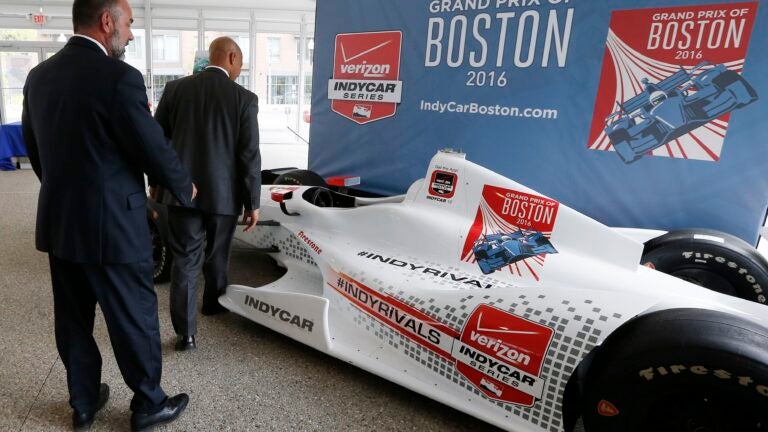
The impartial trustee appointed to administer the Boston Grand Prix’s bankruptcy proceedings said he hadn’t encountered a case like this in his decades as a bankruptcy trustee.
“I’ve never had anything quite like this,” said Gary Cruickshank, who has been a trustee for about 30 years. “I can’t remember any local case like this before.”
In the wake of the bankruptcy filing of the Boston Grand Prix, the company that led the failed attempt to host a high-speed IndyCar race in the Seaport, Cruickshank will be tasked with administering the company’s liquidation and determining whether and how much ticket-buyers will be paid back.
Those hoping to be reimbursed may soon be disappointed. Boston Grand Prix’s initial Chapter 7 bankruptcy filing listed $9 million in liabilities—including $1.67 to a number of ticket-holders—against just $10,900 in cash and two cars worth $50,000, according to The Boston Globe.
We spoke with several local bankruptcy experts to figure out what the the Chapter 7 filing means for local ticket-buyers and what’s next in a case like this.
How did we get to this point?
The Grand Prix was proposed as a 2.2-mile race around Boston’s streets over Labor Day weekend. But the event quickly faced criticism from locals wary of the nuisance, as well as hesitancy from government agencies unwilling to leave taxpayers responsible for potential expenses.
Still, tickets for the event went on sale in March. But a month later, the event was abruptly scrapped, as organizers blamed unreasonable government requirements and city officials pointed their fingers at the unorganized event promoters.
Why did the Grand Prix file for Chapter 7 bankruptcy?
The overarching explanation is simple: The company owed lots of debt, held little money, and had no path forward to pay off that debt.
Chapter 7 bankruptcy is a “liquidation” case, in which all of the company’s assets are collected and distributed to those who are owed money. That’s different than Chapter 11 bankruptcy, in which the company reorganizes or restructures and figures out a path forward to pay off some amount of debt over time.
Chapter 7 cases are preferable for companies with no basis for continuing to do business, according to local bankruptcy attorney David Baker.
“Chapter 7 is basically throwing up their hands and throwing in the towel,” he said.
What’s the general outline of a Chapter 7 bankruptcy?
A bankruptcy trustee is randomly appointed from a panel of trustees by the Department of Justice to investigate the company, lead the proceedings of liquidating its assets, and then dole out those assets to creditors. Trustee Gary Cruickshank was appointed to administer the proceedings in this case.
A majority of Chapter 7 bankruptcies are considered “no-asset” cases, in which the company or person filing for bankruptcy has no assets to be sold, said local bankruptcy attorney Neil D. Warrenbrand.
The Boston Grand Prix’s assets are limited but not non-existent.
“[This is] not your typical Chapter 7 case,” he said.
Cruickshank will lead a meeting with Grand Prix’s creditors, currently scheduled for August 11. Creditors, including business sponsors and ticket-buyers, are all notified of the meeting and invited to attend, he said. The public is also welcome to attend, Baker said.
“A case like this I expect to be a mob,” Baker said.
After that meeting—or what may be several meetings—the trustee collects the assets and pays it out to creditors based on their “priority claims.”
The process for these filings generally takes about four to six months, although the Grand Prix case could be unique given the vast number of people owed money.
Where do ticket-buyers rank on this “priority claims” list of creditors to be paid?
Not all creditors are treated the same in bankruptcy court, and certain types of debts are given priority over others.
One of those priority claims is for customer deposits for purchased services. Tickets to the Grand Prix would likely be considered under that category, Cruickshank said.
Other priority claims take precedent over customer deposits, though, including administrative fees for the bankruptcy trustees and wages owed to workers. Just behind customer deposits are taxes owed to the government.
Business sponsors like Bridgestone Americas Tire Operations, which hopes to recoup the $223,550 paid to the Grand Prix, are not likely to be included on that list of priority claims, Cruickshank said.
The pay is doled out “like a waterfall,” Baker said, with the top priority being paid off in full first, followed by the next priority in full. What’s left when the money runs out gets portioned out from there as a trickle.





To comment, please create a screen name in your profile
To comment, please verify your email address
Conversation
This discussion has ended. Please join elsewhere on Boston.com