
Costs, schedule for commuter rail to Fall River and New Bedford have ballooned
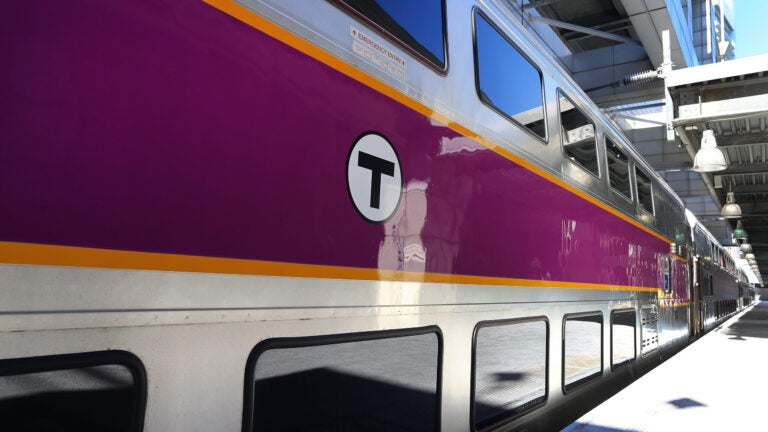
The proposal to send MBTA commuter rail trains from New Bedford and Fall River to Boston will take years longer and cost over $1 billion more than originally expected, prompting transportation leaders to consider an alternative version of the project, officials said Monday.
The South Coast rail project, to which the T has committed about $24 million in design costs so far, will not open before 2028, after earlier projections said it would run trains to and from South Station in 2022. Its costs would come in at between $3.3 billion and $3.4 billion, up from prior estimates of $2.23 billion, largely as a result of cost escalation due to the schedule delays.
MBTA General Manager Frank DePaola, days ahead of his retirement, presented the new projections to the T’s Fiscal and Management Control Board on Monday.
The schedule adjustments are due to the long timeframe needed to secure a plethora of wetland permits, as well as projections that construction would take longer than previously expected after completing the design and securing the permits. Additionally, the prior estimate did not include the costs of outfitting trains with collision-avoidance technology.
The project could be completed quicker—within six to eight years, according to DePaola—and cheaper if the course of the rail line were shifted, though no estimates are prepared yet.
Current plans call for extending the Stoughton branch of the commuter rail, but the other option would build off the Middleborough/Lakeville line. That version would get riders between Boston and New Bedford in about 90 minutes, as opposed to the 77-minute trip under the Stoughton plan, but building it would carry fewer permitting and real estate challenges.
The Middleborough option was previously considered unfeasible because of limited capacity between Boston and Braintree, which only has one set of commuter rail tracks. But state Transportation Secretary Stephanie Pollack and DePaola think there are potential engineering solutions.
Kristina Egan, the director of the nonprofit advocacy group Transportation for Massachusetts, who earlier in her career oversaw the project while working for the state, said changing course at this point would “effectively kill” it.
Pollack disagreed.
“There are other people who said that changing course at this point could effectively expedite this project,” she told reporters.
Elected officials from the area reacted differently to the Middleborough idea at the meeting.
Sen. Marc Pacheco of Taunton, which would host a new station, sharply criticized the potential pivot, pointing to past decisions to go with Stoughton over Middleborough.
“If we only had all the money, all the millions of dollars that have been spent … analyzing options and routes, we could have that money go a long way toward actually breaking ground and constructing the Stoughton option,” he said.
Pacheco said he was skeptical of the cost estimates the T cited for the Stoughton proposal. But Rep. William Straus of Mattapoisett, who chairs the legislature’s Joint Transportation Committee, said the projections seemed reasonable, with similar estimates coming from three different sources. He said there was nothing to lose by considering alternatives.
“To attack it now seems to me premature,” Straus said. “I’ve always felt it’s better to comment on things you know, not what you don’t know.”
Pollack asked the control board to consider whether the project should continue down the Stoughton-centric path it’s already on by beginning the next phase of design and obtaining permits, or to begin further exploring alternative ideas.
Board members said they would like more information before any further action is taken — not just about the Middleborough proposal, but about potentially replacing the planned rail service with bus service as well. DePaola said the T could provide “ballpark” cost ranges for the Middleborough project with a little time to study it, and Pollack told reporters the board would be given additional information within the next month.
Officials alluded several times to the rapid transit system’s Green Line extension into Somerville and Medford. The project was thrown into jeopardy in 2015 after revelations of a projected $1 billion cost overrun. Costs were later trimmed after a deep review of the project and its contracting method. The project’s new form was given conditional approval in May.
In a briefing with reporters, Pollack and DePaola said the review of South Coast rail was undertaken partially in response to that experience.
“Just to be clear, this is not unique to South Coast rail,” Pollack said. “We need to reevaluate the cost and schedule for all of the major expenditures … for the T and the [Department of Transportation] side as well, so that we’re being honest about what things are going to cost and what we’re going to be able to do.”
The Green Line extension still faces the threat of cancellation if other complications arise, and under Gov. Charlie Baker and Pollack, T officials have stressed repairing existing service over expansion. But for the South Coast rail, Pollack said Baker’s administration is still “100 percent committed to getting trains” to the region.
“The administration is committed to the project, I’m committed to the project,” she said. “What’s not clear is the path forward that delivers the project to the South Coast the soonest and the most cost-effectively, and I think it’s worth taking a little extra time to determine that before any decisions are made.”



To comment, please create a screen name in your profile
To comment, please verify your email address
Conversation
This discussion has ended. Please join elsewhere on Boston.com