
5 takeaways from the first year of Gloucester’s groundbreaking effort to fight heroin addiction
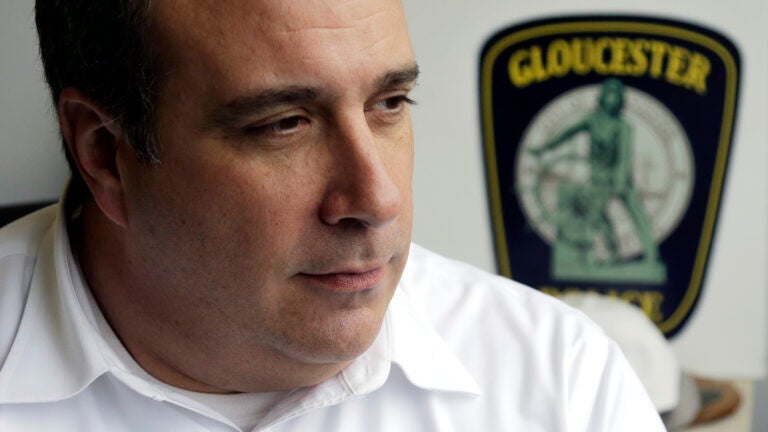
David Rosenbloom, a professor at the Boston University School of Public Health, has been studying the participants who have come to Gloucester asking for treatment.
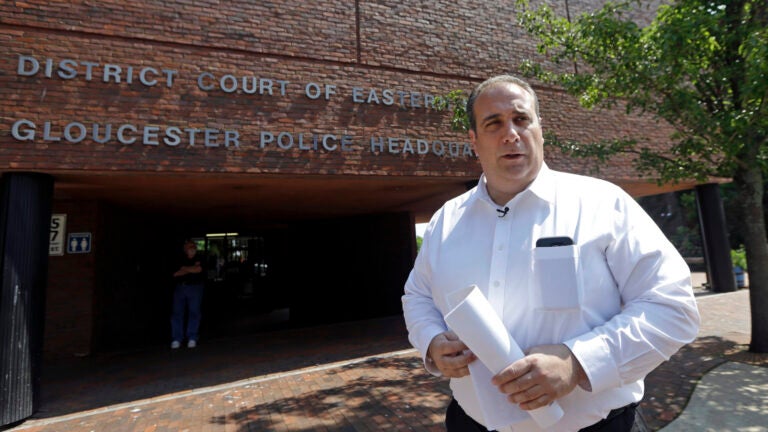
It’s been a year since addicts were welcomed to the Gloucester police station and offered treatment instead of jail. In that time, more than 450 drug users have come through the department’s doors. Police Chief Leonard Campanello, who started the program with a frustrated Facebook post, has been honored at the White House. And 100 other police departments across the country have started their own similar programs.
Boston.com spoke with David Rosenbloom, a professor at the Boston University School of Public Health and a board member of the Police Assisted Addiction Recovery Initiative, the group formed to help police work with addicts. He and his team are conducting research on those who come to Gloucester for help, and while his research is ongoing, he provided some of his takeaways so far.
1. Addicts have been treated with empathy
Many of the addicts who walk into the Gloucester police department have been through other treatment before. They’ve been inside courtrooms, emergency rooms, and jail cells because of their addiction.
Related Links
But they haven’t always been treated with kindness.
“The most dramatic finding is the view that police departments and the police officers have been seen as more supportive and more welcoming than the institutions they encountered earlier in their attempts to get help,” Rosenbloom said. “It’s a real commentary, in my view, on the treatment system itself.”
The participants have told researchers they felt respected and understood.
“The police officers doing this have been remarkable in their sympathetic and nonjudgmental treatment of the these people,” Rosenbloom said.
2. Participants have come back for more help
Most of the addicts have gone into one or more forms of treatment, Rosenbloom said, and a significant percentage are still engaged in the recovery process.
That doesn’t mean they’ve stayed sober the whole time.
“This is a chronic relapsing condition,” Rosenbloom said. “So that’s not a measure of success or failure.”
Between 10 and 15 percent of the participants have come back to the station for help again. And that’s expected, even welcomed, Rosenbloom said.
“The folks at the initial encounter make it clear they’re welcome to come back,” he said. “That it’s not judgmental. And a number of people have taken advantage of that.”
Generally, the addicts who have come to Gloucester for help are in their late 20s or early 30s. About 70 percent are men. Most started with prescription medications in their teenage years and have been using prescription drugs or heroin for five to 10 years.
3. It’s not a clean research study
The Gloucester program wasn’t designed as a research project. There’s no control group. It has no set end date. It’s not clean and neat like some studies are. That makes it a little trickier to analyze, Rosenbloom said.
“This is just the real world,” Rosenbloom said. “We’re trying to understand what’s going on in a real world situation.”
Rosenbloom and his team are reviewing all the intake forms of addicts, and following up with them by phone. So far, they’ve reached about half.
Going forward, Rosenbloom said they’ll study other departments’ participants as well.
4. The program has saved lives
The numbers are still being crunched, but even without the data, Rosenbloom said he knows the program has been a success.
“It’s clear the program achieved its initial objectives — saving lives and changing the nature of the conversation about addiction from incarceration to treatment,” Rosenbloom said.
5. It’s a huge shift in addiction treatment
Rosenbloom has worked in the field of addiction and treatment for 30 years. He’s never seen anything like what’s happened in Gloucester.
“This program is one of the most exciting things that’s happened in this entire period to increase the demand for treatment by helping people get into treatment and recovery,” he said.
Many people want treatment, but didn’t know how to get it. Now they have a clear path — through the doors of Gloucester and other police departments.
“When it’s all over, years from now,” Rosenbloom said, “we will see that they’ve probably done a bit better in terms of their treatment and recovery as opposed to people that did not have the support of the police officers.”



To comment, please create a screen name in your profile
To comment, please verify your email address
Conversation
This discussion has ended. Please join elsewhere on Boston.com