
Things to know about the MBTA’s likely fare hikes in 2016
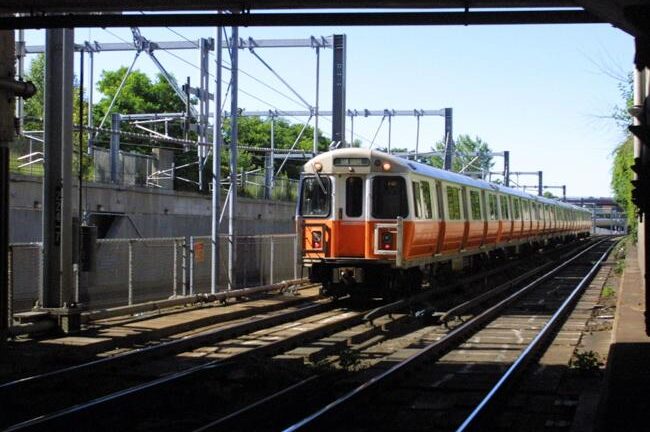
The next stop on the T’s tour of turbulence: Fare hikes.
It looks like they’re coming next summer, and the new year at the transit agency will kick off with a discussion about how high to boost ’em.
Officials will present the MBTA’s Fiscal and Management Control Board with various scenarios for fare increases at a January 4 meeting. From there, the potential new rates will be put out to public hearings. If enacted, new fares would likely take effect in July.
The 10 percent question
Transportation officials have said throughout the fall that fares could increase by as much as 10 percent on average across the system. That possibility was further cemented earlier this week when the control board passed guidelines for fares that allow hikes of up to 10 percent.
Whether the T even can raise fares by more than 5 percent has been the subject of debate. A 2013 law says fares can only increase every 24 months, and not at “an annual rate greater than 5 percent.’’
The MBTA has interpreted the language to mean it can raise fares 10 percent per two-year period, while some legislators say the law was meant to cap hikes at a nickel on the dollar every two years. The T is pressing ahead with its interpretation.
Fares last increased in 2014—the first hike under the 2013 law—by 5 percent systemwide. Previously, they increased 23 percent in 2012.
While no decisions have been made yet, the T has given one major indication that it plans to go beyond 5 percent. The reason the agency is considering fare hikes in the first place is to help balance a big budget gap next year, and that gap is based on a budget that already assumes a 5 percent increase. In other words, in order to fill part of that gap with fares, the T would need to increase them beyond 5 percent.
Some transit advocates have said that even if the T can raise prices 10 percent, that increase would be too much for riders to sustain.
Others have argued the T shouldn’t increase fares at all. They say the T hasn’t justified asking for more from riders with its performance this year, and that its deep financial and maintenance issues won’t be solved by fare hikes.
Monthly passes
The T may use a different strategy from a simple percentage-based increase to determine the costs of weekly or monthly passes.
The monthly LinkPass for the bus and subway costs $75. Based on current fares, that means riders break even at about 36 rides, according to a November MBTA presentation. The T says that number is too low, falling below the break-even point on similar passes for transit agencies in San Francisco, Atlanta, Philadelphia, New York, and Chicago.
The new fare guidelines say the break-even point should be the monthly median number of trips taken by pass holders. For LinkPass holders, that number is 40, according to the presentation.
If that structure was enacted immediately and based on today’s fares, the cost of a monthly pass would increase to $84, or by 13 percent. The price would adjust further upward based on any increase in the standard subway fare.
However, the guidelines say the break-even point can reach the new target “incrementally over multiple fare increases,’’ so it might not get that high in 2016.
Rafael Mares, a vice president with the Conservation Law Foundation, said the strategy could prove “penny wise and pound foolish,’’ because riders who use passes less frequently than the average pass holder would have reason to drop out of the monthly system. That could lead to broader service issues, such as delays on buses because more users would need to pay for their trips as they board, he said.
“Many of them will have a clear financial incentive not to get a pass,’’ he said.
Income-based fares
The fare guidelines say the T should pursue programs allowing lower-income riders to pay less for fares through partnerships with nonprofits, local governments, and other state agencies.
Board members Monica Tibbits-Nutt and Brian Lang last month pushed for means-based pricing to be part of the T’s fare policy.
“I cannot in good conscience raise fares for people making, quite honestly, under $20,000 a year,’’ Tibbits-Nutt said. “I think it’s wrong.’’
But during the discussion, other board members said it might not be possible from a timing perspective to put that kind of system in place by next year. MBTA spokesman Joe Pesaturo said this week that an income-based program is ’’unlikely for the [fare] scenarios being developed now.’’
The idea has also seen pushback from some transit advocates, who argue fares need to stay stable for all riders. Discounting prices for low-income riders would mean making up for it with higher prices for wealthier riders, former Secretary of Transportation Jim Aloisi said. If the price for higher-income riders to take the T came close to the price to take Uber to work, they may be compelled toward the latter. That could ultimately lead to lower public transit ridership and less investment in the T, Aloisi said.
“If we go down the path where we’re forcing wealthier people onto private sector microtransit, what we’ll be left with is a tale of two transit systems,’’ he said.
Aloisi said another strategy to help low-income riders without causing a disparity in fares could be to offer increased tax incentives.
Rethinking fares
Looking longer-term, the board said in a report issued this week that it considers upgrading its faring technology “urgent.’’
New collection technology could allow bus and subway riders to pay with their mobile phones or online, and make it easier to pay while boarding. It would likely be a matter of years before that tech could be implemented, Chief Administrator Brian Shortsleeve said.
But it could also eventually allow the T to base fares on distance traveled or the time of day, the fare guidelines say. That would represent a marked difference from the current system of set costs for different modes of travel—costs that appear very likely to get more expensive next year.





To comment, please create a screen name in your profile
To comment, please verify your email address
Conversation
This discussion has ended. Please join elsewhere on Boston.com