
Architect of affirmative action at Harvard dies at 86
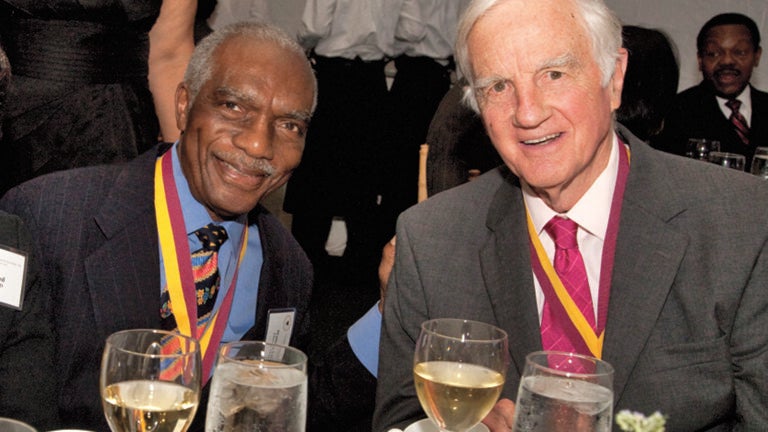
Dr. Walter J. Leonard, the man who pushed Harvard into hiring more women and minorities and who first crafted the widely used policy of affirmative action, died last week at the age of 86, The New York Times reports.
As assistant dean and assistant director of admissions at Harvard Law School in the late 1960s, Leonard intensified outreach to minority and women students, leading to a surge in applicants to the largely white and male institution.
Leonard was appointed as a special assistant to Harvard President Derek Bok in 1971. There, he helped create the Harvard Plan, an admissions policy that saw race and ethnicity as a plus in creating a diverse student body.
As The Harvard Crimson wrote upon his departure in 1976, Leonard balanced criticism of the school’s attitudes toward women and minorities with his work in creating a more diverse applicant pool.
“Both in intensity, coverage, manner and style, he brought in applicants,’’ one administrator said. “In a period when black students here felt in a strange environment, he managed to give them the feeling that they belong here, that they had entitlements. It was not easy to do.’’
His plan to use race and ethnicity in college admissions decisions has since been adopted in higher education across the country.
“The work he did at Harvard had a ripple effect across the nation, and his influence and impact were ultimately felt in higher education nationwide,’’ Harvard Law School Dean Martha Minow said. “He was a truly inspiring agent for change, and his life inspires us to carry forward, in new ways, the work he did here.’’
Both Leonard and Bok were honored with Harvard Law School’s Medal of Freedom, its highest honor, in 2011 for their work in diversifying the school.
“Walter’s presence turned out to be a real blessing to all concerned,’’ Bok said in Harvard Law Today. “To me, he was a good friend who was able to convey a clear and discerning sense of what concerned the students and why it was important while still understanding my need to be responsive without violating important academic principles or agreeing to steps that would ultimately work to the disadvantage of everyone, including the minority students themselves.’’
The Supreme Court has consistently upheld as constitutional Leonard’s vision of affirmative action, in which racial and gender diversity is seen as a plus, over the past 40 years. His Harvard Plan was approvingly cited by justices in the 1978 case California v. Bakke.
The Court is currently re-visiting the topic in the case of Abigail Fisher, a white woman who argues the University of Texas’s use of race in admissions decisions is unconstitutional.
Gallery: Photos of old Harvard
[bdc-gallery id=”112806″]




To comment, please create a screen name in your profile
To comment, please verify your email address
Conversation
This discussion has ended. Please join elsewhere on Boston.com