
Psychologist: After teacher’s murder, Philip Chism acted rationally, tried to avoid getting caught
It was likely the last day of testimony in the 16-year-old’s murder trial.
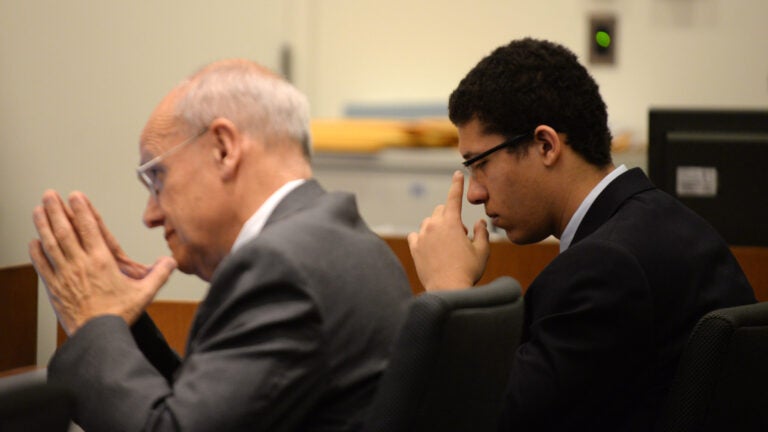
Philip Chism’s behavior after he killed his high school math teacher was deliberate, organized and meant to avoid getting caught, not the actions of a kid in the throes of psychosis, a prosecution expert witness testified Wednesday.
It was likely the last day of testimony in the murder trial of 16-year-old Chism, who admitted he raped, robbed and killed Colleen Ritzer on Oct. 22, 2013 when he was 14 years old. At issue is whether he was insane when he did it.
The teenager wasn’t acting psychotic, said Dr. Robert Kinscherff, the prosecution expert psychologist who evaluated Chism this summer. Chism was acting like someone who was trying not to get caught, Kinscherff said.
“It suggests to me an appreciation of wrongfulness and the fact he was making calculated decisions for a rational purpose in a continued course of conduct,’’ Kinscherff said multiple times Wednesday, as he was presented with different surveillance footage of Chism from the day of the murder.
Chism’s actions after the murder were also rational acts designed to avoid detection, Kinscherff said. He hid Ritzer’s clothes outside the school. He covered his face with a mask. He moved Ritzer’s body into the woods.
After dragging Ritzer’s body into a wooded area near the school, Chismposed the body sexually,violated her with a stick and covered her body with leaves, Kinscherff pointed out.
“It’s a very low-grade behavior that typically indicates the desire of the assailant to feel as though they have humiliated the victim and demonstrated their power over them,’’ the psychologist said.
Covering her with leaves, he said, is just another example of trying to avoid anyone finding out what he’d done.
The bottom line: Chism was not suffering from a mental disease or defect that would have made him criminally insane, Kinscherff said. And though he may have had some psychological distress, he understood that what he was doing was wrong, the psychologist testified.
The defense’s expert psychiatrist, Dr. Richard Dudley, told jurors earlier in the trial that he believed Chism was suffering from some type of psychosis and that the teenager heard a commanding male voice that he couldn’t ignore.
A day earlier, jurors heard from a doctor who gave Chism a battery of tests. They indicated that Chism was likely faking his mental illness, or at least exaggerating the symptoms.
During a short cross-examination, defense attorney Denise Regan asked Kinscherff about the adolescent brain, noting teenagers’ ability to make sound judgments.
Diagnosing kids with a mental illness is “tricky under the best circumstances,’’ she said, and Kinscherff agreed.
It seemed like Chism’s behavior after the murder began to deteriorate, as he used his dead teacher’s credit cards to buy a movie ticket and shoplifted a knife from a store, he said. But even that was normal, as most perpetrators don’t have a good post-attack plan, Kinscherff said.
Also typical: keeping a trophy, or souvenir, Kinscherff said. Like the green women’s underwear found in Chism’s backpack when he was arrested hours later.
“It’s intended to keep the memory of the victim and assault with them over time,’’ he said.
Jurors will be back in court Friday for closing statements and deliberations.



To comment, please create a screen name in your profile
To comment, please verify your email address
Conversation
This discussion has ended. Please join elsewhere on Boston.com