
Tsarnaev prison conditions revealed in unsealed documents
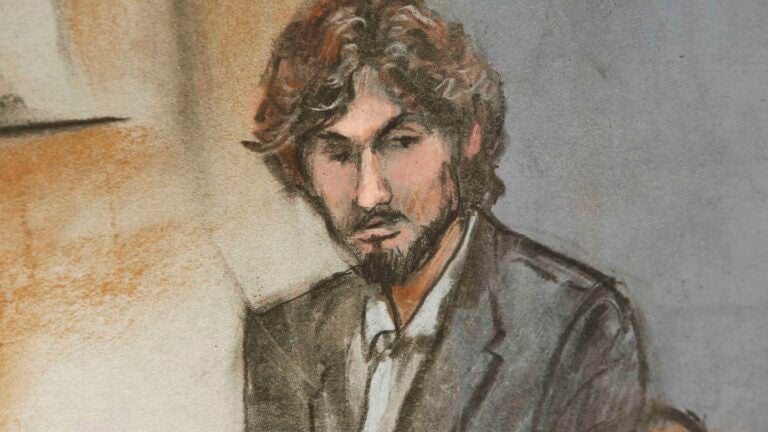
During the two years Dzhokhar Tsarnaev spent awaiting trial for the Boston Marathon bombing, he was closely watched — his mail analyzed, his phone calls recorded and his contact limited to his immediate family and lawyers.
The security restrictions while Tsarnaev was at the Federal Medical Center prison in Ayer were revealed Wednesday in documents unsealed in federal court.
In an Aug. 27, 2013 memo to the director of the Federal Bureau of Prisons from the Attorney General, the so-called “special administrative measures’’ — or “SAMs’’ — for Tsarnaev were spelled out.
Among the restrictions:
• He could have no contact with other prisoners whatsoever.
• Outside of his attorneys, he was limited to only contacting immediate family members, with a minimum of one telephone call a month. The calls were monitored by the FBI and had to be in English, unless an approved translator was available.
• Attorneys could not bring any documents to Tsarnaev unless they were case-related, and couldn’t record their conversations.
• Visits were limited to immediate family members, needed 14 days notice and would be watched by the FBI.
• Mail was limited to one letter a week, sent to an immediate family member, and could be no longer than three double-sided 8 1/2-by-11-inch pieces of paper. It would be copied and analyzed by the FBI. It could take up to 60 days to get any letters, to determine if they were written in code.
• Any newspapers or magazines he was given would have the classifieds, letters to the editor and other contributed content cut out, for fear that someone could be sending Tsarnaev a message.
• He was allowed television and radio privileges and access to books, provided they did not encourage terrorism or pose a threat to national security.
Officials feared that Tsarnaev would communicate with outsiders to elicit more violence.
Days after his capture, according to the Attorney General’s memo, Tsarnaev “reaffirmed his commitment to jihad and expressed hope that his actions would inspire others to engage in violent jihad.’’
Tsarnaev’s attorneys chafed at some of the restrictions, and questioned whether their attorney-client privilege was being violated. In July 2014, prosecutors and defense attorneys came to an agreement that defense preperations would be protected. Prosecutors wouldn’t be able to clear or approve visitors or know about materials shown by the defense to Tsarnaev. An impartial agent was assigned to monitor visits between Tsarnaev and his sisters.
Prosecutors are now seeking information about his pre-trial detention that they previously agreed to not access.
Tsarnaev was found guilty of all 30 counts against him in the attack that killed three people and injured more than 200 others at the 2013 Boston Marathon. He and his brother Tamerlan also killed an MIT police officer, Sean Collier, before Tamerlan died in a shootout with police and Dzhokhar was captured. A jury returned a death penalty verdict.
Tsarnaev is currently at the supermax federal prison in Florence, Colorado.





To comment, please create a screen name in your profile
To comment, please verify your email address
Conversation
This discussion has ended. Please join elsewhere on Boston.com