
How and when media organizations decide to show murder
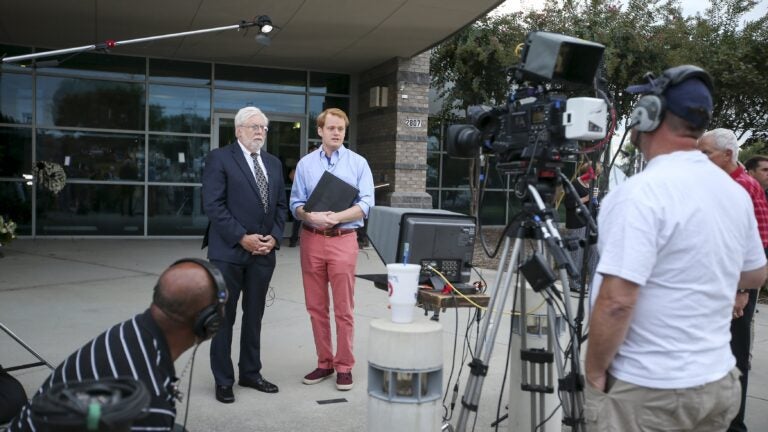
The murder of two Virginia journalists on Wednesday, filmed from the shooter’s and cameraman’s point of view, offered the core question of journalistic ethics. Is gore appropriate to show people? Is there a way to tell this story without the video or images? How far can — should — the media go?
The answers so far have varied by location and by the platform. Virginia newspapers, like the Richmond Times-Dispatch, focused on the two victims, Alison Parker and Adam Ward. Locally, The Boston Globe and Boston Herald both published still-images of the shooter aiming his gun at the camera.
Meanwhile, the New York Daily News is under heavy criticism for publishing three graphic images of the before-during-after of the killing from the shooter’s point of view.
[fragment number=0]
These questions of judgment in violence should be familiar for most Boston journalists, who faced the same questions during the marathon bombing two years ago. The resulting trial, with its photos of bloody streets, strewn body parts, and tattered clothing only emphasized the need for judiciousness on Twitter and on other platforms.
“We have those discussions all the time about what’s OK to use and what’s not OK to use,’’ said Michelle Johnson, an associate professor of journalism at Boston University’s College of Communication. “I think you have to do it on a case-by-case basis.’’
We spoke to Johnson about the key questions media organizations ask themselves when deciding what to do with a graphic story like this.
What is the platform?
The most basic question is one of how news is delivered. Websites, print, and TV all deal with these issues differently.
Websites have the ability to post bolded warnings of graphic content so that someone would have to opt in to watch a graphic video. Twitter and Facebook, on the other hand, were criticized for their video autoplay capabilities, which for many users brought the shooter’s first-person video into unsuspecting feeds.
Print newspapers have a unique choice with bloody photos and color, too.
“If you’re running something that’s fairly bloody, there’s a different look and feel to it in color versus black-and-white,’’ Johnson said.
Finally, television news don’t just have to choose whether to show the video; they have to decide how many times to show it. CNN, for example, chose to show the footage once an hour and not loop the video.
Is there a way to tell the story without the graphic content?
Is the video necessary to understand? Like, really necessary?
“You’ve got to think about, What else can we do that’s close enough that explains how this happened?’’ Johnson said.
At times, this sanitization of the news can inhibit understanding of the power of weapons, The New Republic‘s Brian Beutler argues.
“In an abstract sense, everyone knows guns are deadly, in the same way everyone knows cigarettes are deadly,’’ Beutler writes. “But our political culture—the conservative faction of it, at least—sanitizes the way guns end life in a way that sets gun violence apart from other public health risks.’’
The balance, then, is in getting across the graphic nature to the audience without exploiting it.
Are the circumstances of the incident in question?
If there are doubts about what happened, then publishing video or images is a must, Johnson said. This is most relevant in legal proceedings and in a number of high-profile police shootings caught on video in recent months.
The New York Times, for example, published video of Walter Scott being shot in the back by a white police officer in North Charleston, South Carolina back in April. That video was vital in the decision to charge the officer with murder, and the case couldn’t be understood without it.
Are the victims public figures?
There’s a different level of newsworthiness with major public figures and with private citizens. Killings of private actors like Parker and Ward should be treated more carefully, Johnson said.
The well-publicized Zapruder Film of John F. Kennedy’s assassination is the most obvious contrast here, as is the shooting of JFK’s killer Lee Harvey Oswald by Jack Ruby.
In the end, it all depends on each media outlet and how they want to cultivate an audience. Johnson said personally she would not have done what the Daily News did.
“I would have advised them to either run a severely edited version of this or some stills from it,’’ she said. “It’s pretty disturbing.’’




To comment, please create a screen name in your profile
To comment, please verify your email address
Conversation
This discussion has ended. Please join elsewhere on Boston.com