
A federal judge just struck down New Hampshire’s ban on ballot selfies
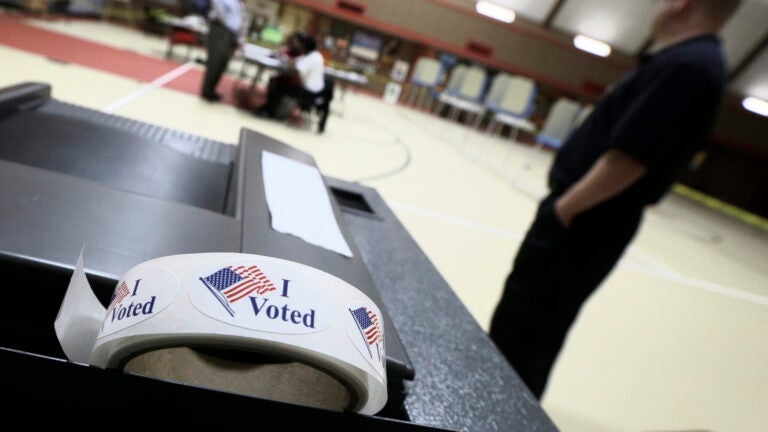
New Hampshire primary voters rejoice! You may once again take “ballot selfies.’’
A federal judge Monday repealed the Granite State’s law banning photos of filled-out election ballots, ruling that it violated the First Amendment. U.S. District Court Judge Paul Barbadoro said the law was unconstitutional, because it did not meet the standards necessary for the state to restrict political free speech.
“Here, the law at issue is a content-based restriction on speech that deprives voters of one of their most powerful means of letting the world know how they voted,’’ Barbadoro wrote in his decision.
The state implemented the law September 1, 2014 upon concerns that a voter could be bribed or coerced into posting proof that they voted a certain way.
“The new high-tech methods of showing a ballot absolutely could be used to further a serious vote-buying scheme,’’ argued the bill’s sponsor Rep. Timothy Horrigan. The measure banned individuals from displaying photos of their ballots on social media and imposed a penalty of up to a $1,000 fine.
The American Civil Liberties Union of New Hampshire sued the state in October, contending that the law violated innocent political expression.
Gilles Bissonnette, the group’s legal director, told Boston.com that while other states (including Massachusetts) have pre-Internet laws that could be construed to ban “ballot selfies,’’ New Hampshire was the only state to explicitly do so.
“In 2014, New Hampshire became the only state in the country to update its decades-old election laws during the social media age with the specific intent to ban this form of online political speech occurring outside the polling place,’’ Bissonnette said.
According to the Concord Monitor, during the 2014 election season many people — including several state representatives — began intentionally posting photos online of their marked ballots in protest of the law. Despite the $1,000 fine, the paper said a “mini-movement’’ had emerged by the general election.
On Monday, Barbadoro ruled in favor of the plaintiffs.
“The Secretary has failed to identify a single instance anywhere in the United States,’’ he wrote, “in which a credible claim has been made that digital or photographic images of completed ballots have been used to facilitate vote buying or voter coercion.’’
Thirty-three other states, including Massachusetts, have laws that could be interpretted to ban the practice, according to documents Bissonnette provided to Boston.com. Maine and Oregon repealed laws banning ballot selfies in 2011 and 2014, respectively.
Bissonnette said the decision had potential to set a precedent to overturn effective ballot selfie bans in other states.
“To the extent these states elect to enforce their laws in that way,’’ Bissonnette said, “this decision in New Hampshire could be used to argue that the enforcement is not constitutional under the First Amendment.’’
Other quirkiness across New England
[bdc-gallery id=”106617″]



To comment, please create a screen name in your profile
To comment, please verify your email address
Conversation
This discussion has ended. Please join elsewhere on Boston.com