
Another day, another public records lawsuit in Massachusetts
This time, it’s the ACLU suing Boston police for information on encounters between police and civilians.
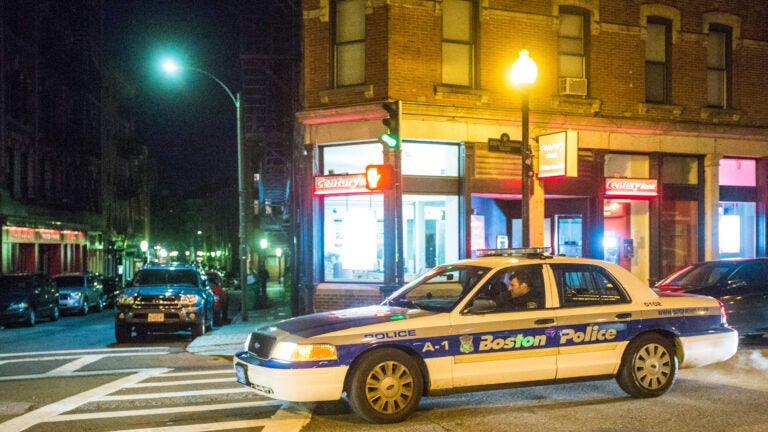
The Boston Police Department has troves of data on hundreds of thousands of encounters between police and civilians. But they won’t hand it over, despite a public records request made almost a year ago by the American Civil Liberties Union of Massachusetts.
So the ACLU Thursday sued the department, the latest example of the lengths required in Massachusetts to get public records.
What the ACLU asked for in September 2014 were so-called Field Interrogation and Observation reports — FIOs — completed since 2010. If that term sounds familiar, it’s because an independent report on FIOs filed from 2007 to 2010 just came out last month.
In those three years, researchers found that the more black and Hispanic residents there were in a neighborhood, the more FIO stops occurred, even controlling for crime and other social factors. Controlling for age, sex, race and gang membership, black people were 12 percent more likely to be frisked and searched during a stop.
After that report came out, Police Commissioner William Evans told The Boston Globe, “We want to be as transparent as we possibly can.’’
Thursday’s lawsuit, which seeks the records to be released immediately, says that Boston police have done nothing to fulfill the 11-month old request.

“We accept the Boston police’s pledge that it is going to be more transparent, that it is going to do a better job of disclosing documents’’ said Matthew Segal, legal director of the ACLU of Massachusetts. “But we’re not going to accept that only on faith.’’
“The BPD can resolve the lawsuit in short order by turning over the documents,’’ he added.
Boston police did not immediately respond to a message seeking comment.
The ACLU has had success suing law enforcement agencies for records. A year after filing suit against a regional police agency for SWAT records, the agency agreed to turn over the records to resolve the case this spring.
And it’s not just the ACLU suing law enforcement for records. The Boston Globe in May sued Boston police and several state agencies seeking police reports, mug shots, and prison booking logs, all of which had been denied. That case is still pending.
Public records laws in Massachusetts are notoriously bad, especially when compared to other states. Agencies routinely deny records outright or charge the huge fees allowed under the current law. The Massachusetts State Police — winners of the “Golden Padlock Award’’ for their efforts to thwart records requests — estimated it would cost $2.7 million for Breathalyzer records that other states provided for free.
Then there are delays, which appear to be the tactic used in the FOI stop database request. Massachusetts took an average of 82 days to respond to records requests filed through Muckrock, a Boston-based news startup that helps people obtain government documents.
These examples are why public records reforms are so crucial, said Pam Wilmot, executive director of Common Cause Massachusetts, a good-government group. Secretary of State William Galvin this week filed a petition to add a public records reform question to the ballot. And a legislative committee last month approved a bill to strengthen the current public records law.
“This is not an exceptional case,’’ Wilmot said of the ACLU’s latest suit. “We see it over and over again where agencies ignore requests or suggest exorbitant fees in order to avoid complying.’’
The police encounter records the ACLU is seeking are crucially important, Segal said, especially now. On Thursday, Boston city councilors discussed adding body cameras to city police officers. But they were making those decisions without the data.
“It’s a hearing that took place in a kind of evidentiary vacuum,’’ Segal said. “And one reason it did is because we haven’t received records in response to this public records request.’’
The 12 most notorious unsolved crimes in Massachusetts
[bdc-gallery id=”110629″]





To comment, please create a screen name in your profile
To comment, please verify your email address
Conversation
This discussion has ended. Please join elsewhere on Boston.com