
A heartbreaking obituary rips Maine governor’s drug policy
Coleen Sheran Singer died on Christmas from a heroin overdose. Her obituary tells so much more of her life, and ‘our society’s asinine approach to drug addiction.’
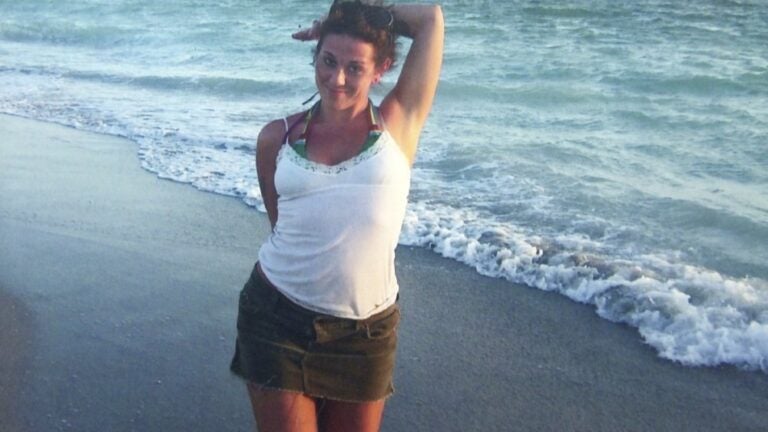
Coleen Sheran Singer died from a heroin overdose on Christmas. But her story is about much more than just how she died.
As what would have been her 33rd birthday approached on August 31, her ex-husband and friend until she died, Brent Singer, decided someone should write that story.
He wanted to tell her hundreds of acquaintances in the Bangor area what happened to her. A simple “she died suddenly,’’ like so many obituaries gloss over addiction and death, wouldn’t do.
He doesn’t have a big explanation of why he wrote her death notice the way he did.
“I did it for Coleen,’’ he told Boston.com, “because I thought she deserved to have an obituary.’’
The 900-word piece tells of her early life, her struggles, her highlights, her years of sobriety and moments of relapse. It tells of her complicated life — she could be endlessly giving yet a liar and a thief.
It also lays blame at the feet of Gov. Paul LePage and the state of Maine’s drug policies that Brent Singer says hampered Coleen’s ability to get help.
“She was a victim of herself, of LePage’s politics, of our society’s continuing ignorance and indifference to mental illness, and of our society’s asinine approach to drug addiction,’’ the obituary reads.
A governor’s office spokeswoman, Adrienne Bennett, said that Maine has actually increased its funding for addiction treatment over the past five years, to $17 million from $7, with $8 million for treatment for the uninsured. She cited LePage’s weekly radio addresses.
Here’s the obituary in its entirety, as it appeared in the Bangor Daily News on July 30. The Portland Press Heraldpublished a story about it the same day. Singer gave Boston.com permission to republish the obituary.
BANGOR – Coleen Sheran Singer (born Coleen Sheran Clark) would have turned 33 this August 31, but she died in Lewiston in an unsuspecting suburban professional couple’s home of a heroin overdose on the morning of December 25, 2014.

She was a victim of herself, of LePage’s politics, of our society’s continuing ignorance and indifference to mental illness, and of our society’s asinine approach to drug addiction. Born in Biddeford and raised near OOB, Coleen lived the last three years of her life mostly as a transient in the Bangor area with increasing problems with infections in her limbs, a lack of MaineCare to pay for antibiotics outside the hospital, and escalating problems with the law following misdemeanor illegal drug possession convictions, failures to appear and a 2009 conviction for solicitation of prostitution. Coleen’s father left when she was younger than two. Coleen’s mother doted on Coleen when she was a child and made a good home for her, but barely eked out a living working long hours cleaning houses and motel rooms. Coleen’s mother was abused as a child in foster care out-of-state, had zero family support in Maine, and struggled at times with drug issues of her own. Though Coleen dropped out of high school, she was intellectually gifted and artistically talented, quick to grasp complicated legal and philosophical concepts. She had near perfect facial recognition and could glance at a person and know his or her clothing sizes to a T. While Coleen was capable of great compassion and would give the shirt off her back to one less fortunate, she was also at times a con artist, thief, and liar. Though Coleen presented herself with great panache among friends, she could be painfully shy and insecure in what many would consider “normal society.’’ Apart from her drug addictions – or more likely much of the reason for them – Coleen suffered from serious borderline personality disorder. Unless you knew her well over a good length of time, you would not know. Beset by affective instability due to a marked reactivity of mood, an unstable sense of self, impulsivity, and a pattern of intense but unstable interpersonal relations, Coleen flashed amazing smiles, but lived an inner life where she often felt intense emptiness, loneliness, and depression. By the time she was 18, Coleen was injecting opiates, crack, and various forms of amphetamines, while also abusing alcohol and other drugs. Coleen met her one and only husband and the only consistent male figure in her life (other than an older half-brother) when she was 22 and she had just started what turned out to be her longest, most successful time in recovery. The marriage was very brief, a couple years into Coleen’s recovery, but they remained dear friends until the day she died. For nearly four years Coleen was in methadone clinics and dedicated herself to sobriety. Taking to heart the adage that “without drugs, anything is possible,’’ and with the sometimes slavish devotion of the man she briefly married, Coleen earned her driver’s license, went to the gym regularly, completed nail tech school, worked successfully both part time in retail sales and full time caring for disabled adults, and enrolled in community college. But in the end Coleen’s untreated personality disorder and addictions prevailed. In later years, after LePage removed poor adults from MaineCare, Coleen could not afford the methadone clinic. Heroin was the cheapest way to avoid going into withdrawal. For readers without loved ones who are opiate addicts, you cannot imagine how powerful and difficult is that disease. The author of this obituary, who grew up comfortably removed from such things, thought he was educated but had no idea. Addicts shoot up to avoid being deathly ill and because the disease heightens also the psychological desire for the drug and the needle. Real addicts rarely manage to get high they just scratch and claw everyday to avoid dope sickness. Coleen wanted to get back into a methadone clinic, but LePage and enough republicans in the Legislature said “No’’ to the Medicaid expansion. It is no stretch to say that but for LePage’s veto of the Medicaid expansion, Coleen probably would not have shot the heroin that ended her life, and probably would not have had the serious recurring infections that ravaged her limbs the last couple years. That is not to say Coleen would be living happily ever after, since there were other significant problems. While in recovery, Coleen travelled extensively and did many wonderful things. She was particularly fond of an avant-garde theater in Washington, D.C. called the Woolly Mammoth. Coleen loved to pick flowers, shop for jeans, dance, work with crafts, and drink medium ice coffees with eight creams and eight equals (formerly eight creams, eight skim, and eight equals, until she started drinking “more coffee’’). Coleen is survived by her dedicated mother, her very saddened older half-brother, a few women with whom at various times she maintained special relationships, numerous boyfriends who seemed to come and go, one boyfriend in particular named Les who among them was more special to her than the others, a few other older men along the way who genuinely tried to care for her, 100’s of acquaintances in this area, her adorable Chihuahua named Squeak, and the author of this obituary whose life was made more difficult, but also much better for having known her.
Coleen, rest in peace.
Gallery: Notable deaths of 2015
[bdc-gallery id=”318859″]





To comment, please create a screen name in your profile
To comment, please verify your email address
Conversation
This discussion has ended. Please join elsewhere on Boston.com