
Cops use clergy, community leaders as their conduit to the public after shootings
The killing of Usaamah Rahim was the second time this year that Boston police officers shot and killed someone.
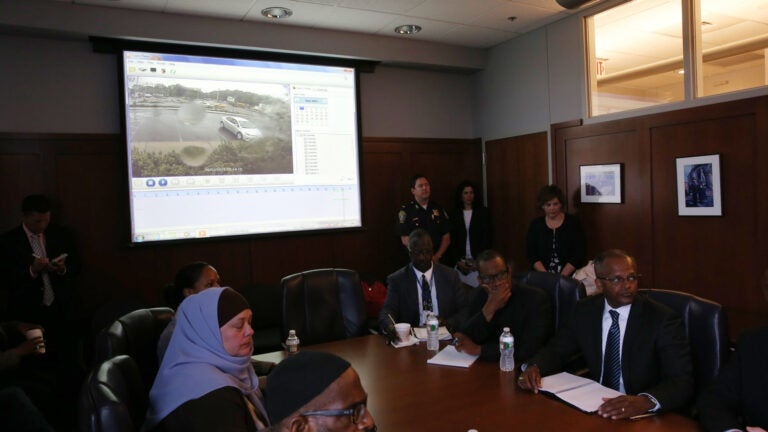
And it was the second time they invited clergy, civil rights, and community leaders to watch how it all went down—before releasing the footage to the public.
“They’re using the clergy as a mechanism to get the truth about what the video depicts out to the public, and they’re doing it through an intermediary,’’ said David Klinger, a former cop and professor of criminology at the University of Missouri-St. Louis.
This is apparently the new normal when it comes to police shootings in Boston — police rallying community leaders to avoid the kinds of protests seen in Baltimore and Ferguson, Missouri.
And those within the group selected by law enforcement say it’s good for all.
“I’m not using them and they’re not using me, but we’re partners,’’ said the Rev. Mark V. Scott of the Azusa Christian Community Church, who has been present at both meetings this year. “We’re forging a partnership.’’
In the hours after the shooting of a police officer and the killing of that suspect, Angelo West, in March, there was anger on the streets. One man was captured on video declaring war against police. Showing the footage of the shooting was a way to calm down any potential unrest.
Hours after Tuesday’s shooting, Rahim’s brother posted on Facebook that his brother was shot in the back as he spoke to their father on the phone.
“I can’t breathe!’’ were his brother’s last words, he said, echoing the last pleas of Eric Garner.
Bringing community leaders in — including Muslim clergy — allowed police an independent group to refute those claims, which even Rahim’s brother stepped back from Thursday. No, he wasn’t shot in the back and no, he wasn’t on a cellphone, they said. Less clear is whether Rahim actually lunged at police with a knife, though one was found at the scene.
On Wednesday, there was still the familiar refrain of “it’s under investigation’’ from law enforcement on some questions. But Scott and others seemed happy to at least get a view of the video.
“In the absence of knowledge and information, we begin to speculate, we begin to guess,’’ Scott said. “Rumors begin to spread. It causes the pain, the trauma, the distrust to increase.’’
Showing surveillance video within a day is a big step from the year or more it has taken in other cases. But some policing experts wondered, why only the select group?
“I’m just troubled by the police handpicking people to get a selective release of information,’’ said Samuel Walker, a professor specializing in police accountability at the University of Nebraska.
Scott said that shouldn’t be an issue. The group is independent and is of the community.
“I can say anything I want to, and Commissioner (William) Evans might not bring me back but he can’t fire me,’’ he said.
Within days, police should complete the necessary interviews with witnesses and then release the video to everyone, Klinger said. (In the West case, authorities released the video publicly two weeks after the shooting. They’ve said they will do the same in the Rahim shooting).
“Probably what they’re trying to do is stake out a middle ground between disclosing information related to the ongoing investigation and keeping the public appraised of the situation,’’ Klinger said.
Even those championing civilian oversight said what Boston is doing seems right. Brian Buchner, the president of the National Association for Civilian Oversight of Law Enforcement, said it’s not uncommon for agencies to communicate with civil leaders in the aftermath of a shooting. Widespread, immediate release of a video can taint witnesses and an investigation.
“It makes good investigative sense, though it may not immediately satisfy the public’s interest,’’ Buchner said. Still, he said, he wants to see that video relased publicly as soon as possible.
After watching the West shooting video, which seemed to vindicate police, the civic leaders gathered at police headquarters wondered if they’d get the same opportunity the next time when it wasn’t so clear. This week, they did. And then next time they will, too, Scott said.
“What we’re dealing with is the technology is evolving, our relationships are evolving and the protocols we use to respond to these things is evolving,’’ Scott said. “It’s my expectation that this is the norm.’’
Photos: Police-involved shooting in Roslindale
[bdc-gallery id=”146013″]



To comment, please create a screen name in your profile
To comment, please verify your email address
Conversation
This discussion has ended. Please join elsewhere on Boston.com