
District attorney to police chief: You can’t make promises to heroin addicts
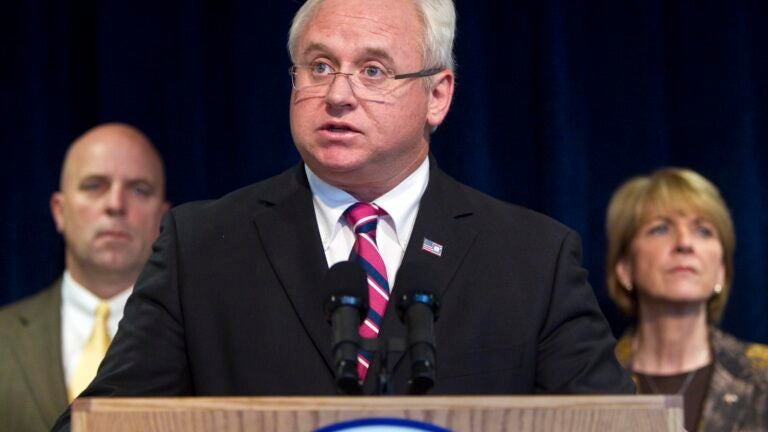
After a police chief made national headlines for promising drug addicts that he wouldn’t arrest them if they sought help, the district attorney is saying: not so fast.
Gloucester Police Chief Leonard Campanello announced in a Facebook post on May 4 that his department was no longer going to treat opiate addiction like a crime but instead like a disease.
Part of that meant assuring opiate addicts who walked into the police station seeking help that they wouldn’t be charged, even if they had drugs and drug paraphernalia on them.
But in a letter sent on Wednesday, Essex District Attorney Jonathan W. Blodgett told the chief that he doesn’t really have the authority to make those promises.
“While I applaud the general idea of your proposal, an explicit promise not to charge a person who unlawfully possesses drugs may amount to a charging promise that you lack legal authority to make, and on which a drug offender may not be able to rely,’’ he wrote.
Blodgett’s spokeswoman, Carrie Kimball-Monahan, said it is the “obligation’’ of the district attorney to make the chief aware of potential legal issues.
“We kept getting asked by the media what we thought about’’ his plan, she told Boston.com. “We thought we’d let him know first, that based on what we saw, there’s a potential legal issue.’’
Reached by Boston.com, Campanello wouldn’t comment directly on the DA’s letter, referring questions to his spokesman, John Guilfoil.
The police chief did say he was surprised by the explosion of attention his plan has gotten. “We’ve already accomplished a lot just by raising the dialogue,’’ Campanello said.
“The provocativeness comes from a typical conservative entity being the ones that are voicing the opinion that addiction is a disease and not a crime,’’ he said.
As for the DA’s objections, Guilfoil said because police are not arresting addicts in the first place, the courts and prosecutors won’t be involved at all.
“Obviously when you have a new police procedure, a revolutionary new police procedure that no one has ever done before, there are going to be a lot of details to iron out before launching the program,’’ Guilfoil said.
The program doesn’t start officially until June 1, Campanello said. But already, his department has fielded calls from those seeking help. They will be given assistance as they walk the road to detox and recovery, Campanello said.
In his letter, Blodgett said the county already has a diversion program in place. Through that, eligible nonviolent drug offenders are offered treatment in lieu of prosecution.
Last year, 72 people enrolled in the program, and more than half successfully completed it. Six percent of those who enrolled later committed another crime.

Another part of the Gloucester police plan is to provide the opiate overdose-reversal drug Narcan to anyone who wants it, regardless of whether they’re insured. Three local pharmacies have signed up.
Anyone without insurance will pay $20 for the drug, and the remainder (about $100) will paid by seized drug money.
“We are in a position to save lives, no matter what a person chooses to do with that life,’’ Campanello said. “We wanted to put together a program that gave people second chances.’’
Read Blodgett’s full letter below:
[fragment number=0]



To comment, please create a screen name in your profile
To comment, please verify your email address
Conversation
This discussion has ended. Please join elsewhere on Boston.com