
Jurors rejected the ‘Tamerlan led’ argument. Or did they?
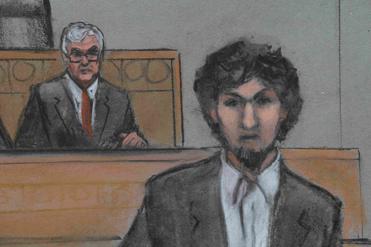
Defense attorneys for Dzhokhar Tsarnaev spent the better part of their case profiling the defendant’s older brother Tamerlan. Tamerlan was the mastermind of the Boston Marathon bombings, they said. Tamerlan was “emotionally abusive’’ toward his wife and to those around him, they said. Tamerlan had a YouTube playlist titled “Terrorists’’ and was the one who radicalized his younger brother, they said.
Yet in delivering their sentence of death to Dzhokhar Tsarnaev, jurors largely rejected these “mitigating’’ arguments.
Of the 12 jurors, just three agreed that “Dzhokhar Tsarnaev acted under the influence of his older brother.’’
Just three agreed that “Tamerlan planned, led, and directed the Marathon bombing.’’
Just three agreed that “Dzhokhar Tsarnaev would not have committed the crimes but for his older brother Tamerlan.’’
That low support for those mitigating factors may reflect more on the jury than on the defense attorneys’ arguments, according to Cornell Law School professor and Death Penalty Project director John Blume.
“A lot of these people come into the jury room (for deliberations) with a view of whether they want to give him death or not,’’ Blume said.
Because of that, the low jury support may be a case of jurors’ life-or-death conclusions influencing how they answer preliminary questions.
“They’ve already kind of made up their minds, life or death,’’ Blume said. “Some of these other decisions are retrofitted consciously or unconsciously in jurors’ minds to justify their decision.’’
That’s why reading too closely into how jurors’ voted on the mitigating factors is the wrong way to analyze the case, he said.
“It’s easy to give too much credence to how they answered some of those questions,’’ Blume said.
The Dzhokhar Tsarnaev trial in sketches
[bdc-gallery id=”147383″]




To comment, please create a screen name in your profile
To comment, please verify your email address
Conversation
This discussion has ended. Please join elsewhere on Boston.com