
11 things we learned in the sentencing phase of Dzhokhar Tsarnaev’s trial
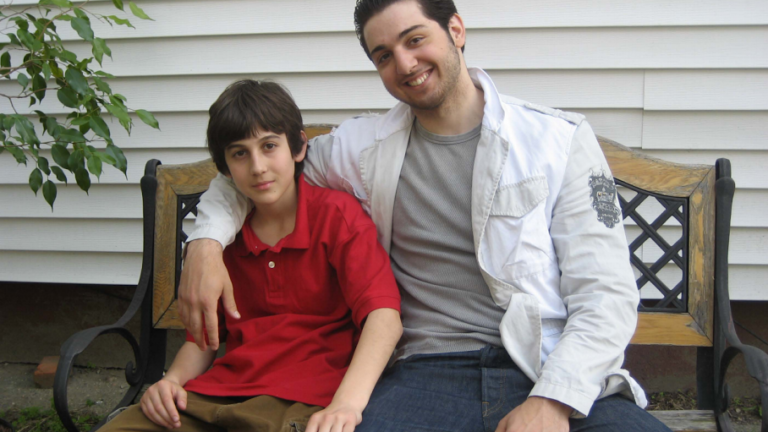
Dzhokhar Tsarnaev was convicted of carrying out the Boston Marathon bombing last month, but his ultimate fate — life in prison or the death penalty — remains undecided. Prosecutors have said Tsarnaev’s crimes made him “America’s worst nightmare’’ and that he deserved the death penalty. His defense has said Tsarnaev was under the domineering sway of his older, now-deceased brother Tamerlan and deserves a life of solitude in prison.
In making their arguments, both sides presented new details, photos, and stories about Tsarnaev — and his victims. Here are 11 things we’ve learned since the sentencing phase of the trial began.
Teachers loved Tsarnaev.

A series of Tsarnaev’s teachers from Cambridge public schools testified that Tsarnaev was the ideal student.
“Super kind, really smart, really quick to learn, very hard worker,’’ said Tracey Gordon, his 7th grade social studies teacher.
“Very bright,’’ said Rebecca Norris, who advised and taught Tsarnaev. She said he was “one of the top handful’’ of students she has ever had. After testifiying, Norris wrote on her Facebook about her conflicted feelings of reconciling the student she knew with the murderer in court.
“Yes, he did the unforgivable. And yes, I still love him,’’ she wrote.
Eric Traub, Tsarnaev’s freshman and senior year math teacher at Rindge and Latin, said he happily agreed to write a college recommendation letter for Tsarnaev. Traubgave him the highest praise.
“Dzhokhar is a smart, energetic, and friendly student,’’ Traub wrote in the letter. “I strongly recommend him to you.’’
Tsarnaev showed his first visible emotion in court.
[fragment number=0]
While his aunt from Russia cried inconsolably on the stand, Tsarnaev reached for a box of tissues and appeared to wipe tears from his eyes. Later, Tsarnaev smiled and blew a kiss to his family during a break in the trial.
Those were the first times Tsarnaev showed emotion in the courtroom since the trial began back in early March, and they were a stark change from his usual demeanor of blank stares and uninterested facial expressions.
Tsarnaev flipped off a courthouse camera.
[fragment number=1]
Tsarnaev showed a two-fingered sideways gesture and a lone middle finger to a camera in his courtroom holding cell back in July 2013, three months after the bombing. Prosecutors showed a still photo of that middle finger during their opening statements of the sentencing phase of the trial in portraying Tsarnaev as “America’s worst nightmare.’’
‘‘This is Dzhokhar Tsarnaev — unconcerned, unrepentant and unchanged,’’ federal prosecutor Nadine Pellegrini said.
Tsarnaev’s defense has tried to combat that middle finger by releasing the entire video in the holding cell in an attempt to provide context for the split-second gesture. They also called up deputy U.S. court marshall Kevin Roche, who asked Tsarnaev after that gesture if he was going to continue to be a problem. Tsarnaev then apologized.
“No, I’m done. I’m sorry,’’ Tsarnaev said, according to Roche.
Tsarnaev’s father had serious mental health issues.

Medical records of Dzhokhar’s father, Anzor Tsarnaev, presented in court showed that he had PTSD, visual hallucinations — “little lizard-like creatures’’ in his vision, a doctor wrote — panic attacks, insomnia, psychosis, and memory problems. Anzor was given various medications to treat those diagnoses.
Anzor’s mental issues got worse after he cracked his skull and sustained brain damage during a 2009 assault. He became overwhelmed and depressed, a doctor wrote in 2010. By 2012, he was divorced, unable to work, and needed constant supervision, a doctor wrote.
The defense presented these medical records as a way to argue that Tamerlan had become the de-facto father figure to Dzhokhar.
Tamerlan had a YouTube playlist titled “Terrorists.’’

Yup, seriously.
The evidence suggests Tsarnaev’s jihadi radicalization largely came online. Tamerlan was an avid reader of Kavkaz Center, a Chechen “news agency’’ that wrote anti-American propaganda.
Magomed Kartashov, who befriended Tamerlan in Dagestan in 2012, told the FBI in June 2013 that Tamerlan had visited the region convinced that there was jihad in the streets. “I came here to get involved in jihad,’’ Tsarnaev said, according to Kartashov’s interviews with the FBI.
“He didn’t really understand,’’ Kartashov told the FBI. “He had just watched videos on the Internet.’’
Tamerlan was “emotionally abusive’’ to his wife Karima.

Tamerlan Tsarnaev and his wife Katherine “Karima’’ Russell.
Friends and the mother of Katherine Russell — who later converted to Islam and changed her name to Karima — said that Tamerlan was a bad influence on her. Her mother, Judith Russell, testified that she opposed their relationship because he had cheated on her, and she had heard that he was abusive toward her.
Amanda Ransom testified that she heard Katherine sobbing and Tamerlan laughing in a bedroom when she and Katherine were college roommates. She then found out why: After the couple had sex, Tamerlan had told Katherine that he had AIDS. He said that it was a joke, Ransom said.
As Tamerlan and Katherine got closer, she became more religious, serious, and isolated from others, according to testimony. Gina Crawford, a friend of Russell, said neither she nor any Russell family members were invited to Katherine and Tamerlan’s wedding.
Karima searched online about “rewards for wives of mujahadeen.’’
Around the time Tamerlan left his wife and daughter to venture to Dagestan in January 2012, Karima Tsarnaeva’s search history included the following:
• “If your husband becomes a shahid what are the rewards for you’’
• “rewards for wife of mujahideen’’
A shahid is an Arabic term for a martyr, while a mujahideen is the term for a person engaged in jihad.
Jurors also saw texts between Tsarnaeva and a friend shortly after the bombings. She first assured her friend that she was O.K., and then continued: “Although a lot more people are killed every day in Syria + other places,’’ she wrote. “Innocent people.’’
The immediate Tsarnaev family was nowhere to be seen.

From left to right: Anzor, Dzhokhar, Bella, Zubeidat, Ailina, Tamerlan.
No members of Dzhokhar Tsarnaev’s immediate family came to court in either part of his death penalty trial. That includes his parents Anzor and Zubeidat, his two sisters Ailina and Bella, and his sister-in-law Karima. (Tamerlan died during the shootout in Watertown.)
Extended family from Russia did come to court to testify on Tsarnaev’s behalf, and they told stories about the sweet boy he used to be. One family member testified that Tsarnaev cried when he watched the main death of The Lion King.
The very different ambulance rides of Dzhokhar and Tamerlan.
Dzhokhar and Tamerlan Tsarnaev in their younger years.
Tamerlan and Dzhokhar Tsarnaev acted very differently in their post-capture ambulance rides, according to testimony from emergency responders who treated them.
Tamerlan, captured after the Watertown shootout, had gunshot wounds and road rash from being hit by a Mercedes SUV driven by his brother. Still, he aggressively resisted attempts by responders to put an IV in his arm.
“He got combative and he was resisting our attempts to intervene and treat him,’’ paramedic Michael Sullivan testified. “He was yelling loud like ‘RRRRRRRR.’’’
Dzhokhar, who was captured less than a day later hiding in a boat, was more responsive to assistance. He answered questions, followed commands, and was compliant enough that he had his handcuffs taken off so that an IV could be inserted, according to paramedic Laura Lee.
“He was able to respond to all of those questions,’’ Lee said. “He said he was allergic to cats.’’
Immediately after the bombings, the Tsarnaev brothers bought milk and cookies.
We knew from the guilty-or-not-guilty part of the trial that Dzhokhar Tsarnaev casually purchased a half-gallon of milk at Whole Foods right after the bombings, which prosecutors argued was evidence of his callousness.
What we didn’t know was what Tamerlan did. And according to testimony from Laith Albehacy, the manager of a Middle Eastern grocery store in Cambridge, Tamerlan visited his store on the afternoon of the bombings. “He bought some cookies,’’ Albehacy said.
Victims’ friends and family have struggled to recover from their losses.

Tsarnaev was convicted of killing Sean Collier, Martin Richard, Krystle Campbell, and Lingzi Lu.
The mother of MIT police officer Sean Collier has been diagnosed with PTSD since Collier’s death. “She was despondent,’’ Collier’s step-father Joe Rogers testified. “It took her a couple months just to get out of bed.’’
Rogers said each of Collier’s siblings has struggled in the two years since his death. One sister moved away. Another is depressed. Another has to deal with the press questions.
“It wears you down after a while,’’ Rogers said. “I just feel beat down after two years of this.’’
“Even when we’re having fun, there’s always a cloud over whatever event it is,’’ Collier’s brother Andrew said. “I miss Sean. I miss everything about him.’’
William Campbell Jr., the father of Krystle Campbell, testified about losing his daughter. “Krystle was the light of my life,’’ he said. “She never left the house without giving me a hug. I miss the hug.’’
Jinyan Zhao, Lingzi Lu’s aunt, testified that her young niece was a “bubbly, innocent girl.’’ Although Lu spent her youth in China and had only moved to Boston the year before, Lu was buried in Boston.
“How she died and why she died, it just felt like she was part of Boston, part of the city,’’ Zhao said.
Martin Richard’s family did not testify during the sentencing phase of the trial.




To comment, please create a screen name in your profile
To comment, please verify your email address
Conversation
This discussion has ended. Please join elsewhere on Boston.com