
Law Schooled: For Aaron Hernandez Defense, Less Has Been More
While prosecutors took two months to present their case, Aaron Hernandez’s lawyers wrapped up their defense in just one day and three witnesses. Could that strategy help win them the case in the former New England Patriot’s murder trial?
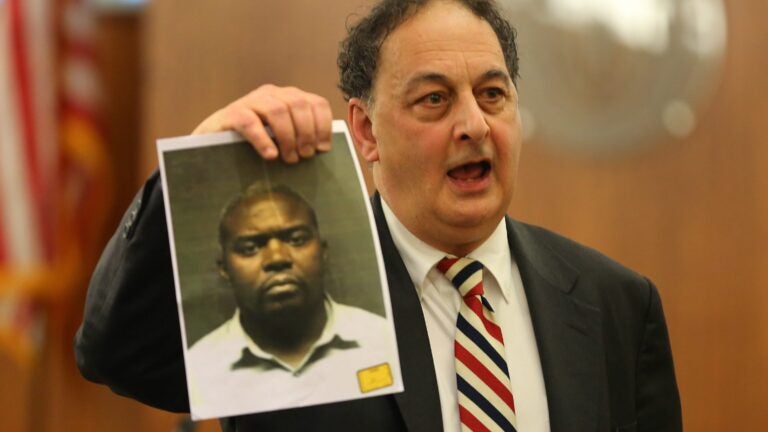
Throughout the murder trial of former Patriots tight end Aaron Hernandez, Boston.com will offer insight into the proceedings from local legal experts in a series called “Law Schooled.’’
The argument presented against Aaron Hernandez in the murder trial of Odin Lloyd was, if anything, lengthy. The prosecution’s murder case spanned two months, 132 witnesses, and more than 2000 pages of cell phone records. To be fair, there were a few snow days.
Yet, relative to the prosecution’s marathon of a case, the former NFL tight end’s defense was barely a 40-yard dash. In just one day and three witnesses, despite being nowhere near as exhaustive as the prosecution, Hernandez’s lawyers rested.
And in this murder trial, less may be more.
According to the Michael McCann, director of the Sports and Entertainment Law Institute at the University of New Hampshire, the brevity of the defense’s case signals their confidence that prosecutors have not convinced the jury.
“The defense likely believes it rebutted much of the prosecution’s case during the prosecution’s case-in-chief,’’ said McCann.

Pictured is an image from video surveillance tapes from security cameras at the home of Aaron Hernandez, which the prosecution claims to show Hernandez holding a gun.
The list of evidence against Hernandez includes surveillance footage of him allegedly holding a gun in the hours before and after the murder, cell phone location data placing him with victim Odin Lloyd right before the time of the killing, DNA and footprints found at the murder scene matching the former Patriot, and video of his fiancee getting rid of a suspicious box the day after the murder.
The list does not include any eyewitnesses, nor does it include a clear motive.
“Although motive isn’t required for murder, jurors often want to know why a defendant would have killed the victim,’’ said McCann, who also contributes as a legal analyst to Sports Illustrated and NBATV. “Especially for first degree murder where jurors are asked to conclude beyond a reasonable doubt that the defendant planned the killing and intentionally carried out the killing.’’
First-degree murder, as opposed to second-degree or manslaughter, implicates that the act was malicious and premeditated beforehand.
“Or, through joint venture, shared in the intent,’’ adds McCann, noting the nuance in Massachusetts law that states an individual (or individuals) can be convicted of a joint venture murder if they were both present at the scene and knowingly assisted in the crime.
“If the prosecution had more success in its testimony about Hernandez allegedly staring down Odin Lloyd at the Rumor Nightclub two nights before the murder, maybe the defense would have called eyewitnesses to talk about that evening,’’ said McCann. “But the defense was very effective in cross-examining prosecution eyewitnesses who were at Rumor and highlighting inconsistencies and ambiguities in their accounts.’’
The potential effectiveness of such a cross-examination also illustrates the inherent risk in calling each witness. So another benefit of only calling three is minimizing that risk.
McCann noted one of the defense’s few witnesses, Dr. David Greenblatt, called to testify regarding the effects of PCP (the defense has suggested Hernandez’s co-defendants committed the murder while high on the drug), who bysomeaccounts came off as defensive in his testimony.
“While Dr. Greenblatt was capable in responding to cross-examination,’’ said McCann,’’ “there is always a risk that a different defense witness might cause more harm than good.’’
However, Greenblatt’s testimony also gave the prosecution the opportunity to call a rebuttal witness to refute his assertion that PCP use make individuals prone to violence.
Ultimately, the fewer witnesses called by Hernandez’s lawyers, the less the prosecution can pin down and scrutinize the defense’s theory of the events before and after June 17, 2013. More ambiguity means more reasonable doubt.
Unlike the prosecution, Hernandez’s defense team doesn’t have to prove anything. The less said, the better.




To comment, please create a screen name in your profile
To comment, please verify your email address
Conversation
This discussion has ended. Please join elsewhere on Boston.com