
Is Parking in Boston Too Cheap? This Man Thinks So
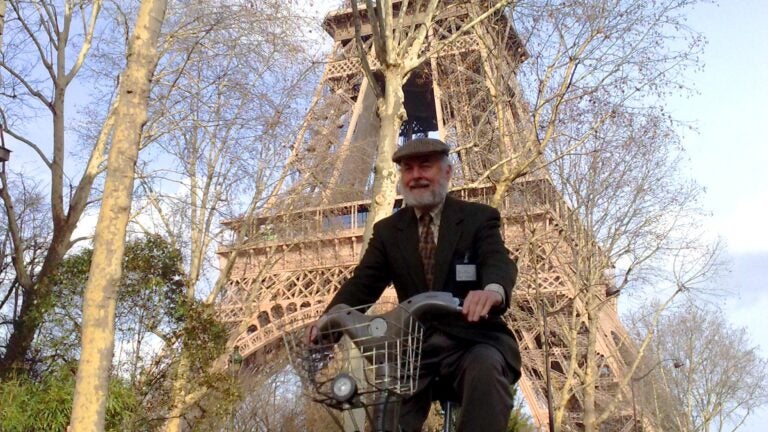
You don’t usually become a superstar through parking analysis, but Donald Shoup has—at least in certain circles. The urban planning expert’s name may not ring many bells, but he has a dedicated group of Facebook fans who call themselves “The Shoupistas.’’
Shoup, 76, has been a professor at UCLA’s urban planning department for 41 years. His ideas, and most importantly his 2005 book The High Cost of Free Parking, have affected policy in places like San Francisco, where a trial run with market-set pricing showed a reduction in meter costs and slashed the time spent circling the block looking for a space.
“I think parking problems are fairly similar all over the world. Every city thinks it’s unique—of course Boston does,’’ Shoup told Boston.com. “And Boston is unusual for a big-tech city to be so backwards in terms of managing its own streets.’’
He appears as an expert in countlessarticles about Boston’sparkingwoes. He’s retiring this summer, but he said that will give him even more time to be quoted. He’s been published in numerous urban planning journals and delivered a keynote address at the 2014 Boston parking conference called “sPARKing New Ideas.’’
To Shoup, Boston’s drivers are paying too little: Meters here cost $1.25 per hour city-wide, whereas other cities raise meter prices based on demand and area. In Washington, D.C., “premium demand zones’’ cost $2 an hour, with some meters operating until 10 p.m.; according to parking database app ParkMe, meters in Los Angeles range in price from $0.50 to $5.75 per hour. In Boston, resident parking permits are free—in San Francisco, they cost $110 per year.

But by not contributing to parking revenue, Boston drivers are paying in other ways, Shoup said.
Shoup laughed when discussing how it took 10 years of debate in Boston’s city council to raise the price of parking meters throughout the city by just 25 cents. But he said that’s not the only mistake Boston’s made for parking policies.
“I think the city should charge market price for residential parking and spend the revenue to have more local amenities—like snow removal,’’ Shoup said. “High prices for housing and free prices for cars? Sounds like Boston has its priorities switched around.’’
City officials did recently announce a new plan for the Boston Transportation Department that will update 8,000 parking meters and possibly implement surge pricing. But while Boston may be making some progress, the city is still lagging behind. Because residents don’t pay for permit parking—unlike in neighboring Somerville and Cambridge—and there aren’t any restrictions on how many permits can be given out, more permits are distributed than there are spaces available. In Back Bay, the city distributed nearly 5,000 permits, but there were only about 1,000 parking spaces in the area, according to Patrick Siegman, a transportation specialist and the original “Shoupista.’’
“Over and over again I’ve gone to places and told that story, and people laugh,’’ Siegman said. “It’s kind of that thing where Shoup has had a big influence, just by pointing out really obvious things—except they weren’t obvious until Shoup pointed them out.’’
Siegman became a “Shoupista’’ when he found Shoup’s writing in the library as a Stanford student. Even though Siegman never took a class with Shoup, he said Shoup was the most influential professor in his career.
“It’s partly that his work is clearly compelling,’’ Siegman said of Shoup’s humorous writing style. “And also he makes it obvious that this is a really important topic.’’
According to Shoup, parking spaces are the most valuable land on the planet. He said he’s shocked at how some Bostonians can think that San Francisco’s $110 parking permit is expensive.
“That’s just 30 cents a day,’’ Shoup said. “You can’t repeal the laws of supply and demand in Boston and expect it to work well.’’
Not every city is perfect when it comes to parking, but other cities have ideas that spur progress at a quicker pace, Shoup said. Some cities are motivated to hike parking costs when the money comes back through neighborhood improvements: Car owners are happy to pay more out of pocket when they see their sidewalks fixed and their parks maintained.
“Now, when you pay money to a meter, it disappears into a black hole—you don’t see it, for all the political appeal it has in Boston,’’ he said. “The politics will change completely if the city says here’s the deal: We charge the right price for curb parking, and you’ll see the revenue in your neighborhood.’’
Shoup said the costs of metered parking should rise with demand. He also said parking meters can be designed to favor residents and profit more off of tourists. In Miami Beach, for example, meters require your license plate number. If you’re a local, your registration appears and you get a discount. Tourists pay the full price without even knowing that residents get a cheaper rate.
When parking prices are controlled by demand, blocks that are always full get a high price, and blocks that are usually half-empty get a lower one. This helps to balance out where people park, Shoup said. Drivers won’t have to spend so long cirlcing the block for a space, which should improve traffic.
This way, even those who rely on public transportation will benefit.
“There’s a huge cascade of benefits that will result from getting the price of parking right,’’ Shoup said. “These policies eliminate cruising, lessen waste, lower carbon emissions, and spend money in local neighborhoods.’’
While Shoup thinks Boston may be behind the parking-policy curve, he has faith that the city will make improvements. Boston’s a smart city, Shoup said, and could easily build on all the parking advancements already in place across the country.
“I wouldn’t be surprised to see Boston make changes that become widely cited,’’ he said. “Boston can make big improvements in a short time.’’



To comment, please create a screen name in your profile
To comment, please verify your email address
Conversation
This discussion has ended. Please join elsewhere on Boston.com