
Boston’s Trying to Be More Like San Francisco, At Least in Terms of Parking
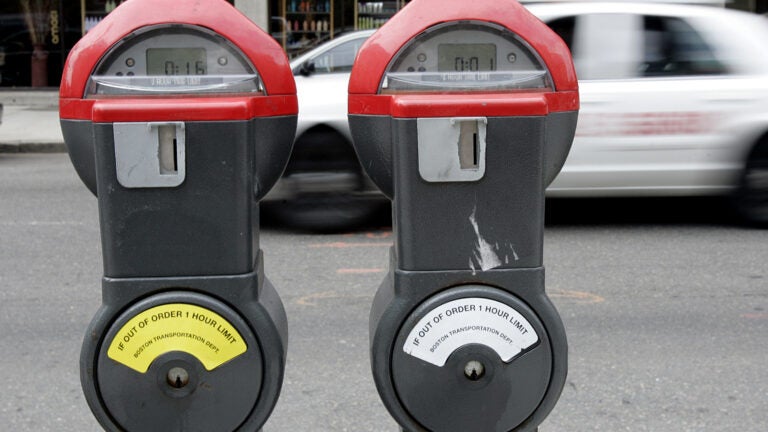
It this winter’s record-breaking snow has you considering a move to California , take heart in the fact that Boston may soon get one of the conveniences of San Francisco.
Mayor Marty Walsh’s new plan for the Boston Transportation Department calls for 8,000 updated parking meters across the city. They won’t eat your quarters anymore, because they’ll be payable by credit cards or smart phones. Officials also hinted at the chance that they’ll be price-adjustable, based on demand or time of day.
New York City announced a pilot program for app-payable parking in 2013, and San Francisco’s used these smart meters for years.
Everyone else might think Boston is the city where it’s easiest to “pahk the cah,’’ but spaces here are tight—and shrinking—as The Boston Globe recently reported.
Boston has made some recent improvements. In January, it debuted ParkBoston, an app that lets you pay for some spaces with your phone while allowing parking officers to match your license plate your spot. It’s only available in Back Bay, but officials said they want to expand.
Walsh announced a number of proposed changes this week. The new technology offers more than just convenience. In San Francisco, demand-responsive meters that are paid with credit cards or smart phones proved to make parking in the city easier and cheaper. An evaluation by San Francisco’s Municipal Transportation Agency found that the average meter rates dropped 11 cents per hour. The times when there were no street spots available decreased 16 percent, and the average time spent searching for a space dropped by 5 minutes (or 43 percent).
“By making it easier to park and easier to pay, we have significantly reduced parking tickets and improved the experience for people who visit, live in, or work in some of San Francisco’s busiest commercial neighborhoods,’’ Edward Reiskin, San Francisco’s director of transportation, said in the report. “Even as more and more people came to the city, we were able to reduce circling for parking and make the streets safer for everyone.’’



To comment, please create a screen name in your profile
To comment, please verify your email address
Conversation
This discussion has ended. Please join elsewhere on Boston.com