
Will Gender Imbalance Affect the Aaron Hernandez Jury?
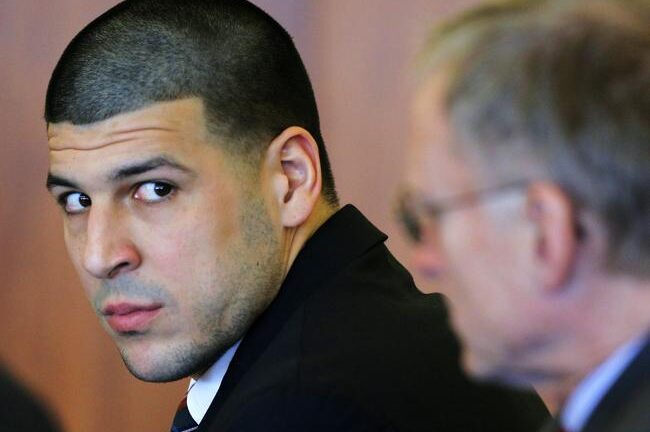
The juror rolls have been announced in the Aaron Hernandez trial, and while we know little about who the jurors are, we do know one thing: their genders.
The 12 people who will decide the former Patriots tight end’s fate will be selected from a pool of 13 women and 5 men. And while not quite as extreme a gender split as George Zimmerman’s all-female jury, the makeup does beg the question: Does a juror’s gender effect his or her ultimate verdict?
The short answer, according to longtime trial lawyer Philip A. Tracy, is “no’’—largely because of how exhaustive the juror search has been in this particular trial.
“The prosecution, the defense, and judge have had a lot of time to sort them out, so it’s really not going to matter whether they’re men or women,’’ said Tracy, a senior partner with Boston-based DiMento & Sullivan. “They’re trying to find somebody who says, ‘If the government proves the case beyond a reasonable doubt, I can convict.’’’
The final 18 jurors were culled from a pool of 1,100 residents of Bristol County, Massachusetts over a 16-day process earlier this month. Ideally they represent the most impartial members of that group. And because the prosecution’s case — with no eyewitnesses or murder weapon — relies entirely on circumstantial evidence, that impartiality is twice as important, Tracy said.
“What you’re looking for is a juror, no matter what they’ve read or who (Hernandez) is as a football player, [that] can listen to the evidence in the courtoom, and make the decision [about] whether the government made its case beyond a reasonable doubt,’’ he said.
But while the gender makeup of the Hernandez jury is not likely to affect the final verdict, men and women have been shown through scientific analysis to approach court cases differently.
According to an article published in 2005 in the College of William & Mary Journal of Women and the Law
, gender does in some cases make a difference. In cases involving spousal murder, for example, women will tend to empathize with defendants more than male jurors, and are “more likely to mention that the defendant should receive psychiatric care.’’
Likewise, the article says women are harsher on defendants in rape trials and more likely to sympathize with defendants accused of killing an allegedly abusive partner. And while it stands to reason that an attractive defendant such as Hernandez might elicit sympathy from the opposite sex, the studies refute it.
One finding that could explain the prominence of women on the Hernandez trial: In cases with high pretrial publicity, women are less likely to identify with the victim than men. But despite the differences between men and women, both sexes are just as likely to render a guilty verdict.
So while the gender makeup of the Hernandez jury may appear to be an anomaly, it will make little to no difference when deliberations end.





To comment, please create a screen name in your profile
To comment, please verify your email address
Conversation
This discussion has ended. Please join elsewhere on Boston.com