
Homer Russell, 70; Boston Redevelopment Authority’s former urban design director loved his adopted city
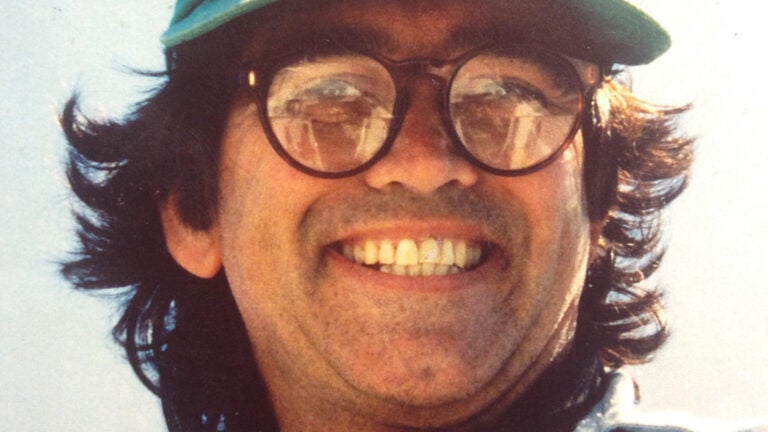
As planning for the Big Dig coalesced and local architects launched a “Boston Visions’’ design competition in the late 1980s, Homer Russell weighed in with the perspective of a Midwesterner who had fallen in love with the city.
“In the past, a lot of the planning ignored the city’s essential nature,’’ Mr. Russell, who was then the Boston Redevelopment Authority’s urban design director, told the Globe in June 1988. “The real challenge is, how do you alter and improve and refine a 350-year-old city with a real strong character?’’
The topic of how to reimagine Boston while preserving its essential nature was one he returned to several years later in a speech to the Urban Design Project in Buffalo that is archived online.
“We made a lot of mistakes in the ’50s and ’60s,’’ Mr. Russell said in the speech, published in 2001. “We learned in the ’70s and the ’80s about how to fix those mistakes and how to go about making Boston look like Boston, rather than other cities around America. We’ve been through the time when the megacity looked the same everywhere. Now we are on to something better.’’
Mr. Russell — who also advised urban planners in Japan, Vietnam, and Oklahoma City — died at 70 of complications of Alzheimer’s disease Oct. 28 in Our House, a residential care home in Rutland, Vt.
During his many years in Boston, his preferred neighborhood was the North End.
“If he was living in Boston, he was living in the North End,’’ said his daughter, Sarah Stefanak of Dorset, Vt. “He loved the history, he loved the culture, he loved his commute to City Hall. I honestly never imagined him ever leaving.’’
No fan of past urban planning decisions, Mr. Russell recalled in his Buffalo speech that as city residents migrated to the suburbs after World War II, the state and federal governments stepped in with a design vision they hoped would ensure the survival of city businesses.
“They designed a six-lane elevated steel highway to cut right through the heart of the downtown and made it easy for the suburbanites to come in and shop,’’ he said. “They put seven above-ground parking garages at the end of seven exits, very close together, so that it could be convenient for them to park and to shop, and entertain themselves and enjoy the city.’’
Soon after the Central Artery was built, “city planners drew up a scheme where they decided that Boston was too dense and the neighborhoods were too congested,’’ he added. “The planners were undoubtedly white middle-class suburban males who walked around the dense Boston neighborhoods and saw laundry hanging out the window, and laundry hanging out the window, of course, is an immediate symbol of a slum.’’
Among the areas slated for demolition, “mercifully, only one of these neighborhoods was demolished, the West End,’’ he recalled in his speech called “The Urban Design Challenge.’’
“But it was cleared. Twenty-five hundred buildings were torn down, and 10,000 residents were scattered to the winds.’’
During his years with the Boston Redevelopment Authority and before that with the Boston Landmarks Commission, Mr. Russell worked on many design and building projects, said his family and friends.
They said he also had served as a trustee for the Boston Foundation for Architecture and took part in urban development seminars in Kobe, Japan, where he helped develop a master plan to reconstruct part of that city after the 1995 earthquake. Mr. Russell also served on a planning panel in Oklahoma City after the 1995 bombing of the Alfred P. Murrah Federal Building.
The oldest of four children, Mr. Russell grew up in Great Bend, Kan. His father was a physician who had graduated from Princeton and wanted his first son to follow that path.
“They really wanted my dad to be a doctor, and he was accepted to medical school,’’ his daughter said.
But when Mr. Russell went to Princeton, from which he graduated with a bachelor’s degree, a class in drafting and design changed his trajectory.
“He said he was in awe of it and knew his parents wouldn’t be real happy about it, but he really didn’t want to be a doctor,’’ his daughter said.
While at Princeton, Mr. Russell played bass in an early rock ’n’ roll band and performed in communities on the New Jersey shore.
After Princeton, he attended and graduated from the Harvard Graduate School of Design and began working in Boston.
“He wore dark brown tortoise shell glasses that made him look like a mad professor, and was very charismatic,’’ his daughter said. “When you spoke to him, it was as if you were the only person in the room; he was very intense.’’
Mr. Russell’s marriage to Nancy Hoftler, with whom he had two children, ended in divorce, as did a second marriage to Carol Nugent.
During his years of urban planning and design, “we started looking around the city and started to realize that Boston was becoming an important tourist destination,’’ Mr. Russell said in his Buffalo speech. “It became clear that the reason people wanted to visit here, not only from other cities in the United States, but from around the world, was because Boston really had, aside from where all the demolition had been done, a wonderful old historic fine grain.’’
A service has been held for Mr. Russell. In addition to his daughter and former spouses, he leaves a son, Sean of Pawlet, Vt.; two brothers, Philip and Rodney, both of Dallas; a sister, Susan Stewart of Oklahoma City; and four grandchildren.
Although Mr. Russell reveled in being a Bostonian, he never acquired a city accent and did not like hearing his name pronounced Boston-style.
“People called him Homer and they never pronounced the ‘r,’ which drove him crazy,’’ his daughter recalled with a laugh. “They’d say, ‘Hi, Homah.’ ’’








To comment, please create a screen name in your profile
To comment, please verify your email address
Conversation
This discussion has ended. Please join elsewhere on Boston.com