
The long-ago tragedy that Boston forgot
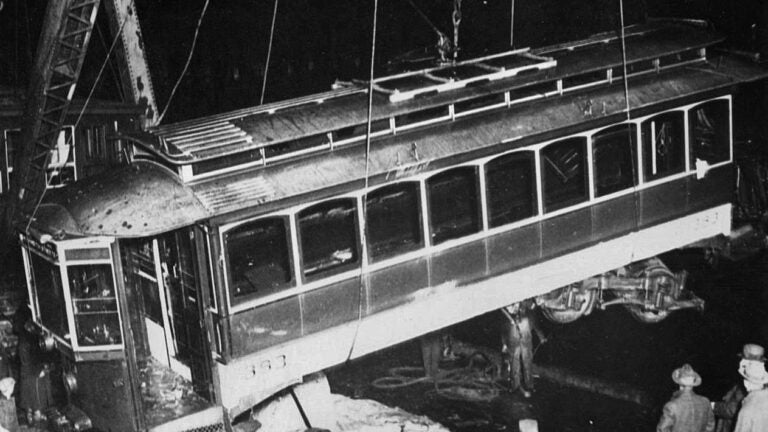
The faint glow of dusk had given way to the deep black of night by the time the streetcar clattered up Summer Street at 5:25, its sole headlight and the scattered street lamps waging a losing battle against the darkness.
On an unusually warm fall evening — Tuesday, Nov. 7, 1916, election night — the rush-hour ride home was something to endure, stuffy and loud: nearly 70 commuters packed into a rumbling shoebox with seats for 34, the straphangers squeezed by knees and toes on all sides.
The crush of riders spilled out onto the closet-sized platforms on both ends, flanking the motorman in front and hanging off the back stairs, as the inbound car crested the hill approaching Fort Point Channel, in the industrial end of South Boston.
Many were bound for South Station, and still more planned to transfer at Washington Street, but until then it was an assault on the senses, especially the ears: the clang and rattle of steel wheels atop steel rails atop paving stones; the motorman hollering out the stops (“E Street! . . . . D Street!”), followed by the cry of the brakes; the steady clang of the gong to warn horses, pedestrians, and the occasional automobile, to clear the way; the ka-ching of the fare register mounted overhead.
And so they stared blankly or thought of other things — supper waiting on the table; a spouse in the hospital; the fate of the Red Sox, fresh off their second straight “World’s Series” championship but soon to be sold — or strained to talk to co-workers or strangers about the election.
Read the complete story at BostonGlobe.com.
Don’t have a Globe subscription? Boston.com readers get a 2-week free trial.


To comment, please create a screen name in your profile
To comment, please verify your email address
Conversation
This discussion has ended. Please join elsewhere on Boston.com