
Sign up for The Queue
Discover the best movies and TV shows streaming now, with handpicked recommendations from Boston.com.
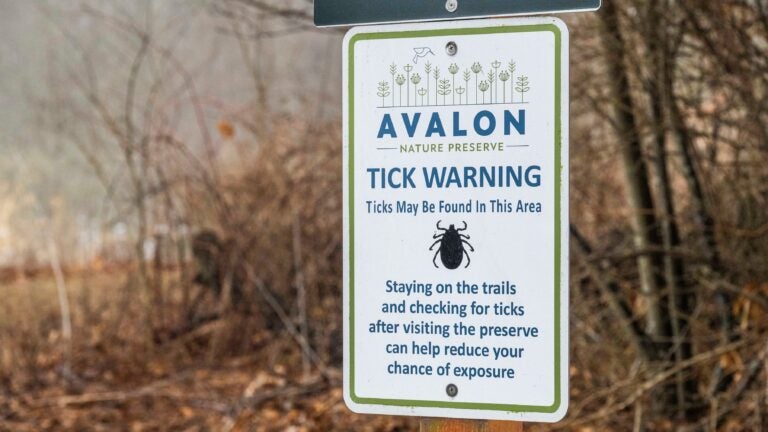
Alpha-gal syndrome, a red meat allergy that begins with a tick bite, could afflict hundreds of thousands of people, mainly in a belt of states extending from Oklahoma to North Carolina and extending up the Atlantic coast.
In Massachusetts, the lone star tick has started to expand to areas of the state due to climate change and the restoration of green spaces, according to the state’s Department of Public Health. That species is most commonly associated with alpha-gal syndrome.
Because alpha-gal syndrome is an emerging public health concern in Massachusetts — driven by the northward spread of the lone star tick — DPH Commissioner Robbie Goldstein has declared the condition reportable by health care providers and laboratories for at least one year, effective April 1.
Here’s what to know about alpha-gal syndrome and what to do if you think you have it.
A tick bite, especially from a lone star tick, can cause an overactive immune response to a sugar molecule in the tick’s saliva, called alpha-gal.
Alpha-gal is found not only in tick saliva. It also exists in the meat of most mammals, though not in humans and other large primates.
Someone who has been bitten by a lone star tick — and has become hypersensitive to alpha-gal — is primed for an allergic reaction when encountering alpha-gal again, such as by eating red meat.
Not everyone bitten by a lone star tick gets alpha-gal syndrome. In fact, most people don’t.
But if you break out in hives or experience vomiting or diarrhea after eating a hamburger or bacon, it’s a good idea to get tested.
One thing that makes alpha-gal unusual among food allergies is its timing. While people with allergies to peanuts or shellfish typically start having a reaction within minutes or two hours at most, those with alpha-gal may not experience a reaction to a hamburger for four or six hours. That may be because of how alpha-gal binds to fats, taking longer to absorb.
Because of the time lag, the allergic reaction often hits at night. People wake up with severe diarrhea and their face and hands swollen.
“If you eat meat and something happens four hours later, that could be this syndrome,” said Dr. Thomas Platts-Mills, an allergist at the University of Virginia School of Medicine who played a leading role in the discovery of alpha-gal syndrome.
The key message is to get tested if you’re having unexplained and severe allergic reactions. For some patients, the main reaction is gastrointestinal distress, with hives or bloating less pronounced. Some alpha-gal patients assume they are experiencing food poisoning the first time they have an attack.
The standard test involves a blood draw to look for antibodies to alpha-gal. Antibodies are produced by the immune system to protect against foreign substances. One category of antibodies, known as IgE, for immunoglobulin E, can cause intense allergic reactions.
The test measures levels of IgE that are specific to alpha-gal.
Increasingly, the test can be done by a major lab, such as Labcorp or Quest Diagnostics, without first consulting with a doctor. The tests are advertised for $149 by Labcorp and $131 by Quest.
Of course, not everyone who tests positive for alpha-gal antibodies will have an adverse reaction to red meat or be diagnosed with alpha-gal syndrome.
“It’s perfectly clear that 50% of people who have a positive test have no reactions whatsoever,” Platts-Mills said. What factors determine whether someone will have an allergic reaction? “I don’t think we know,” he said.
For that reason, some experts advise against getting tested after a tick bite unless you are also having allergy symptoms or have some other reason to suspect alpha-gal syndrome. “There are so many false positives, so testing after any tick bite would lead to a lot of people avoiding red meat unnecessarily,” said Dr. Scott Commins, a professor at the University of North Carolina at Chapel Hill School of Medicine who helped solve the mystery of alpha-gal syndrome about two decades ago.
Avoiding beef and pork is key, said Dr. Jeffrey M. Wilson, an alpha-gal expert at the University of Virginia School of Medicine, “and being mindful of things such as dairy and gelatin that also have alpha-gal, albeit at lower levels than meat.”
Many people with alpha-gal syndrome carry an EpiPen and take an antihistamine if they anticipate a minor reaction. Some triggers are not obvious. Turkey sausage sometimes comes in pork casing, for instance.
For many people, the allergic reactions lessen over time. Some people with alpha-gal syndrome get tested periodically to see if their antibody levels have dropped. And they often have.
“Most people do get better over three to five years,” Commins said.
For other patients, antibody levels and symptoms can be more persistent, Wilson said.
Dr. Erin McGintee, an allergist and immunologist on Long Island, New York, sometimes clears patients to reintroduce meat into their diet if their antibody levels plummet.
The bad news is that setbacks are one tick encounter away.
“A new bite resets the clock,” said McGintee, who has treated more than 1,000 patients with alpha-gal during the past 15 years.
Samantha Genzer of Boston.com contributed to this article. A version of this story appeared originally in the New York Times.
Discover the best movies and TV shows streaming now, with handpicked recommendations from Boston.com.




Be civil. Be kind.
Read our full community guidelines.To comment, please create a screen name in your profile
To comment, please verify your email address