
Sign up for the Today newsletter
Get everything you need to know to start your day, delivered right to your inbox every morning.
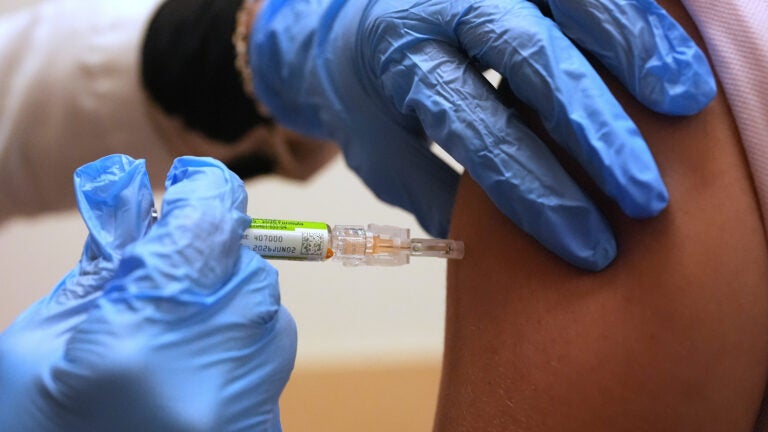
Gov. Maura Healey announced Wednesday that Massachusetts will not adopt the CDC’s newly updated childhood vaccination guidelines, instead issuing its own evidence-based recommendations through the state Department of Public Health.
The move follows U.S. Department of Health and Human Services Secretary Robert F. Kennedy Jr.’s directive to the CDC earlier this month to reduce the number of recommended routine childhood vaccines.
“Secretary Kennedy’s rollback of long-standing federal vaccine recommendations creates confusion for parents and providers and erodes trust,” Healey said in a statement. “Our message to families is simple: we will continue to stand behind science and preserve access to the vaccines children need to stay healthy.”
On Jan. 5, the acting director of the CDC signed a decision to reduce the number of vaccines routinely recommended for all U.S. children.
Several long-standing childhood vaccines, including those for hepatitis A and B, influenza, rotavirus, COVID-19, meningococcal disease, and respiratory syncytial virus (RSV), were removed from the routine recommendations and shifted to only children deemed “high-risk.”
“The decision to change CDC’s childhood immunization schedule is reckless and deeply dangerous,” state Public Health Commissioner Robbie Goldstein said. “It replaces decades of transparent, evidence-based guidance with uncertainty.”
“At a time when we are seeing measles outbreaks across the country, a resurgence of whooping cough, and a severe respiratory virus season — including pediatric deaths from diseases that are preventable — this action puts families in an impossible position and places children and communities at risk,” he continued.
Healey signed legislation last year granting DPH the authority to set independent vaccine standards, regardless of federal recommendations.
The state’s new recommended schedule is endorsed by the American Academy of Pediatrics. The AAP has helped shape the U.S. childhood immunization schedule for decades.
The state DPH issued guidance to health care providers and community stakeholders, recommending that clinicians use the AAP immunization schedule.
The guidance states that clinicians should continue to comply with all state immunization recommendations, including school and camp entry requirements.
Massachusetts is a member of the Northeast Public Health Collaborative, a bipartisan, multi-state coalition of state and city health departments that coordinates on vaccine guidance and other health matters.
The collaborative is also recommending the AAP immunization schedule.
“The science is clear,” Goldstein said. “Vaccines remain one of the most effective tools we have to prevent serious illness and save lives.”

Get everything you need to know to start your day, delivered right to your inbox every morning.



To comment, please create a screen name in your profile
To comment, please verify your email address
Conversation
This discussion has ended. Please join elsewhere on Boston.com