
Sign up for the Today newsletter
Get everything you need to know to start your day, delivered right to your inbox every morning.
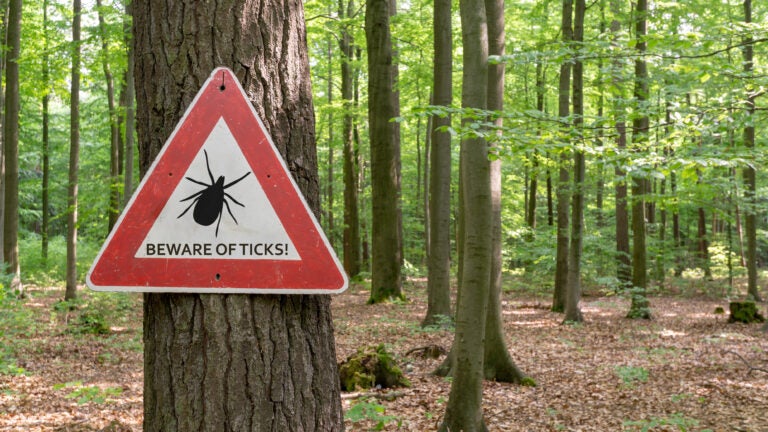
An invasive tick species entered Massachusetts in 2022 and is now known to carry an unfamiliar disease.
The Asian longhorn tick was first discovered in New Jersey in 2017, although it is believed to have arrived as early as 2010, and has been found in 24 states, according to Scientist Goudarz Molaei from the Connecticut Agricultural Experiment Station.
Now, Asian longhorn ticks in the United States are carrying the bacteria that causes an infection in humans called Ehrlichiosis.
Ehrlichiosis can cause fever, chills, headache, muscle aches, and sometimes upset stomach within two weeks of a tick bite, according to the Centers for Disease Control and Prevention or CDC.
Researchers, including Molaei, have found that the Asian longhorn ticks bite humans, “but it is not entirely clear to what extent this tick would infest humans,” he said.
The ticks, believed to have arrived here via livestock and other animals, acquire the disease-causing pathogen through their relationship with these animals.
“Whitetail deer [are] the reservoir host, meaning it is the source of the Ehrlichia pathogen,” giving the ticks the ability to maintain and amplify the pathogen before passing it on to a human when bitten, Molaei said.
Ehrlichiosis bacteria-carrying ticks are found in the “Ehrlichiosis Belt” spanning from Arkansas to New York and Connecticut, according to NBC10. Longhorn ticks in Massachusetts have not yet been found to carry Ehrlichiosis bacteria, Molaei said.

“It is expected that this tick would cover the entire United States and perhaps, Canada,” said Molaei.
The ticks pose a “significant” public health threat to humans because of their unique ability to clone themselves and create widespread colonies, according to Molaei.
The risk to humans is extending as “these ticks are around almost year-round” and are not hibernating due to climate change, causing shorter winter months, said Molaei.
A Connecticut beach is closed until next summer due to the presence of invasive ticks, including the longhorn ticks, according to NBC10.
In 2000, the CDC reported a total of 200 Ehrlichiosis cases nationwide, but in 2019, those numbers rose to 2,093 cases, though they have lowered some since.
To prevent contracting Ehrlichiosis and other tick-borne illnesses, prevent contact with ticks by checking yourself and your pets for ticks after time outdoors and wearing bug repellent, long sleeves, and pants.
Get everything you need to know to start your day, delivered right to your inbox every morning.




To comment, please create a screen name in your profile
To comment, please verify your email address
Conversation
This discussion has ended. Please join elsewhere on Boston.com