
Sign up for the Today newsletter
Get everything you need to know to start your day, delivered right to your inbox every morning.
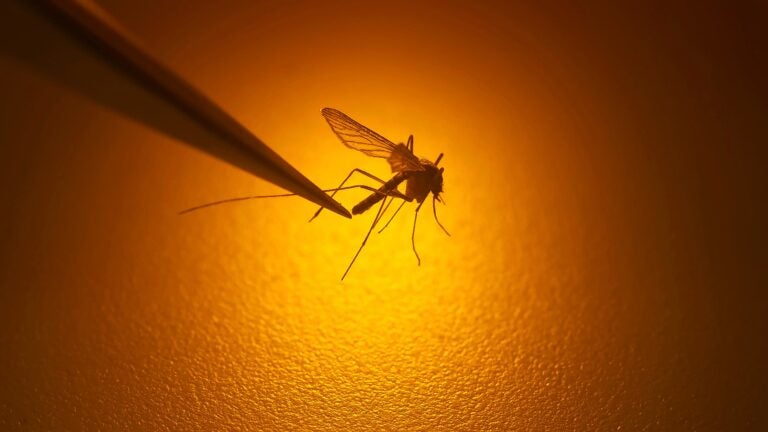
As summer heats up, so does the risk of mosquito-borne diseases. The Boston Public Health Commission announced Friday that two mosquito samples in Boston tested positive for West Nile virus.
The samples, from West Roxbury and Hyde Park, are the first to test positive for the virus in Boston this summer, the commission said in a press release.
West Nile Virus is a disease carried by mosquitos that can be imparted to humans through mosquito bites. The risk of transmission is low, the commission said.
There were 19 cases reported in 2024 and six cases in 2023, according to the Massachusetts Department of Public Health.
While there are no confirmed human cases in Boston at this time, residents should take caution and avoid mosquito bites, BPHC said.
“It is important to drain standing water where mosquitoes thrive, and wear insect repellent and long sleeves during outdoor activities between dusk and dawn when mosquitoes are most active,” Dr. Bisola Ojikutu, Boston’s Commissioner of Public Health, said in the release.
The commission recommended residents avoid spending extended periods of time outside from dusk to dawn and use EPA-approved insect repellents, such as DEET, picaridin, IR3535, or oil of lemon eucalyptus.
It encouraged residents to check that screens in windows and doors do not have any holes and are secured properly.
With the abundance of rain in Boston, the commission also recommended residents “regularly empty out and clean” anything that can hold rainwater, to prevent mosquitos from breeding there.
Most people infected with West Nile virus do not experience any symptoms and recover without medical assistance, BPHC said.
However, in certain circumstances, people may experience “headache, fever, nausea, vomiting, diarrhea, rash, and body aches” which can range from a few days to several weeks.
Those older than 50 years old are at higher risk for more serious symptoms, including lack of coordination, muscle paralysis or weakness, or confusion, the commission said.
“BPHC will continue to work with our partners at the State to monitor this situation, and keep residents informed and prepared,” Ojikutu said.
More information about West Nile virus can be found here.
Get everything you need to know to start your day, delivered right to your inbox every morning.





To comment, please create a screen name in your profile
To comment, please verify your email address
Conversation
This discussion has ended. Please join elsewhere on Boston.com