
Sign up for the Today newsletter
Get everything you need to know to start your day, delivered right to your inbox every morning.
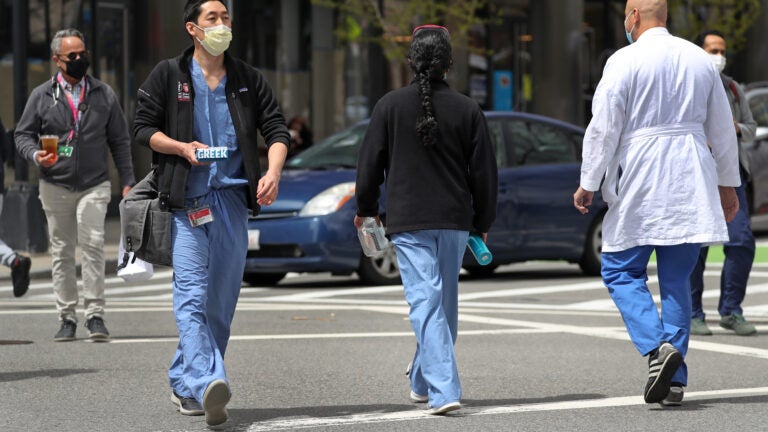
Five years after the outbreak of COVID-19 sent the world scrambling, global health leaders say another pandemic isn’t a matter of if, but when.
Is Greater Boston ready? It’s complicated, local health experts say, but the COVID-19 pandemic offers something of a roadmap.
“I think that one of the important things that we learned is that we weren’t prepared for a pandemic, an emergency event of that magnitude, unfortunately,” said Dr. Bisola Ojikutu, Boston’s public health commissioner. “And that we needed to grow and strengthen our public health infrastructure and also our direct service provision.”
While it’s difficult to say how the region might fare in another pandemic without knowing the particular pathogen, “we’re more prepared than we were,” Ojikutu said. She pointed to efforts to expand public health capacity, community outreach, and data-sharing.
“I think that there has been, over time, if you just look across the country, just a low investment in public health,” Ojikutu said. “And I think that that is one of the main points that came out of this, is that we truly need to build our capacity and our ability to be prepared if something similar happens in the future.”
Dr. Paul Biddinger, Mass General Brigham’s chief preparedness and continuity officer, said there are strengths and weaknesses in today’s health care infrastructure.
“From my perspective, I think if you look at where we are in our pandemic preparedness currently, it’s really a mixed picture,” he said. “We have learned an awful lot of lessons.”
On the one hand, leaders in medicine and public health fostered collaboration during the COVID-19 pandemic, arranging for testing sites, expanding hospital capacity, and fast-tracking effective vaccines and treatments.
“We’ve never developed a vaccine for a pandemic in less than four years previously, and then with the mRNA vaccines and other technologies, we did in less than one, which I think is absolutely extraordinary,” Biddinger noted.
Through it all, health care workers toiled “tirelessly and bravely,” said Dr. Shira Doron, chief infection control officer for Tufts Medicine and a hospital epidemiologist at Tufts Medical Center.
“We learned that we can do really hard things,” she said. “We learned from our successes as much as we learned from our failures.”
“The overarching theme in terms of what we could have and should have done better is that we had been preparing for a pandemic for decades. We knew that we needed to prepare, we had been preparing, we had a plan, and we didn’t follow it,” Doron said.
A key part of that plan, she said, was keeping some semblance of normalcy in day-to-day life.
“The importance of keeping children in school, the importance of balancing disease prevention against the harms of shutting down people’s businesses, livelihoods, lives, social fabric,” Doron explained. “We really abandoned … those critical aspects of society for way too long.”
According to Biddinger, one of the most important lessons for hospitals was the need to balance surge activities — creating new intensive care beds, for example — with ongoing medical care. Early in the pandemic, hospitals canceled many non-essential appointments and procedures en masse.
“I think for subsequent waves and on an ongoing basis, we’re really more dynamic in how we try and balance the need to make sure we’re taking care of pandemic patients, but … also taking care of other patients,” Biddinger said.
He said it’s encouraging to know the health care system can “do big things really quickly,” though he noted the system now faces some serious headwinds.
“Unfortunately, we know that we’re in a tougher place with the health care system now than we were even before the pandemic,” Biddinger said. “We are more crowded as a health care system than we were before the pandemic. There is more strain on capacity.”
The health care supply chain also remains vulnerable with relatively little surge capacity, he added.
Another lasting takeaway from the response to the COVID-19 pandemic is the loss of trust in public health, according to Doron.
“How did we sort of lose that public trust? We lost it by not properly communicating uncertainty and we lost it by overstating certain things,” Doron asserted. For example, she said, COVID vaccines’ efficacy needed to be more clearly explained to the public.
“We needed to be more nimble as things were changing and be more honest and transparent about what those changes meant,” Doron added.
Overcoming that skepticism is easier said than done.
“Five years, in many ways, is the blink of an eye,” Doron said. “What I’m seeing, what I’m hearing on this sort of fifth-year anniversary is still a lot of anger about some of the things that happened.”
She said public health leaders need to prioritize making sure people feel some sense of control over their lives when it comes to taking precautions.
“I really think we have to figure out how to get to a place where we acknowledge that whatever the infectious disease is, there are goals beyond eradicating it and that we balance those goals with the many other priorities that people have,” Doron said.
As Biddinger noted, “skepticism is both a challenge and an opportunity.” He said health leaders need to continue figuring out how to communicate risk and “respond to changing science faster than we did during the response to the pandemic.”
“Certainly in a pandemic, it’s not possible to know all the facts at the beginning,” Biddinger acknowledged. “That’s why we have to do good science. That’s why we have to do good research. But then as the data emerges, we have to act on the changing science and data and communicate that effectively to the public so they understand why things are changing and why we’ll adapt our response.”

As Greater Boston shores up its pandemic preparedness, federal uncertainty weighs heavily on some parts of the health care system. President Donald Trump has proposed funding cuts to the National Institutes of Health and Medicaid, and Robert F. Kennedy Jr., the sitting U.S. secretary of health and human services, is a notable vaccine skeptic.
“We have the expertise [to respond to another pandemic],” Doron said. “We have the knowledge. We have the protocols. We have the infrastructure. What I am most concerned about is, … will we have the funding and resources? Will the federal government continue to fund pandemic preparedness to the extent that it needs to be funded to quickly respond to the next threat?”
While Ojikutu said Boston’s public health leaders are concerned about the Trump administration’s proposed funding cuts, she noted the Boston Public Health Commission is in a stronger position because a lot of its work is funded directly through the city.
“So we feel confident as an institution that we are stable and we will be able to continue our work and continue to build and strengthen our infrastructure in preparation for any future events or emergencies,” Ojikutu said.
According to Biddinger, the health care system will do its best to adapt to whatever comes next.
“I think public health and medical professionals have to always work in the system that they’re in,” he said. “They have to use the resources that are available to them. They have to adapt to what the population is expecting and how they communicate.”
Meanwhile, lessons from the COVID-19 pandemic loom large as experts plan ahead for the next public health crisis — whenever that may be.
“As we’re at the fifth anniversary of the beginning of the COVID pandemic, people should know that there are a lot of folks trying to make sure we capture all of the lessons that have come out of this pandemic and really change how we respond going forward to make sure we’re effective,” Biddinger said.

Get everything you need to know to start your day, delivered right to your inbox every morning.




To comment, please create a screen name in your profile
To comment, please verify your email address
Conversation
This discussion has ended. Please join elsewhere on Boston.com