
Sign up for the Today newsletter
Get everything you need to know to start your day, delivered right to your inbox every morning.

Two Canada geese found dead on UMass Amherst’s campus have tested positive for bird flu, the university confirmed this week. The positive tests come as state and local authorities investigate a separate discovery of dead birds at a lake in Taunton.
The Massachusetts Department of Agricultural Resources determined the geese found at UMass Amherst had highly pathogenic avian influenza, or H5N1 — the first known positives on the university’s flagship campus, a UMass spokesperson said.
“Out of an abundance of caution, the university has informed town officials as well as faculty who may interact with animals to take proactive measures to reduce the risk of transmission to themselves or other animals,” the spokesperson said. “The university also has placed signs near the Campus Pond warning visitors to avoid feeding or touching geese.”
Sick or dead birds found on campus can be reported to UMass Environmental Health and Safety at 413 545-2682.
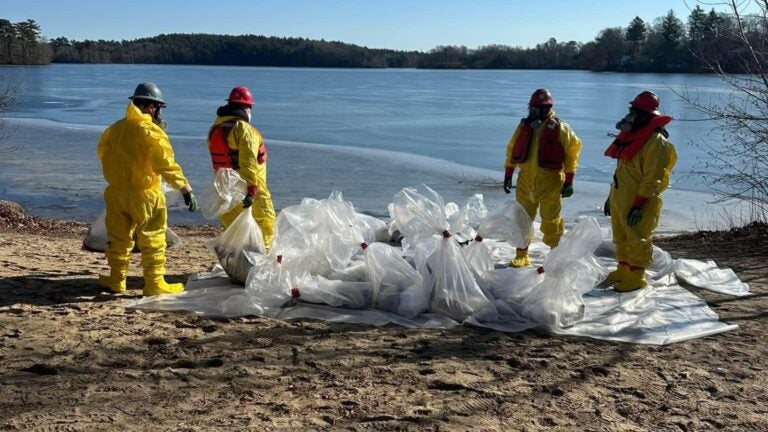
State officials said over the weekend they suspect bird flu is to blame for the deaths of more than 60 Canada geese, swans, and ducks found dead at Billington Sea in Plymouth. Smaller outbreaks of suspected bird flu have been reported in other parts of the state in recent weeks, according to a news release from the Executive Office of Energy and Environmental Affairs.
In Taunton, a resident who lives on Lake Sabbatia reported a sighting of dead Canada geese to local officials on Sunday, Police Chief Edward Walsh said in a statement.
“I personally observed 4 or so dead birds at the lake on Sunday the 19th and Monday the 20th,” Walsh added. “We believe that number has risen to 8-9 birds now.”
Mayor Shaunna O’Connell said her office is working closely with other city departments to address the matter and keep the community informed.
“We are aware of other municipalities dealing with similar issues with wildlife and we have been keeping a close watch,” O’Connell said in a statement. “When we received information that there were affected birds on Lake Sabbatia this past Sunday, our team moved quickly to verify the report, notify all of our internal stakeholders and initiate an investigation through the Environmental Police and MassWildlife.”
A spokesperson for MassWildlife, the state’s Division of Fisheries and Wildlife, said test results for the Taunton birds aren’t yet available.
“Officials are responding quickly to collect, test, and safely dispose of dead birds as they are reported to us,” the spokesperson said, adding that prompt reporting of sick and dead birds helps expedite testing and diagnosis.
Taunton Board of Health Director Danielle Gurgel advised community members to report any sightings to the state and include the number of sick or dead birds, the location, and one or two photos.
“The public should strictly avoid handling any sick or dead birds or other animals,” Gurgel added. “Pets should always be kept away from wildlife.”
Bird flu can infect both wild and domesticated birds, and raptors, waterfowl, and other aquatic birds are most at risk, state officials have said. While bird flu rarely infects humans, recent cases among U.S. dairy and poultry workers have stoked concerns of a more widespread outbreak.

Get everything you need to know to start your day, delivered right to your inbox every morning.





To comment, please create a screen name in your profile
To comment, please verify your email address
Conversation
This discussion has ended. Please join elsewhere on Boston.com