
Sign up for the Today newsletter
Get everything you need to know to start your day, delivered right to your inbox every morning.
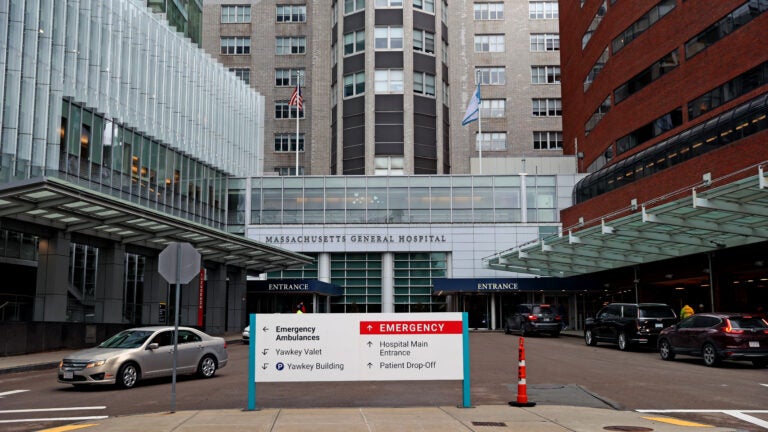
Despite the state’s sterling reputation as a national health care leader, residents across Massachusetts are still struggling to find medical care. A shortage of primary care physicians is particularly alarming. At the same time, experienced doctors who have practiced in other countries are being hindered in their attempts to continue helping patients here.
Tucked inside the major economic development bill recently signed by Gov. Maura Healey is a piece of legislation that will ideally address both problems.
Once implemented, the Physician Pathways Act will create a new, streamlined pathway for experienced internationally trained physicians (ITPs) to get fully licensed in Massachusetts. That path will require at least three years of practice at healthcare facilities that provide care for rural and underserved communities.
Massachusetts has the highest physician-to-population ratio in the country. However, the distribution of those doctors is not quite even. Although it contains just over 11% of the state’s population, almost 40% of physicians in Massachusetts were practicing in Suffolk County as of 2016, according to a Department of Public Health report.
In 2021, just under 34% of residents reported that they had difficulty obtaining necessary healthcare, an increase from 2019. At the same time, more than 34% of residents who had visited an emergency room recently said that their most recent visit could have been avoided if a general doctor’s appointment had been available to them in time, according to data from Massachusetts Health Quality Partners and the Center for Health Information and Analysis.
A lack of opportunities for professional development, lower pay, and poor working conditions are largely to blame for the lack of primary care doctors, according to the DPH report. An increasing number of these doctors are over the age of 60, nearing retirement.
ITPs can fill these gaps, but they have been routinely underemployed in Massachusetts. Before now, established physicians who often had years of experience practicing in other countries had to repeat their postgraduate clinical training, or residencies. Forced to compete with recent medical school graduates for a set number of slots, many ITPs were unable to secure residencies.
The system itself was designed for recent graduates, not ITPs, according to Amy Grunder, director of legislative affairs for the Massachusetts Immigrant and Refugee Advocacy Coalition.
“Ironically, the more experience you have as a physician, and the further out you are from your graduation date, the less likely you are to get a residency,” she said.
Many ITPs are in the country with legal authorization to work and an eagerness to continue practicing medicine, Grunder said. They spend significant amounts of time and money to prepare for and take the U.S. Medical Licensing Examination, only to find out when they start applying for residencies how limited the number of open spots are.
“Because the process is not at all transparent, people will often go through this whole process of preparing for these exams — including paying to prepare for the exams — and then taking the exams only to find out at the end that they can’t practice here,” Grunder said. “It’s incredibly frustrating.”
Grunder’s organization, MIRA, has been working to get legislation like the Physician Pathways Act passed since at least 2014, she said. The framework for the final bill was laid out in the DPH report, released in 2022. It allows qualified ITPs to be issued a renewable one-year license to practice in a mentorship program at certain healthcare facilities.
Afterwards, the ITP would be eligible for a renewable two-year license to practice in areas and specialties that are facing shortages. In total, after those three to six years, the ITP would be fully licensed and able to practice wherever they want.
In 2023, Massachusetts became the first state where a piece of legislation was filed to provide permanent licensure by removing the residency requirement for experienced ITPs, Grunder said. Since then, however, nine other states have already passed similar measures. While she expects other states to continue enacting legislation like this, Grunder said that Massachusetts will begin to attract more and more highly skilled ITPs in the meantime.
“We will attract physicians that are living in other states. They’re going to come where the opportunities are,” she said.
With promises of mass deportation and a sustained campaign of dehumanizing language aimed at immigrants, the incoming Trump administration could upend many aspects of life for immigrants across the country. But Grunder does not expect the implementation of the Physician Pathway Act to be affected.
“I just can’t imagine … I suppose nothing’s beyond imagination, but I really am not concerned about this program,” she said. “These are not the most vulnerable immigrants. They’re here with permission, they have work authorization. I mean, other than the way that all immigrants are going to be experiencing these attacks. The narrative is pretty harmful right now.”
Get everything you need to know to start your day, delivered right to your inbox every morning.





To comment, please create a screen name in your profile
To comment, please verify your email address
Conversation
This discussion has ended. Please join elsewhere on Boston.com