
Extra News Alerts
Get breaking updates as they happen.
PLYMOUTH, Mass. — Sue Ryan, who lives in Plymouth, Massachusetts, is taking no chances.
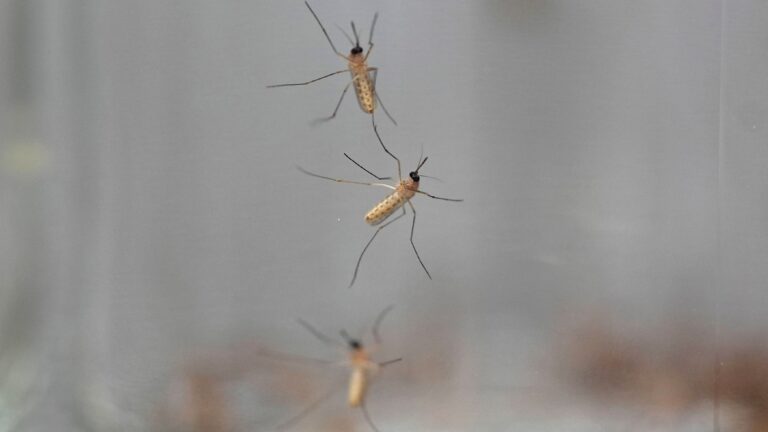
Plymouth is one of 10 communities in Massachusetts that health officials consider to be at high or critical risk from eastern equine encephalitis, a rare but dangerous mosquito-borne disease that killed a 41-year-old man in New Hampshire this month. And Ryan is among those who have adjusted their routines accordingly.
“I’ve changed everything,” Ryan, 61, said Wednesday morning as she visited a playground with her two grown daughters and three grandchildren. “I don’t go out on my patio after dark. I’ve stopped gardening. I will be obeying the rules until further notice.”
Plymouth’s parks, swimming ponds and playgrounds still thrummed with life Wednesday. But Ryan was hardly the only resident who said she had begun taking precautions and heeding the advice of public health officials to stay indoors from dusk until dawn, when mosquitoes are most active.
The virus cannot be passed from person to person. Most people who are bitten by an infected mosquito never even become ill. But for the few who do, the virus can be very serious, leading to brain inflammation, neurological damage, coma or death. There is no treatment.
Between 2003 and 2023, Massachusetts reported a total of 41 human cases of the virus, more than any other state. Michigan and Florida, with 22 and 24 cases, ranked second and third, according to data from the Centers for Disease Control and Prevention provided by the Massachusetts Department of Public Health.
Southeastern Massachusetts, in particular, has seen its share of severe cases over the years; an outbreak there in 1938 killed 25 people, most of them children. More recently, in August 2006, a 9-year-old boy in Middleborough died of the virus, falling into a coma one day after coming down with a headache and a fever.

Few who fall severely ill survive; those who do often suffer lasting health effects. Derek Ashworth is the rare exception. Infected with the virus during the same Massachusetts outbreak that killed the 9-year-old in 2006, Ashworth, then 23, was stricken by seizures, then fell into a coma for six days. Now 41, he recovered with no permanent damage.
In an interview Wednesday, Ashworth, of Rochester, Massachusetts, said he takes reasonable precautions when outdoors and is vigilant about protecting his three young sons, but tries to raise awareness without instilling fear.
“This is nature; it’s the way it is, and we have to adapt and learn to live with it,” he said. “I wouldn’t say cancel your plans, but be aware it’s out there.”
Like others interviewed, Ashworth said he has mixed feelings about the aerial spraying of pesticide that began in Plymouth and other high-risk communities this week. Some said they were more concerned about the spraying than about the threat of the virus.
Holly Crocker, 46, of Plymouth, said she felt unnerved Tuesday evening when she and her friend spotted a low-flying plane. “We don’t want to breathe it in,” she said.
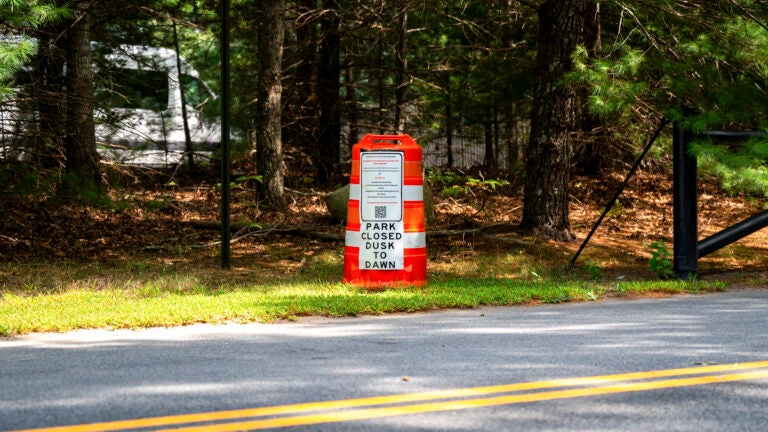
Others have bristled at the town’s decision to close parks and playing fields from dawn until dusk to discourage outdoor activities at night, saying the closures were uncomfortably reminiscent of government lockdowns and mask rules during the coronavirus pandemic.
“The main thing is, we haven’t even seen a case in Plymouth,” said Mike Pimental, 68, who grew up in the town but now spends part of the year in Florida. “And even if you get a case, it’s not a death sentence if a mosquito bites you.”
An announcement that high school football games in Plymouth would be moved to afternoons or weekends prompted pushback, including an online petition calling on the town to keep Friday night games on the schedule.
Kelsey Kincade, a school athletic director in neighboring Carver, said students there have been understanding of the schedule changes, an adaptability she attributed to their experience in the pandemic, when school sports were largely canceled.
“They’ve been through a lot the last few years,” she said, “and they understand the need to be flexible and that the important thing is that they can keep playing.”
To Pimental, though, the field closures and curfew recommendations are “a little reminder,” he said, standing beneath the tall pines at Morton Park in Plymouth, “that the government sometimes reaches a little too far.”
Even so, he acknowledged that he had pulled on a coat when he went out to walk his dog the previous evening. All the talk of risk, he said, had “put it in my mind.”
This article originally appeared in The New York Times.
Get breaking updates as they happen.



To comment, please create a screen name in your profile
To comment, please verify your email address
Conversation
This discussion has ended. Please join elsewhere on Boston.com