
Sign up for the Today newsletter
Get everything you need to know to start your day, delivered right to your inbox every morning.
State health officials have confirmed a second human case of eastern equine encephalitis (EEE), announcing Thursday that a woman in her 30s was exposed to the mosquito-borne virus in Plymouth County.
The Massachusetts Department of Public Health said in a news release that both the woman and a horse were exposed to EEE in an area of Plymouth County that was aerial sprayed Tuesday night, though both became infected before the area was sprayed. Thursday’s announcement also marks the state’s second confirmed case of EEE in a horse this year.
“This evidence of the spread of EEE to a person and a horse in Plymouth County before aerial spraying confirms risk in the area,” Public Health Commissioner Dr. Robbie Goldstein said in a statement. “We expect that the aerial spraying will help prevent risk for EEE from continuing to escalate in the area, but it does not eliminate it completely. We are asking people to be consistent about taking steps to prevent mosquito bites.”
Earlier this month, state health officials announced that a man in his 80s was exposed to the virus in Worcester County — Massachusetts’s first confirmed case of EEE since 2020. New Hampshire health officials also announced Tuesday that an adult from Hampstead died from EEE.
While rare, the virus can cause severe illness; six of the 12 people who contracted EEE in Massachusetts in 2019 died, followed by five cases and one fatality in 2020, according to a fact sheet offered by state health officials.
“There is no treatment for EEE,” the fact sheet notes. “In Massachusetts, about half of the people identified with EEE died from the infection. People who survive this disease will often be permanently disabled. Few people recover completely.”
The first symptoms of EEE include a fever, stiff neck, headache, and lack of energy, according to the fact sheet.
A live EEE risk map posted to Mass.gov shows several communities in eastern Massachusetts with risk levels ranging from moderate to critical, though much of Greater Boston remains at low or remote risk. Sutton, Douglas, Webster, and Oxford are at critical risk for EEE, according to the map. Middleborough, Carver, Plymouth, Dudley, Uxbridge, and Northbridge are all considered high risk.
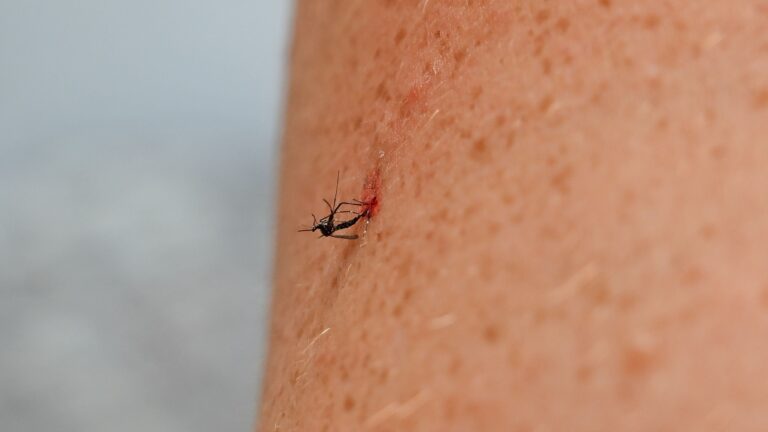
State health officials are advising residents to take precautionary measures to keep mosquitos at bay, including using insect repellent, rescheduling outdoor activities to avoid peak mosquito hours between dusk and dawn, draining standing water, and installing or repairing screens on windows and doors.
“EEE risk does not end on Labor Day,” State Epidemiologist Dr. Catherine M. Brown said in a statement.

Get everything you need to know to start your day, delivered right to your inbox every morning.



To comment, please create a screen name in your profile
To comment, please verify your email address
Conversation
This discussion has ended. Please join elsewhere on Boston.com