
Newsletter Signup
Stay up to date on all the latest news from Boston.com

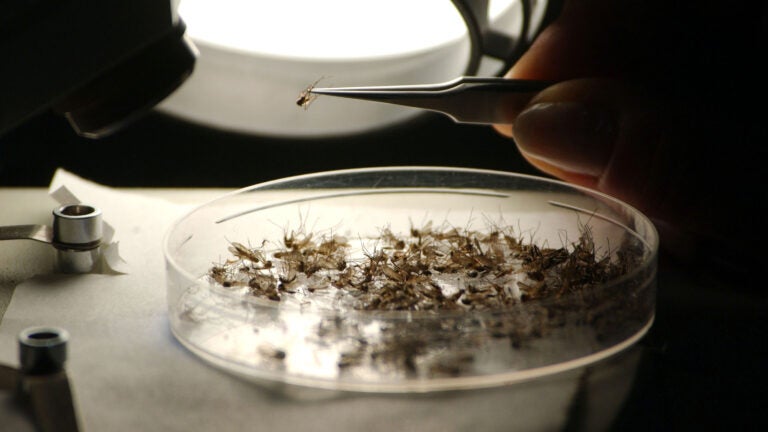
The Massachusetts Department of Public Health is reporting the first Eastern equine encephalitis (EEE) virus detected in mosquitoes in the state this year.
EEE was confirmed in mosquito samples collected on June 30 in Carver. The state has not found EEE cases in humans or animals yet this year.
The findings, reported on July 3, increase the risk level of EEE to moderate in the communities of Carver, Kingston, Middleborough, Plymouth, Plympton and Wareham.
EEE is a rare but serious and potentially fatal disease that can affect people of all ages. EEE is spread to humans through the bite of an infected mosquito.
There were 12 cases in people in Massachusetts in 2019, with six deaths. In 2020, there were five cases and one death. No cases were found in people in 2021, 2022, or 2023.
“EEE activity in Massachusetts tends to occur in outbreak cycles,” said state epidemiologist Dr. Catherine Brown, in a statement. “When EEE is found in mosquitoes like this at the start of the season, the risk may increase throughout the rest of the summer. We rely on our mosquito surveillance program to monitor for the presence of virus to let people know when and where the risk is occurring.”
The announcement of EEE follows the announcement of West Nile virus detected in mosquitoes earlier this week.
“We are asking everyone to take the necessary precautions to prevent mosquito bites,” said Public Health Commissioner Robbie Goldstein in a statement.

Stay up to date on all the latest news from Boston.com



To comment, please create a screen name in your profile
To comment, please verify your email address
Conversation
This discussion has ended. Please join elsewhere on Boston.com