
Newsletter Signup
Stay up to date on all the latest news from Boston.com
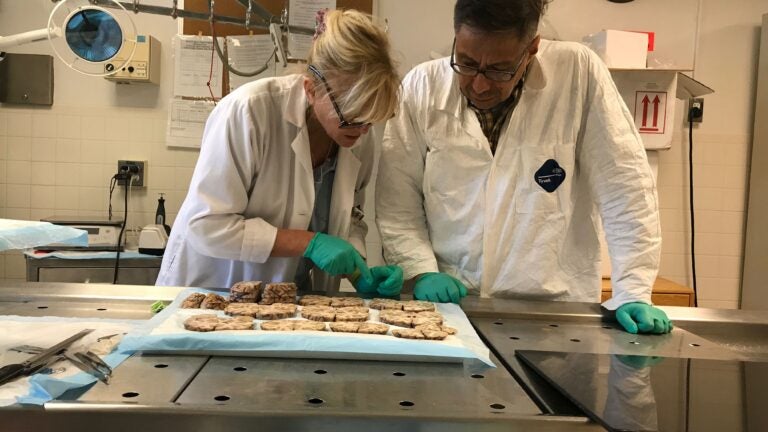
Researchers at Boston University have linked certain cognitive and behavioral symptoms in people to chronic traumatic encephalopathy, or CTE, moving experts one step closer to being able to diagnose and treat the disease during life.
CTE, a neurodegenerative disease that is linked to high-contact sports and frequent hits to the head, is characterized by a buildup of a misfolded protein known as p-tau in different areas of the brain. For decades, the disease has only been officially diagnosed through brain tissue analysis after a person’s death.
In the new study, published Feb. 6 in Molecular Neurodegeneration Magazine and funded in part by the federal Departments of Defense and Veterans Affairs, researchers correlate the density and location of protein buildup in the brain with behavioral, cognitive, and psychiatric symptoms.
The study relied on loved ones of 364 brain donors with autopsy-confirmed CTE — 91.2% of which were American football players, according to the study — to measure the donors’ perceived cognition, activities of daily living, neurobehavioral dysregulation, aggression, depression, and apathy, among other behaviors. The “informants,” as researchers called them, had known donors for an average of 42 years, the study said.
Researchers found that as the severity of protein buildup — and therefore CTE severity — climbed, informants reported worse outcomes on cognitive and functional scales. Varying levels of protein buildup resulted in similar scores on scales of behavioral dysregulation, depression, and apathy, according to the study.
In addition to measuring outcomes based on the density of p-tau buildup, the study also explored 11 different regions of the brain for correlations. Researchers found that buildup of the protein at the front of the brain was the strongest predictor of symptoms in donors.
The new study partly relies on previous research that developed a clinical criteria for traumatic encephalopathy syndrome, known as TES, a clinical disorder associated with CTE. Symptoms of TES include trouble thinking, memory loss, impulsive behavior, and mood disorders, but are not approved for diagnostic use on patients.
Researchers hope their findings will confirm what previous research has found and can “inform future clinical research diagnostic criteria and potential avenues for intervention,” the study says.
“For the first time, we were able to show a clear dose-response relationship between the amount of CTE pathology and the severity of cognitive and functional symptoms, including problems with memory and executive function,” said Jesse Mez, a coauthor of the study, in a statement.
Despite the success of the study, researchers said relying on informants to gather information about donors’ cognitive skills was less than ideal. For example, they found that some brain regions with protein accumulation, such as the hippocampus, had no associations with cognitive function, which contradicted previous research.
But factors such as memory decline and impaired attention are hard to assess using people other than the individual themselves, researchers wrote in the study.
“Although this study benefited from gold standard pathology, it lacked prospective, objective clinical assessments, introducing potential measurement error, and recall bias,” researchers wrote.
“A limitation of this study is the use of informants to describe the different symptoms their loved ones experienced, said coathor Michael Alosco in a statement. “This can offer valuable information, but we need to move toward a model where we objectively assess individuals during life and follow them until brain donation.”
Despite this, the study is a notable step toward diagnosing CTE during a person’s life, which will ultimately help experts with researching and finding treatments, Mez said.
“Diagnosis is crucial before we can test therapies,” he said. “With validated in-life diagnostic criteria, we will be able to design clinical trials for therapies.”
Stay up to date on all the latest news from Boston.com





To comment, please create a screen name in your profile
To comment, please verify your email address
Conversation
This discussion has ended. Please join elsewhere on Boston.com