
Newsletter Signup
Stay up to date on all the latest news from Boston.com
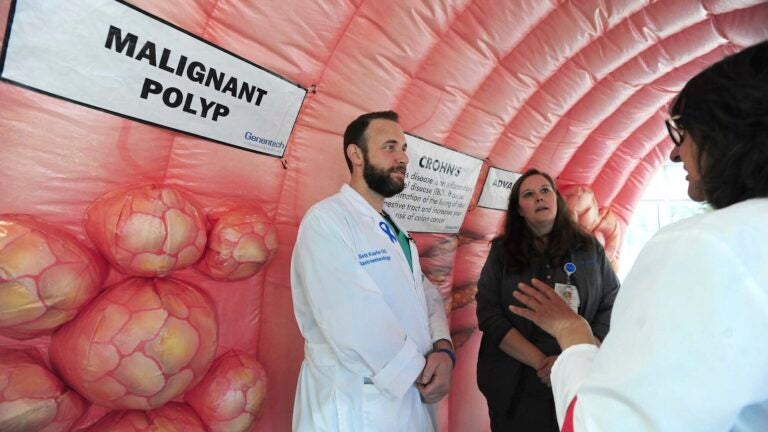
A recent policy change to Blue Cross Blue Shield of Massachusetts (BCBSMA) insurance introduces stricter rules on qualifying for general anesthesia during colonoscopy procedures.
The decision is facing backlash from state gastroenterologists who claim that not using general anesthesia makes the procedure more difficult and discourages patients from receiving preventative care.
A colonoscopy is a screening test that detects pre-cancer or colon cancer, and the earlier you get this procedure, the better. The American Cancer Society ranks colon cancer as the third most common form of cancer — and the third most deadly. Men and women over age 45 should get screenings at least every decade to catch the formation of polyps, unusual growths, or other signs of cancer in the colon, the ACS says.
Traditionally, this procedure takes about 30 minutes and is performed with the patient fully under anesthesia.
Now, as of Jan. 1, BCBSMA’s policy 154 states that general anesthesia is no longer “medically necessary” for some colonoscopy procedures. Those considered class I or II patients — further described as BMI under 35, light smokers, and social drinkers — may not receive deep sedation unless it is deemed clinically appropriate.
The policy also extends to other procedures including endoscopic, bronchoscopic, or interventional pain procedures.
Some other major insurance carriers in Massachusetts, such as Tufts Health Plan and United HealthCare, continue to fully cover general anesthesia for these procedures, according to representatives from those companies.
In a letter to Dr. Sandhya Rao, Chief Medical Officer of BCBSMA, various medical organizations stated that the new policy only adds more barriers to already apprehensive patients.
“The reality is that BCBSMA’s policy will result in delays or even abandonment of medically necessary procedures due to patient decisions,” the letter stated.
Following receipt of the letter last year, BCBSMA postponed the implementation of the new policy, originally scheduled for July of 2023, to Jan. 1 of this year. However, an advisory from BCBSMA “for anesthesiologists and gastroenterologists caring for our members” announcing the postponement noted that “moderate sedation is comparably safe and more cost effective than monitored anesthesia care.”
“Over the past year, we’ve met with providers and representatives from professional societies to hear their concerns,” Dr. Rao told Boston.com via a written statement. “We used their feedback to expand the list of conditions for which deep sedation will be deemed clinically necessary. Any Blue Cross member who clinically needs this form of deep sedation will get it.”
According to Rao, patients with chronic illnesses, conditions that warrant more frequent colonoscopies, a previous failed procedure, or a phobia of medical procedures are just a few examples of those who could qualify for deep sedation.
Around 60% of procedures performed by endoscopists utilize Monitored Anesthesia Care (MAC), according to a letter from various endoscopy organizations. The practice of using MAC has become so common in the field that many recently trained endoscopists lack the experience to administer moderate sedation.
In May of 2023 Lauren Bleich, president of the Massachusetts Gastroenterology Association, reached out to members of the organization to side with them in opposition to policy 154. Bleich listed many concerns including the legalization of marijuana, which, if used frequently, means more sedation is required.
The main concern, however, is failed procedures. Patients may stop the procedure due to pain or discomfort, and inadequate sedation can lead to postoperative nausea.
When detected, survival rates for colon cancer are currently at 90%. But inequities within the medical field mean Black Americans are most impacted by colon cancer. Black males specifically have a mortality rate of 30% and an incidence rate of almost 64%, according to the American Cancer Society.
Colorectal cancer death rates declined by 3% in the last decade. Decreasing the accessibility of the colonoscopy procedure may undo some of the work that has been done, the gerontologists argue.
Note: This story has been corrected to remove a reference to patients paying separately for full sedation, which is not allowed per BCBSMA’s contracts with providers.
Stay up to date on all the latest news from Boston.com





To comment, please create a screen name in your profile
To comment, please verify your email address
Conversation
This discussion has ended. Please join elsewhere on Boston.com