
Newsletter Signup
Stay up to date on all the latest news from Boston.com

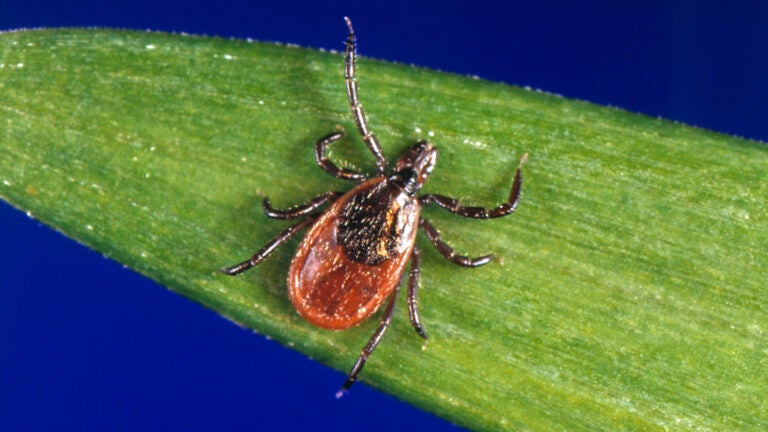
Once confined to the southern U.S., the lone star tick has become increasingly prevalent in the north. And doctors are suggesting residents exercise caution as one bite from the tick can make a person allergic to red meat.
The roughly quarter-inch tick, which got its name from the silver spot on its back, is known to be highly aggressive — especially to humans — and can cause a delayed allergic reaction to red meat and red meat products, a condition known as alpha-gal syndrome. According to the Massachusetts Department of Public Health, the population of lone star ticks has gradually increased in the state.
“It’s kind of a new situation because lone star ticks are not initially found in the Cape,” Dr. Ana Paula Oppenheimer, an infectious disease expert at Cape Cod Healthcare, told Boston.com “However, with the warming climate, we know that they have been expanding their territory, initially from the Texas area and surrounding states, but they have been expanding everywhere.”
The reaction occurs when the tick, carrying a sugar molecule called alpha-gal, transmits the molecule to a victim. And while the transmission of the molecule doesn’t immediately result in any symptoms, upon the consumption of red meat, those bitten can break out in hives, begin to swell up, feel nauseous, and go into life-threatening anaphylaxis.
“So when they bite, they transmit in their saliva the alpha-gal molecule, which is a carbohydrate made of two double sugars that we, humans, do not have,” Oppenheimer said. “So when that molecule gets inoculated into a person’s blood, the immune system will react to it, and makes antibodies.”
“So now, we have these antibodies against this molecule,” she added. “When later on, we eat red meat … since [people] have the antibodies that we acquired when we were bitten by the tick, these antibodies will … react to it … a few hours after you actually have the red meat. So the reaction is an allergic reaction.”
The reaction, which occurs about two to eight hours after eating red meat, has no cure, according to Oppenheimer. People who have a reaction can eventually outgrow it and receive supportive care, such as antihistamines. They’re suggested to carry an EpiPen.
Oppenheimer said she has only seen one patient with the condition, but as the ticks populate the coast over the summer, it’s possible that more people will suffer from lone star tick bites.
In addition to the allergic reaction, the tick can transmit bacterial and viral diseases to victims, Oppenheimer said.
She recommends people use proper safety precautions in areas where ticks are likely to be present, like fields with tall grass and bushes.
Stay up to date on all the latest news from Boston.com





To comment, please create a screen name in your profile
To comment, please verify your email address
Conversation
This discussion has ended. Please join elsewhere on Boston.com