
Newsletter Signup
Stay up to date on all the latest news from Boston.com
Xylazine, an animal tranquilizer with the street name “tranq,” has been showing up in more and more of New England’s illicit street drugs, according to the Brandeis University Opioid Policy Research Collaborative.
It entered the market around two decades ago in Puerto Rico before cropping up in Pennsylvania in 2006. Now, xylazine and xylazine-laced opioids in particular are increasingly present in New England, the collaborative has found.
Around a third of New England’s illicit street drugs are being laced with the veterinary sedative, which for humans can cause serious sedation, reduced breathing, and in some cases lead to skin ulcers.
Joseph Friedman researches xylazine and said he thinks the Northeast will be the “epicenter” for its sale, particularly based on its history with the opioid epidemic. He called Massachusetts one of the “most affected parts of the country.”
“In some of the places where it’s arrived, it really takes over,” Freidman said. “That’s the only thing available.”
Massachusetts Drug Supply Data Stream testing found that in 2021, 31% of heroin and fentanyl was laced with xylazine, and in 2022, the number was similar at 28%. Boston Public Health Commission released an advisory in November, warning people to look out for the brownish-white powder.
Friedman said xylazine causes the typically very short-term effects of opioids to last longer and most people can tell the difference in the changing drug supply.
“They know something’s changing in the drugs that they’re being exposed to, but they don’t really understand what it is,” he said.
Kimberly Sue, an assistant professor of medicine and public health at Yale University School of Medicine, said health officials are trying to make the best decisions they can regarding xylazine, but little information is available.
“We are still trying to conduct more studies and understand more about this substance and its effects on humans,” she said, adding that proper research will likely take years.
However, she stressed that the drug “has been in the drug supply for a while,” so the goal right now is to get health professionals properly educated about the drug so they can provide proper treatment.
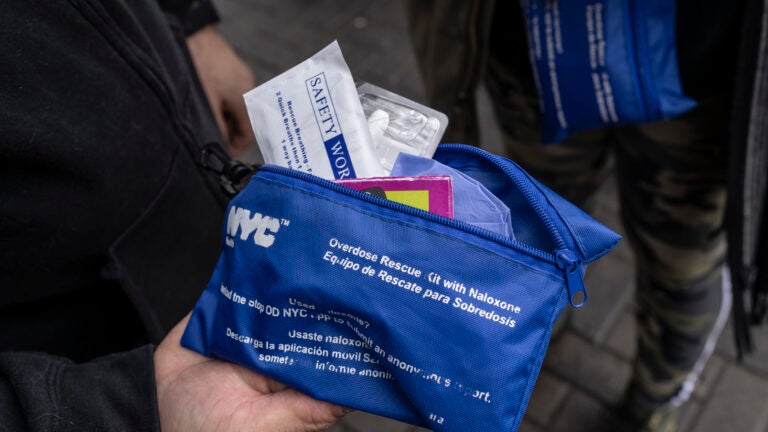
Naloxone – commonly referred to as Narcan – is recommended for overdose cases because it is still proven to reverse the effects of opioids. However, it will not reverse the sedation effects of xylazine.
The Food and Drug Administration has ruled that xylazine is only safe for animals, but the Drug Enforcement Administration hasn’t scheduled the drug — in the way that heroin has been classified as a Schedule 1 drug, etc. — meaning there are currently no controls on it.
Advocacy groups are working to learn more about the sedative.
“We need to make sure that our providers and frontline responders have the education, training, and awareness that they need to deal with this,” said Julie Burns, the president and CEO of RIZE Massachusetts, a non-profit helping to fund an end to the opioid epidemic.
Tapestry Health, which provides community-based care and harm reduction services to Western Massachusetts, has already put new training into action, said Director of Harm Reduction Liz Whynott.
“Our staff has been really, really good at educating themselves through training and then passing on this education to people,” she said.
Part of that education is making sure when people call for help with overdoses that they know to check if the person is breathing. Whynott said this is a crucial step with xylazine in particular because it may cause people to pass out, or their airway could become obstructed.
With xylazine’s presence in overdoses on the rise, Whynott said she thinks Tapestry’s “services are more important than ever.”
“We have that connection with a lot of people that aren’t accessing any other medical services,” she said.
Some states have issued public health notices about the drug, including Massachusetts and Pennsylvania, but Andrew Kolodny, a senior scientist and medical director at OPRC, said “the system really doesn’t work unless it’s on the federal government schedule.”
“It’s kind of like guns,” he said. “You can ban guns in one state but you [can] go across the border to get them from another.”
He’s currently working with Physicians for Responsible Opioid Prescribing to make this happen, and the American Veterinary Medical Association said in a Jan. 26 release that the DEA is already evaluating xylazine for scheduling.
In the meantime, Friedman said getting commercial test strips that can check for xylazine in drugs on the market is key. This way, people can go to a test center, see if it’s in their drugs, and respond accordingly.
Whynott said “the more education that people have, the more equipped they are to respond — particularly with overdoses — in the best way possible.”
Stay up to date on all the latest news from Boston.com





To comment, please create a screen name in your profile
To comment, please verify your email address
Conversation
This discussion has ended. Please join elsewhere on Boston.com