
Newsletter Signup
Stay up to date on all the latest news from Boston.com
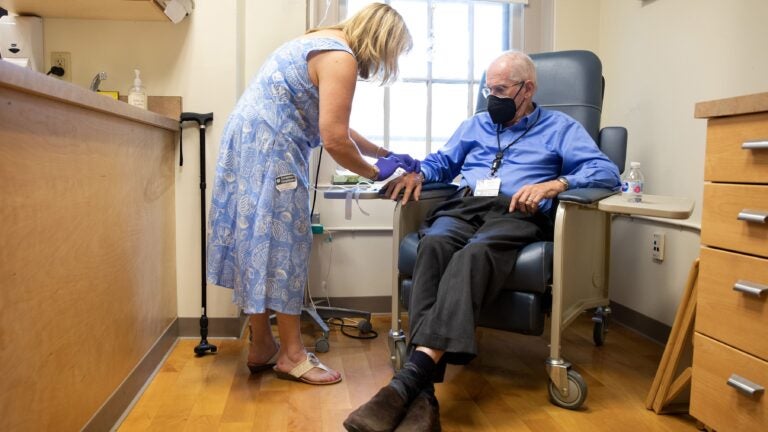
A landmark trial of a new nasal vaccine that could slow and possibly prevent the progression of Alzheimer’s disease by boosting the body’s immune system is about to begin at Brigham and Women’s Hospital.
The trial is a culmination of 20 years of research led by Dr. Howard L. Weiner co-director of the Ann Romney Center for Neurologic Diseases at Brigham, according to a statement from the hospital. He called this “a remarkable milestone.”
“If clinical trials in humans show that the vaccine is safe and effective, this could represent a nontoxic treatment for people with Alzheimer’s, and it could also be given early to help prevent Alzheimer’s in people at risk,” Weiner said in the statement.
One of the most common types of dementia, Alzheimer’s disease begins with mild memory loss, leading to challenges with carrying on a conversation and responding to the environment, according to the Centers for Disease Control and Prevention. The disease involves parts of the brain that controls thought, memory, and language
More than 6 million Americans currently live with Alzheimer’s and that number could double by 2050, according to a report by the Alzheimer’s Association. It is the fifth leading cause of death for adults age 65 years and older, according to the CDC.
The trial will involve 16 participants from the Ann Romney Center between the ages of 60 and 85, with early, symptomatic Alzheimer’s disease. They will receive two doses of the nasal vaccine one week apart, according to the hospital.
Participants will be given varying doses within six months, starting in early December, Weiner said in an interview with the Boston Globe. Researchers will determine the appropriate dose using blood tests, he said.
The vaccine uses Protollin, a new intranasal immunotherapy made of proteins derived from the outer membrane of certain bacteria. Though new, Protollin has been used safely in humans with other vaccines, according to the hospital.
Protollin is designed to activate white blood cells found in the lymph nodes on the sides and back of the neck to migrate to the brain and trigger clearance of beta amyloid plaques — one of the hallmarks of Alzheimer’s disease, according to the hospital.
“The immune system plays a very important role in all neurologic diseases,” said Weiner. “And it’s exciting that after 20 years of preclinical work, we can finally take a key step forward toward clinical translation and conduct this landmark first human trial.”
The primary objective of the trial’s first phase is to determine the safety, effectiveness, and tolerability of the nasal vaccine. The research team will also measure the effect of nasal Protollin on participants’ immune responses.
“For 20 years, there has been growing evidence that the immune system plays a key role in eliminating beta amyloid. This vaccine harnesses a novel arm of the immune system to treat [Alzheimer’s],” said Tanuja Chitnis, MD, professor of Neurology at Brigham and principal investigator of the trial.
Two companies based in China, I-Mab Biopharma (I-Mab) and Jiangsu Nhwa Pharmaceutical (NHWA), are responsible for the development, manufacturing, and commercialization of Protollin and are funding the trial.
“We are thrilled to see Protollin approved to advance into clinical trials after many years of pioneering work, and we are honored to contribute our expertise in the global effort to develop novel therapies for this devastating disease,” said Dr. Jingwu Zang, founder, chairman, and director of I-Mab.
Stay up to date on all the latest news from Boston.com



To comment, please create a screen name in your profile
To comment, please verify your email address
Conversation
This discussion has ended. Please join elsewhere on Boston.com