
Landmark study of schizophrenia gives ‘foothold’ to researchers
Scientists from Harvard Medical School, Boston Children’s Hospital, and the Broad Institute published a landmark study Wednesday that provides insight into the biology behind schizophrenia, The New York Timesreports.
“We’re all very excited and proud of this work,’’ Dr. Eric Lander, director of the Broad Institute, told the Times. “But I’m not ready to call it a victory until we have something that can help patients.’’
According to the Times, the findings of the study, published in Nature, won’t lead to new treatments any time soon, but the results have given researchers “their first biological handle’’ on the psychiatric disorder that affects more than two million Americans.
“This paper gives us a foothold, something we can work on, and that’s what we’ve been looking for now, for a long, long time,’’ David B. Goldstein, a professor of genetics at Columbia University, told the Times.
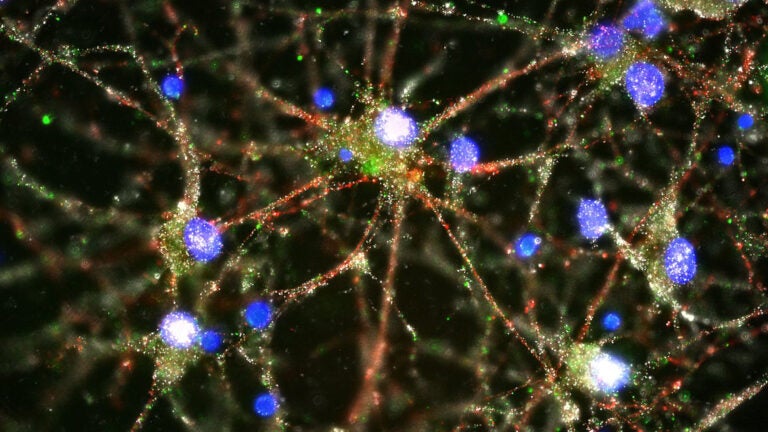
The Massachusetts scientists found that people are at a higher risk of developing schizophrenia if they carry genes that accelerate or intensify synaptic pruning, according to the Times. Synaptic pruning is a process in the brain in which extra neurons and synaptic connections are removed.
Read the full Times report here.





To comment, please create a screen name in your profile
To comment, please verify your email address
Conversation
This discussion has ended. Please join elsewhere on Boston.com