
Sign up for the Today newsletter
Get everything you need to know to start your day, delivered right to your inbox every morning.
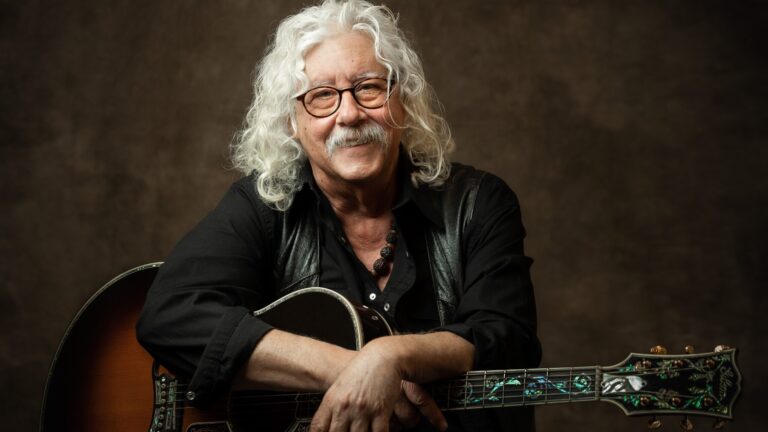
For the first time in years, Arlo Guthrie won’t have Thanksgiving dinner at a restaurant — half a mile from the railroad track or otherwise.
He’ll enjoy a Thanksgiving dinner that couldn’t be beat right at home.
“The last few years, we’ve been going out to all different kinds of restaurants,” his wife Marti Ladd Guthrie tells me in a phone interview from the couple’s winter home near Sebastian, Florida. “This year, I want to just cook at home — a small dinner for two — a little bit of all our favorite dishes. I’m so excited.”
“She’s a great cook,” Guthrie, 78, chimes in. “So whatever we’re doing here at the house is going to be really yummy.”
No word yet on who will take the garbage out.
Because it all started 60 Thanksgivings ago, that’s 60 years ago on Thanksgiving, when Guthrie and a friend went up to visit Alice at the restaurant. Alice didn’t live in the restaurant, she lived in the church nearby the restaurant, in the bell-tower, with her husband Ray and Fasha the dog.
What happened next on that fateful Thanksgiving Day 1965 in Western Mass. sparked Guthrie’s 1967 anti-war story-song. Today, the 18-minute tale of the litterbug’s arrest is the Unofficial Official Anthem of Thanksgiving.

Six decades after he drove around Stockbridge in a red VW microbus with shovels and rakes and implements of destruction, “Alice’s Restaurant Massacree” is as much of a Thanksgiving tradition as turkey, pumpkin pie, Macy’s parade floats, and football.
I grew up with this song on the radio every Thanksgiving. I still need to hear it every Thanksgiving. You or someone in your family likely plays it every Thanksgiving, too.
Guthrie, 78, is one of the few who doesn’t.
“I’ve played it enough,” the now-retired legendary folk singer tells me, with his signature no-bull way of speaking.
Guthrie speaks in conversation exactly like he speaks in songs. G’s are dropped from endin’s. Some sentences are exclaimed! Many words are emphasized. Shaggy dog stories are peppered with “ain’t” “I mean” and often start with “Weell.”
The war-protestin’, garbage-dumpin’ longtime Washington, Massachusetts resident is incapable of selling himself or feeding you a line. It’s what makes him a joy to interview.
That church in Great Barrington which once famously housed half a ton of garbage has been lovingly restored as The Guthrie Center. The non-profit hosts “monthly hootenannies,” non-denominational interfaith spiritual service, a summer concert series, and free community lunches every Wednesday at noon.
This year marks the 20th anniversary of their free Thanksgiving dinner. This year’s is sold out.
“With the 60th anniversary, this is a big year, there’s a lot going on at the church,” Guthrie tells me. Says he recently took part in a Q&A and “Alice’s Restaurant” film-screening at the Guthrie Center with Matthew Penn, son of director Arthur Penn.
“We showed the film for the first time ever at the church. I mean, I didn’t watch it. I’ve seen it enough. But people liked it.”
Classic Guthrie.
The son of legendary song-poet Woody Guthrie and professional dancer Marjorie Mazia Guthrie, Arlo has, since his father died, served as the Guthrie family “keeper of the flame,” as his website aptly states.
The longtime Berkshires resident retired from touring in 2020 after a series of strokes, and married Marti in 2021.
I called, on this milestone year, to talk all things “Alice,” Woody, Bob Dylan, Newport Folk, Thanksgiving, Instagram, the Guthrie Center and more. Marti joined us for the first few questions.
Marti: Yes. I had a very different upbringing — we’re 13 years difference in age, so I grew up listening to “Alice’s Restaurant.” [laughs] Thanksgiving in our house meant “Alice” and Macy’s Thanksgiving Day parade. I still watch the parade now, at 65 years old. But I won’t be listening to “Alice’s Restaurant” this year. [laughs]
Arlo from the background: Nobody in this house will!
Marti: Lauren, do you listen to “Alice”?
Marti: [laughs] What I find so mind-blowing through all of the Cameo videos that Arlo does, everybody says the same thing: “We play ‘Alice’s Restaurant’ every Thanksgiving.” It’s just ingrained. Now people say “Our parents played it,” “Our grandparents played it.” It’s lovely.
[hands phone to Guthrie]
Arlo Guthrie: Mostly happy birthdays, happy anniversaries, stuff like that. It’s kind of fun. Usually around Thanksgiving time, [requests] pick up. Cameo and Social Security is what I live on.
I wasn’t a smart business guy ever. It wasn’t my thing. I was a folk singer — that’s what I was born to do. And I did it really well for a very long time, so I have no complaints.
My fingers, my voice. Yogi Berra said it best: If you live long enough, you get old. I make the best of it, but it ain’t like 30 years ago.
In 2005, we started the annual Thanksgiving Dinner That Can’t Be Beat — free at the church for whoever wants to show up. People can use that, especially these days. And it’s already filled up.
Back in 2000 we started the community lunch program. We feed about 130 people a week. Spring through September we have a music series. And there’s hootenannies every week, so there’s music going on all the time.
She passed away just before Thanksgiving. It was a sad one for me and everybody that knew her. She passed away on the Cape, where she’d grown up. I used to see her every summer. [Last Thanksgiving] wasn’t the same.
I was going to college in Montana, and I went home to New York for Thanksgiving. I never returned to college. After getting arrested in Stockbridge, I moved to Stockbridge. I became friends with a lot of the people from the original events, like Officer Obanhein (“Officer Obie,” in the song.) People who, at first, I thought weren’t like us, and didn’t like us. But we became pals over the years. That’s nice to note.
I remember it well. I was sitting at the kitchen table at the church, the phone rang, Alice picked it up. I couldn’t hear who was speaking on the other end, but I heard her say: “Well, it wasn’t me, but I think I know who did it…”
She looked at me and my buddy Rick. That’s what started it. He asked us to drive to the police station in Stockbridge. We did. And much to our chagrin, he put us in jail!
I think so! I mean, I was not for the war in Vietnam. It didn’t make any sense to me. The newspapers and political leaders at the time were suggesting that if we didn’t stop the communists in Vietnam, they would be in New Jersey in two weeks. Well, 60 years later, they haven’t been to New Jersey yet.
Well, it happened in segments. When I left college, I became eligible for the draft. I had to deal with that. So I didn’t have the whole draft part [of the song] until a year later.
None. I had no idea. It was not an aspiration, it was not on my mind, I didn’t plan to be a big shot. I was just a folk singer. Folk singers in those days were seldom seen. [laughs]
I think what happened was they started playing it on the radio around Thanksgiving at a time when nothing was automated. It gave the DJs a 20-minute break. So they wanted to play it! Over the years, it became a tradition. I think it was a decent break for people working in radio.
Arthur Penn had directed “Bonnie and Clyde” (1967), which I loved, so I knew who he was. Out of the blue one day he called me! On the phone! He said “I just heard your record ‘Alice’s Restaurant’ and most people think you’re making it up. But I live in Stockbridge. I know these people. I know you’re not making it up. We gotta make a movie, buddy.” The record came out in November of ’67, by the fall of ’68 we were working on the movie.
Yes, Judge [James] Hannon. You couldn’t make that stuff up! I didn’t make up any events. I told it pretty much like it was. And when we made the movie, it was amazing to me that Obanhein would opt to play himself! Same for Judge Hannon.
It’s one of those mysteries. We talked about a lot of stuff, but that never came up.
I thought it was kind of depressing. But we were living in a depressing time. It was sort of like these days where people are not overly happy. The world was changing, and a lot of people didn’t like that. People were concerned about where it was going and what was going to happen. The movie reflects that. In that sense, it holds up well.
He dismissed some of the idealism as being a little overly hopeful. And of course, he was right. A lot of the hope and dreams we had were due to our youth — but not all the hopes and dreams. A lot of those things happened. Women’s rights, civil rights — the world changed, I think, for the better. There’s a lot of people who’d disagree with me, but I’m very optimistic. I think we have to get through these rough patches every so often in order to stay on our toes. Don’t become dull.
[laughs] That happened overnight. I went to Newport with a guitar, like most all kids my age did. They had a stage area out in the middle of a field. Somebody put me on a milk carton, and I played “Alice’s Restaurant.” After which somebody said, “We gotta get that guy a bigger carton.” I played on a little bigger stage. The next day, they put me on the main stage. My life changed overnight.
I never saw my dad perform. By the time I was old enough to go to venues, he was in the hospital. My entire life with my father is either in hospitals or when we brought him home for a visit.
My sister Nora discovered a recording of my father and mother on stage, and he’s going off on these tales about one thing or another. My sister looked at me and said, “I thought you invented that!” I looked at her and said, “I thought I did, too!” So some of it is plain genetic.
When I was 5. He took me and a neighbor to Manhattan, and bought two guitars. That neighbor contacted me two weeks ago and said, “I still have that guitar.” And I just thought: “We both do.”
I sent mine to Gibson and they restored it, and they made replicas of it. I learned to play on that little guitar.
I took that little guitar everywhere — it was part of me. When we visited my dad every week, I brought it. Sat there playing songs, and sometimes he’d grab it and play. Just family stuff.
In those days we had vinyl records; they made acetate test pressings. He heard the test pressing of “Alice’s Restaurant.”
He died two weeks later.
That was probably around 1961. I remember him coming to the house and asking where my father was. According to other accounts, he already knew, but it didn’t appear that way to me. We invited him in, he stayed for a while. We played harmonicas together. The next thing I knew, the guy had made a record! [laughs]
Yeah, around 1963. He was going to Newport to perform. My mom said, “Take Arlo.” He looked like that was the last thing he wanted to do. He wanted to go meet with Joan Baez or something. But he took me anyway, and I don’t remember anything that happened.
When I was probably 18 or 19. In college, I’d taken a course in music, and it was really boring. I was interested in what was going on in the streets. I left college and told my mom, “I’m gonna be a folk singer.” She looked at me and said, “Well, you better have a Plan B.”
I’m sure if I’d taken her advice, I’d be doing that by now. But I didn’t take it. I purposely burned every bridge I came up to that didn’t have to do with music. I was going to do it come hell or high water. Sure enough, I did it.
There was never a show in 50 years that I didn’t include at least one of his songs. My father wrote in a few different styles, and one that he popularized was called the talking blues. I loved talkin’ blues. It was just him talking. The music was the same no matter what the story was — the Second World War, the Merchant Marines, going fishing. So that obviously had an impact on me. [laughs]
Yeah, I hear from him every few years. I haven’t heard from him lately, but he’s older than me and I don’t hardly call anybody. So.
My mother was the dance director at a [now closed] prestigious summer camp called Indian Hill in Stockbridge. I first went to Stockbridge probably in the late ‘50s. When it came time for high school, I opted to stay in the area and go to a boarding school — the [since closed] Stockbridge School. I’ve been associated with that town ever since.
Oh, wow, thank you!
Eh, lucky. You gotta be at the right place at the right time. I managed to do that down here in Florida when I was living right on the river, got some beautiful shots there, mostly sunrise, because I get up pretty early. Same thing in Massachusetts. I love getting up when it’s still dark, waiting for the sun to come up. Sunrise is pretty spectacular, especially in the Berkshires.
Takin’ pictures!
And keeping in contact with old friends. I’m amazed that some of the guys I looked up to are still out there. Dave Amram — 95 now. Ramblin’ Jack: 94. Tom Paxton: 88. They’re still doing it. I wish I could, too. I miss that.
The church has been there a couple hundred years. Anybody who knows old buildings knows that it’s a pain in the butt to maintain. We’ve made some improvements. We’ve restored as much as we could. I think it’s going to be there long after I’m gone, and long after anybody remembers who I am.
Alice came up a number of times, and was pretty much amazed that A: we had it [laughs] and B: were doing such good things. It put a smile on her face, which was great. None of us have had easy lives. Life is not without its ups and downs. Nobody skips through. But it’s really good when, toward the end of life, you see that you’ve had a positive influence. I think Alice felt that.
Lauren Daley is a freelance culture writer. She can be reached at [email protected]. She tweets @laurendaley1, and Instagrams at @laurendaley1. Read more stories on Facebook here.
Get everything you need to know to start your day, delivered right to your inbox every morning.





To comment, please create a screen name in your profile
To comment, please verify your email address
Conversation
This discussion has ended. Please join elsewhere on Boston.com