
Sign up for the Today newsletter
Get everything you need to know to start your day, delivered right to your inbox every morning.
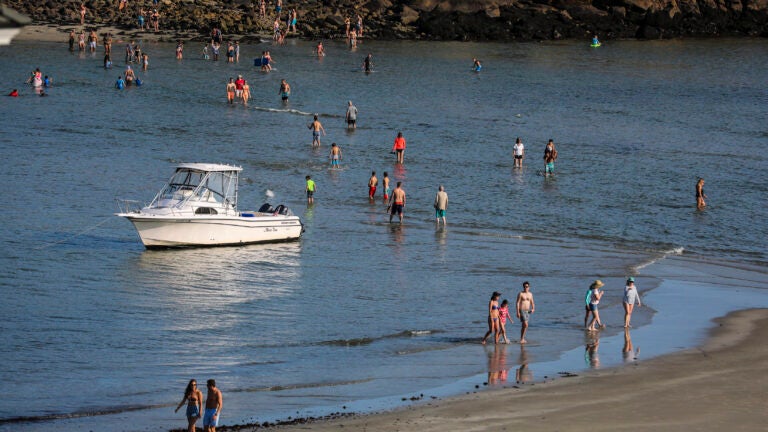
Something’s stinking up the sea in Gloucester, but city officials say it’s nothing to get in the weeds about.
“Noticing a strong smell around East Gloucester?” officials asked on Facebook. Scores of residents were quick to chime in that they had noticed the “rotten egg-like odor” coming off the coast of Good Harbor Beach.
As it turns out, the source of the stink is an invasive Japanese seaweed called heterosiphonia japonica, according to the city. Strong winds last week from Hurricane Erin washed large amounts of the seaweed ashore, and high tides carried it into the estuary.
The algae doesn’t normally smell so pungent, but without a strong enough tide to bring it back out to sea, it’s been sitting around and decomposing, officials said. As the seaweed breaks down, it releases the unpleasant odor.
The invasive species, also known as dasysiphonia japonica, first spread to the East Coast in 2008 when it was found off the coast of Rhode Island, according to the Smithsonian Environmental Research Center. It can now be found along the coast from Nova Scotia down to the south side of Long Island.
Get everything you need to know to start your day, delivered right to your inbox every morning.





To comment, please create a screen name in your profile
To comment, please verify your email address
Conversation
This discussion has ended. Please join elsewhere on Boston.com