
Newsletter Signup
Stay up to date on all the latest news from Boston.com
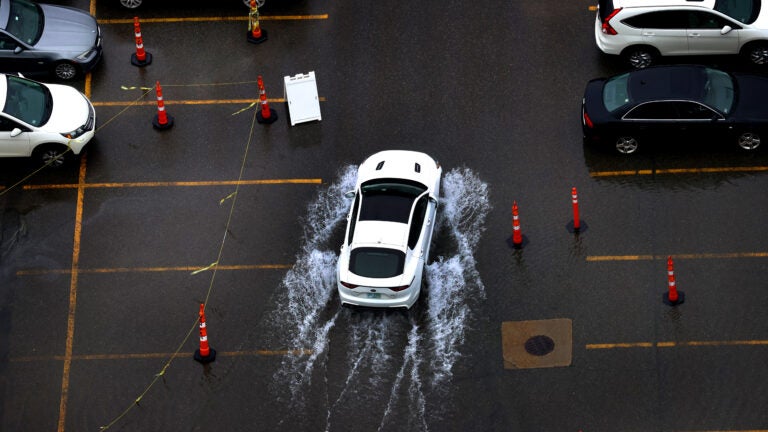
Boston is expected to have 12-19 days of high-tide flooding between 2024 and 2025 — the most in the Northeast, the experts at the National Oceanic and Atmospheric Administration predict.
“Above-normal tides can trigger high-tide flooding, disrupting coastal communities,” according to the recent report from NOAA. “This flooding can occur on sunny days and in the absence of storms.”
High-tide flooding, an “increasingly common” occurrence, refers to flooding conditions along the coast as a result of rising sea levels, sinking land, and the loss of natural barriers, the report noted.
As the Northeast continues to experience a “rapid increase” in high-tide flooding due to sea level rise and “large tidal ranges and coastal storms,” Boston saw 19 days of high-tide flooding last year, according to NOAA.
It is “not surprising” that east coast cities like Boston will be subject to the compounded impact of climate change, said Paula Bontempi, a dean at the University of Rhode Island’s Graduate School of Oceanography.
Last year, four communities in the Northeast either set or tied flooding records: Bar Harbor, Maine (19 days), Providence, Rhode Island (15 days), Bridgeport, Connecticut (16 days), and Kings Point, New York (23 days).
“If you take a look at what’s happening with the changes in climate, how that feeds things like more extreme storms, in the sense of more intense and more frequent things like sea level rise that’s happening in response to climate change, plus the intensification of storms,” Bontempi told Boston.com, “then you’re going to expect in coastal areas there to be a lot more flooding and impacts of flooding.”
The Northeast experiences a median of six more high-tide flood days per year — a nearly 150% increase — compared to the year 2000. Heavy rains led to widespread flooding all across eastern Massachusetts last August, and high tides flooded Long Wharf in downtown Boston in January 2022.
The sea level near Boston has risen nearly a foot over the last 100 years. By 2050, NOAA experts predict that Boston could see 50-70 days of high-tide flooding.
Predicting the frequency of high-tide flooding helps communities plan to mitigate the impacts, the report said.
“Working very carefully with the science and management community that are within those cities becomes very important,” Bontempi said.
NOAA is also predicting an “above-normal” 2024 Atlantic hurricane season, forecasting a range of 17-25 total named storms between June 1 through Nov. 30.
Flood watches are in effect for post-tropical cyclone Debby until Saturday morning, The Boston Globe reported. As storms continue to hit the Northeast, Bontempi said heavy rains can exacerbate flooding in affected areas.
Bontempi added that local lawmakers should work with state agencies to create city plans to prepare for flooding, but as flooding becomes more common and severe, there are limitations.
“There’s only so much you can do at the intersection of what I would call the natural and the built environment,” Bontempi said. “Over time, the power of the storm can win out.”

Stay up to date on all the latest news from Boston.com





To comment, please create a screen name in your profile
To comment, please verify your email address
Conversation
This discussion has ended. Please join elsewhere on Boston.com