
Newsletter Signup
Stay up to date on all the latest news from Boston.com
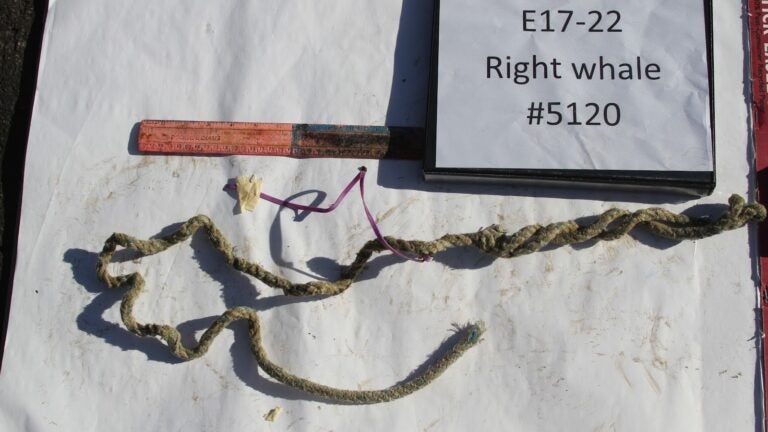
A North Atlantic right whale that was found dead last month was tangled in fishing gear originating from the Maine Lobster Fishery, officials said.
The whale was positively identified as #5120, a juvenile female born in January 2021, NOAA Fisheries said in a statement. She was first spotted “seriously entangled” in August 2022 with a rope wrapped around her tail multiple times as well as flukes and 200 feet of trailing gear.
Officials tried to disentangle her from the gear in Cape Cod Bay in January 2023 but were unsuccessful.
“She was last seen in June 2023 with ropes still wrapped around her tail alongside severe wounds and evidence of poor body condition,” NOAA said. “Preliminary necropsy results confirmed a chronic entanglement, finding the animal’s body in thin condition and rope deeply embedded in its tail.”
The whale was found Jan. 28 off the coast of Martha’s Vineyard, Boston.com previously reported, and was one of only about 350 of the species left in the wild.
“This right whale was no more than a year and a half old when she suffered the entanglement that ultimately killed her,” said Jane Davenport, senior attorney at Defenders of Wildlife, in a statement. “She likely spent at least half of her short life in excruciating pain. We cannot avert our eyes from the fact that entanglements are not only pushing this species to the brink of extinction, but brutalizing whales in the process.”
Fishing gear entanglement and collisions with vessels are the top threats to the critically endangered right whales. Entanglements can lead to injuries, starvation, or drowning, NOAA said.
“The energy spent dragging heavy gear around leads to lower calving rates, placing a heavy burden on a species with fewer than 70 reproductively active females,” NOAA said in the statement. “In U.S. commercial fisheries, entanglements kill or seriously injure an average of four right whales a year.”
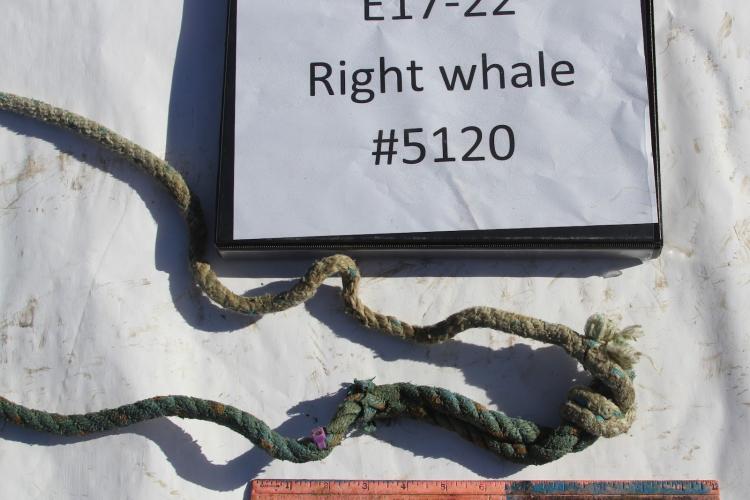
Historically, entanglements have been difficult to trace to specific fisheries because of a lack of gear-marking requirements. In this case, NOAA experts used purple markings on the rope recovered from the whale to determine the gear is consistent with rope used in Maine state water trap/pot buoy lines.
Maine has required specially-marked gear in its American lobster and Jonah crab fishery since 2020, NOAA said.
A full necropsy — or animal autopsy — of the whale is still pending, and the NOAA Office of Law Enforcement is investigating the incident.
“As terrible as the news is that Maine lobster gear has killed a right whale — and a juvenile female no less — this should come as no surprise,” Davenport said. “The Maine lobster industry’s lobbyists and lawyers have been deceiving the public for years, claiming that Maine gear has never been tied to a right whale’s death, knowing full well that they’d successfully opposed gear-marking requirements for decades. Now that the Maine lobster industry finally has to mark its gear, it can no longer hide the truth.”
Stay up to date on all the latest news from Boston.com




To comment, please create a screen name in your profile
To comment, please verify your email address
Conversation
This discussion has ended. Please join elsewhere on Boston.com