
Newsletter Signup
Stay up to date on all the latest news from Boston.com
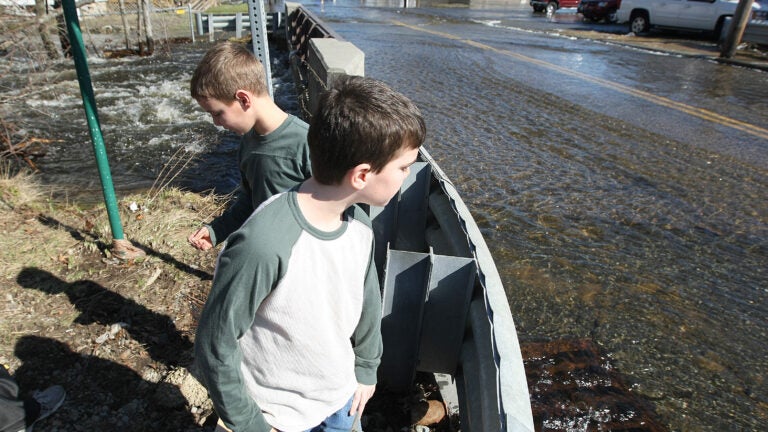
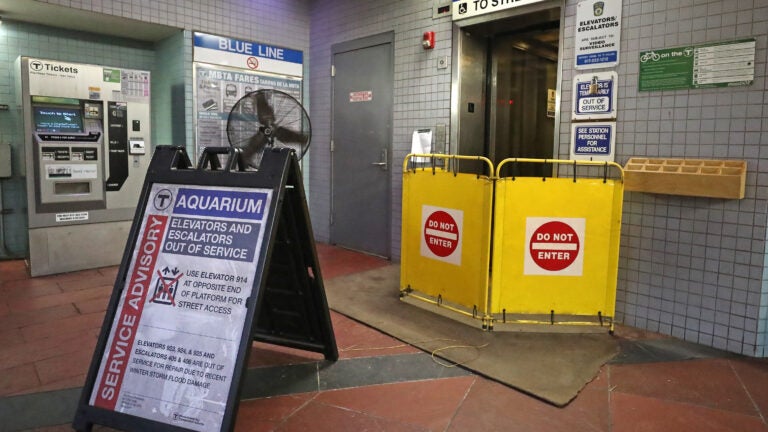
Just over 13 years ago, a series of historic rain storms pummeled eastern Massachusetts. Flooding swept the region, interrupting MBTA service, closing highways, and pushing sewage into Boston Harbor. Homes were hit incredibly hard, causing millions of dollars of damage and impacting countless lives.
Now, a new analysis of this period is offering a glimpse into how devastating inland flooding can be, and what communities must do to stave off future destruction.
In late March 2010, President Obama issued a disaster declaration for seven Massachusetts counties that allowed residents to file flood claims to FEMA. Data from these claims, the likes of which are not typically made available, were shared with the Metropolitan Area Planning Council (MAPC).
The MAPC used this to conduct a “first-of-its-kind analysis” of how stormwater flooding affects eastern Massachusetts. Notably, experts found that 96% of the disaster-relief claims came from outside areas considered to be at high risk for flooding. As a result, most residents were unaware of their risk, according to the MAPC.
Although the impacts of rising sea levels are rightfully drawing attention to increasing coastal flooding risks, experts with the MAPC say more must be done to understand stormwater flooding.
“Progress continues on developing models to assess the likely impacts of sea level rise, but no similar predictive tools exist for the widespread, and poorly understood, phenomenon of stormwater flooding,” the MAPC report reads.
FEMA flood maps do not capture much of the risk of stormwater flooding, and climate change is set to increase the frequency and intensity of storms in the future, according to the report. From 1901 to 2016, the number of notable two-day storms increased by 74%. The most intense storms now drop 55% more precipitation than they did in the middle of the 20th century, and experts predict that this will increase another 40% by the end of this century.
Numbers on a page are one thing, but those behind the analysis also interviewed many Woburn residents to learn about their experiences. The city was particularly hard-hit during the March 2010 storms, and basements throughout Woburn flooded. The MAPC documented a total of 555 flooding incidents spread throughout the city, and interviewed 44 residents.
“It’s constant stress with my basement, my sump pump. I always check immediately when I go home. I cancel plans when there’s a storm because I’m afraid my generator will go out. I run down to the basement all the time to check the sump. Constant vigilance, if I didn’t stay on top of it, I’d have troubles,” one resident told the MAPC.
Very few of those interviewed had prior knowledge of their building’s flood risk, and most only took steps to protect their homes after experiencing significant damage from flooding. Almost all the interviewees live in areas designated on FEMA maps as having a minimal flood risk.
The Woburn residents who spoke with MAPC reported high levels of stress, anxiety during heavier rains, and notable financial pressures.
“It’s raining now, my heart is racing. I have to leave work and run home and drop a utility pump. It has just about broken me financially and emotionally,” another interviewee said.
Ultimately, the MAPC issued a series of recommendations based on their findings. The organization is pushing for more widespread access to flood claims data, more funding for stormwater management, strengthened building regulations, and new insurance strategies to help low-income households. It also recommends rules requiring flood history disclosure, as Massachusetts is one of only 15 states that has no such requirement for potential home buyers.
Stay up to date on all the latest news from Boston.com




To comment, please create a screen name in your profile
To comment, please verify your email address
Conversation
This discussion has ended. Please join elsewhere on Boston.com