
Newsletter Signup
Stay up to date on all the latest news from Boston.com
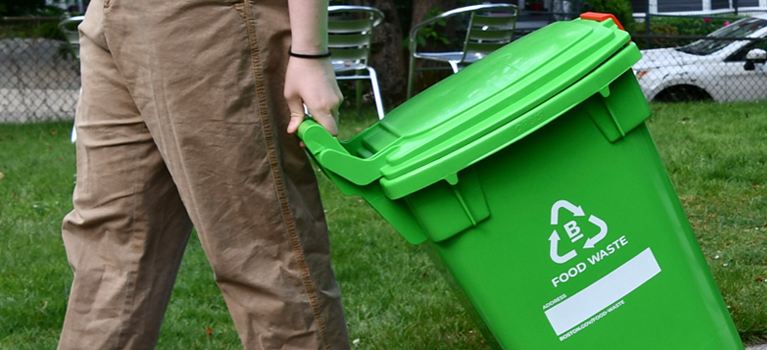
Boston Mayor Michelle Wu launched a free, curbside composting program as part of her mission to make the city greener last year, but the program reached capacity before service even started.
Now, according to the program’s website, pre-enrollment for new households is open, and new families can begin receiving city composting services this summer.
People on the waitlist from last year will soon be contacted with details on how to sign up for service, according to the website. Residents who would like to join the program and did not get on the waitlist are encouraged to pre-enroll now.
Residents must live in a building with six units or fewer to be eligible for the program.
Once enrolled, you receive a starter kit which includes a kitchen compost collection container, a roll of compostable liners, a list of accepted items, and a curbside bin for compost pick-up. The food waste is collected weekly by the city on your street’s trash and recycling day.
The food scraps are then taken to a composting facility in Brockton where they are turned into a soil amendment, or are taken to Charlestown where they are processed into a slurry before being anaerobically digested in North Andover.
You can sign up for curbside composting in Boston here.
Those who don’t make it into the city’s curbside composting program this year have a few other composting options.
One is participating in the city’s compost drop-off program, which offers over 20 locations around the city for free food waste drop-off. Participation in the program requires that residents use their own compost collecting containers.
Another option is signing up for a private composting service which will provide you with a composting bin and pick up your compost for you. You can find a list of companies that serve Boston and surrounding towns and cities at bostonzerowaste.com.
Lastly, anyone can compost in their backyard or home. Bostonzerowaste.com also has instructions on how to compost in your home.
The EPA calls composting “nature’s way of recycling.” The Natural Resources Defense Council (NRDC), an environmental advocacy group, explains the process like this:
“Anything that grows decomposes eventually; composting simply speeds up the process by providing an ideal environment for bacteria, fungi, and other decomposing organisms (such as worms, sowbugs, and nematodes) to do their work.”
When food waste isn’t composted, it goes into landfills where it gets stuck under other trash and can’t decompose naturally, the NRDC explains. The organisms that end up breaking down the food waste produce greenhouse gases, which contribute to climate change.
But composting doesn’t just help the Earth by cutting down on harmful emissions. It also helps create healthy soil which uses less water, the NRDC says. Composting even benefits municipalities financially by helping them cut down on landfilling costs.
To learn more about composting and food waste, visit epa.gov.
Stay up to date on all the latest news from Boston.com



To comment, please create a screen name in your profile
To comment, please verify your email address
Conversation
This discussion has ended. Please join elsewhere on Boston.com