

Newsletter Signup
Stay up to date on all the latest news from Boston.com
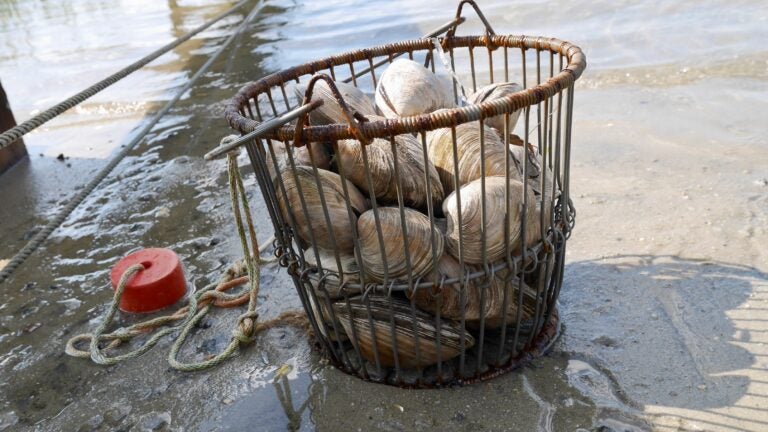
Shellfish harvesting is temporarily off limits in large swathes of coastal Massachusetts waters, particularly off the North Shore. These restrictions are the result of harmful algae blooms that can cause Paralytic Shellfish Poisoning (PSP), also known as Red Tide.
The ban was initially announced by the Massachusetts Division of Marine Fisheries (DMF) last month, but remains in effect until toxicity levels decrease. The collection of all bivalve shellfish and carnivorous snails was prohibited in fourteen growing areas, stretching from Salisbury Beach down to the waters off Gloucester.
A ban on Blue Mussel collection was announced in late June affecting many South Shore growing areas.
On July 7, soft-shell clams were determined to be safe to collect and eat in the area of Essex Bay, but all other bivalve shellfish and carnivorous snails from the area are still considered dangerous.
In an update posted July 8, DMF officials said that, although toxicity levels have been declining, multiple areas will still be closed until mid-to-late July.
Red Tide in New England waters is caused by a sudden population boom of Alexandrium fundyense, a naturally-occurring microscopic plankton. Blooms of this plankton are caused by environmental conditions that are conducive to explosive growth, such as warm surface temperatures, high nutrient content, low salinity, and calm seas, according to the DMF. When rainy periods are followed by sunny weather in the summer, these blooms are particularly common.
PSP is an illness caused by eating contaminated shellfish. Certain marine species, like shellfish, feed on microscopic algae that is collected by filtering seawater. During a harmful algae bloom, these creatures can collect enough algae containing neurotoxins to be dangerous and potentially lethal if eaten by humans. The toxin does not affect the shellfish themselves, and the animals eventually rid themselves of the toxin.
These toxic blooms can sometimes turn water a reddish brown, hence the Red Tide name. This discoloration does not always happen, even if a particular algae bloom has rendered shellfish poisonous. Conversely, many nontoxic species of reddish brown plankton can cause similar discolorations.
There is no risk swimming in waters affected by Red Tide, according to the DMF.
Hard-shell clams, soft-shell clams, oysters, mussels, whelks, and moon snails are most commonly affected, but scallops and lobster meat are generally safe to eat.
The poison immediately affects the nervous system once ingested, and symptoms can develop within 30 minutes, according to the DMF. A common initial reaction is tingling of the lips and tongue, which can quickly spread to the face, neck, fingertips, and toes. Headache, dizziness, and nausea come next. In severe cases, muscular paralysis and respiratory difficulty may occur. Deaths from respiratory paralysis caused by PSP have been documented.
With these restrictions in place, restaurants have been forced to buy shellfish from out of state, WBUR reported. This typically raises the price for both restaurants and customers. Generally, restaurateurs turn to Maine clams when local ones are off the table.
Stay up to date on all the latest news from Boston.com





To comment, please create a screen name in your profile
To comment, please verify your email address
Conversation
This discussion has ended. Please join elsewhere on Boston.com