
175 nations agree to create treaty on plastic pollution. Here’s what that means.
"We are making history today."
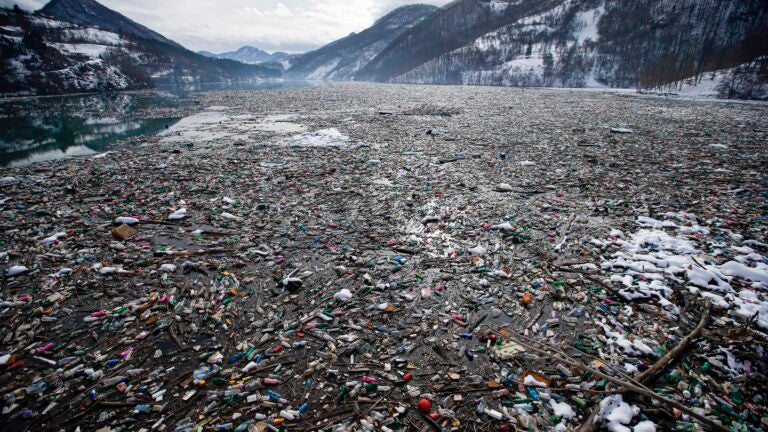
With the bang of a gavel made of recycled plastic and a standing ovation, representatives of 175 nations agreed Wednesday to begin writing a global treaty that would restrict the explosive growth of plastic pollution.
The agreement commits nations to work on a broad and legally binding treaty that would not only aim to improve recycling and clean up the world’s plastic waste, but would encompass curbs on plastics production itself. That could put measures like a ban on single-use plastics, a major driver of waste, on the table.
Supporters have said that a global plastics treaty would be the most important environmental accord since the 2015 Paris Agreement on climate change, in which nations agreed to cut greenhouse gas emissions. Negotiators are now set to meet this year for the first of many rounds of talks to hammer out the details of a treaty on plastics, with a target of sealing a deal by 2024.
“We are making history today,” said Espen Barth Eide, Norway’s climate and the environment minister and president of the United Nations Environment Assembly, which took place for the past week in Nairobi, Kenya.
Scientists say plastics cause harm throughout their life cycle, releasing toxic as well as planet-warming greenhouse gases during production, landfill and incineration. Plastics, which are manufactured from fossil fuels, caused 4.5% of global greenhouse gas emissions in 2015, one recent study estimated, more than all of the world’s airplanes combined.
Among other requisites, Wednesday’s agreement specifies that any global treaty must be legally binding, and that it must address the full life cycle of plastics, from production to disposal, recycling and reuse. Delegates said they hoped to model the treaty on the Paris climate accord, under which countries set binding targets but are able to meet those goals using a range of policies.
The treaty must also address packaging design to cut down on plastic use, improve recycling and make technical and financial assistance available to developing nations. According to Wednesday’s agreement, it must also address microplastics, the tiny plastic debris created by the breakdown of plastics over time. Microplastics have been detected by scientists in deep ocean waters, shellfish, drinking water and even falling rain.
This article originally appeared in The New York Times.


To comment, please create a screen name in your profile
To comment, please verify your email address
Conversation
This discussion has ended. Please join elsewhere on Boston.com