
Sign up for the Today newsletter
Get everything you need to know to start your day, delivered right to your inbox every morning.
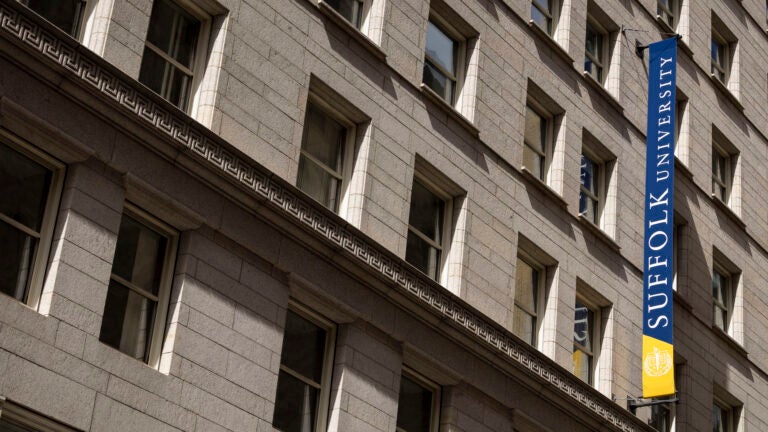
Suffolk University laid off 35 staff members in June, joining a growing number of higher education institutions in the area that are decreasing their workforces amid financial headwinds and shifting federal policies.
President Marisa Kelly warned in April that Suffolk would have to tighten its budget for the new fiscal year and told employees at a meeting that this would likely result in the elimination of some positions.
Between April and June, school leaders learned that incoming and returning students are “experiencing even greater financial need than we have seen in years past,” Kelly wrote in a June 10 letter to her colleagues.
A university spokesperson confirmed the moves to Boston.com this week.
Suffolk had to provide more financial support than initially projected. That, combined with decreasing international student enrollment, were cited by Kelly as the main factors causing layoffs. She blamed federal policy changes for slowing international student enrollment.
“These steps are necessary, as the challenges facing our sector are unlikely to subside in the near future,” Kelly wrote in her letter.
The Trump administration has canceled student visas and threatened to deport international students for their political speech, as was seen in the case of Tufts student Rümeysa Öztürk. That, combined with major cuts to academic research funding and other actions, are causing international students to look toward other countries instead.
Kelly also mentioned “shifting views of the value of a college degree.” Last year, the Pew Research Center found that about half of Americans think it is less important to have a four-year college degree today in order to get a well-paying job than it was 20 years ago. At the same time, young adults without a college degree are performing better in key metrics today than in the past.
So colleges and universities are cutting back. Around New England, non-teaching staff are being particularly affected, The Boston Globe recently reported. Places like Boston University and Clark University have been particularly impacted, with more than 100 faculty and staff being let go at each school.
Staff numbers have been rising at higher education institutions for years, leading to concerns about “administrative bloat.” The hiring differences between professional administrative staff and instructors was extremely notable at Suffolk. From 2018 to 2022, the university lost 8% of its full-time professors while increasing its full-time professional staff by 24%, according to the Globe.
Kelly said in June that Suffolk would not be able to provide a general salary increase pool for fiscal 2026 without a “significant shift in the enrollment picture for the fall.” Kelly herself is taking a pay cut for the fiscal year, she added.
Kelly sought to project optimism in her letter, but cautioned that achieving financial stability will not happen overnight.
“We have a responsibility to ensure that we continue to serve our students and our alumni for many decades to come,” she wrote. “The steps we are taking now—budget reduction, ensuring adequate support for areas where enrollment will increase this year, planning for continued innovation, and developing new revenue pipelines—will help ensure our long-term financial strength. Exploring some of those possibilities will take time.”
Get everything you need to know to start your day, delivered right to your inbox every morning.





To comment, please create a screen name in your profile
To comment, please verify your email address
Conversation
This discussion has ended. Please join elsewhere on Boston.com