
Sign up for the Today newsletter
Get everything you need to know to start your day, delivered right to your inbox every morning.
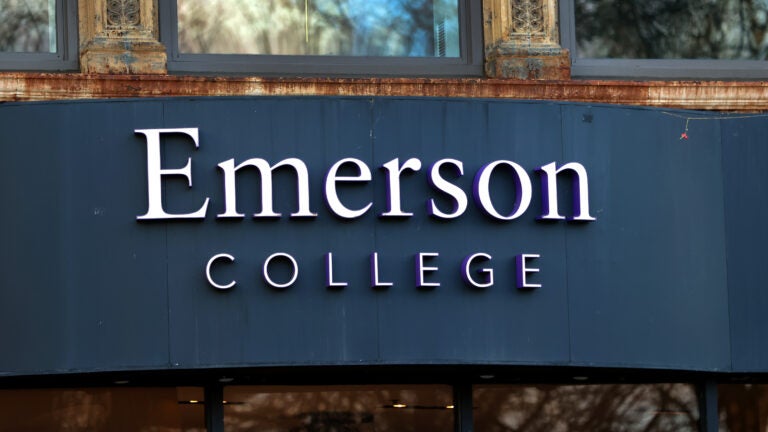
A former Emerson College staff member is alleging that she was wrongfully fired after screening a film critical of Israel and criticizing the school’s response to pro-Palestinian campus speech.
Anna Feder, who is Jewish, led Emerson’s Bright Lights Cinema Series for 12 years as the head of Film Exhibition and Festival Programs before she was laid off in August of 2024. Feder worked at Emerson for 17 years, according to the lawsuit.
At the time, Emerson announced layoffs and program cuts due to multiple factors like declining enrollment and “negative press” surrounding the arrest of 118 students at the pro-Palestine encampment, according to an email to faculty and staff from Emerson College President Jay Bernhardt. The Bright Lights Cinema Series was also cut.
Feder alleges in the suit that she began to clash with Emerson’s administration before the Oct. 7 attacks in Israel, when she programmed the documentary “Israelism,” which highlights two young American Jews’ struggle with Israel’s policies.
The screening went “without incident,” according to the lawsuit, and was one of the series’ most successful events. Feder was also present and supported students at the protest encampment in Boylston Place Alley, organizing donations, removing trash, speaking with media, and keeping watch over students at night, according to the lawsuit.
“When Ms. Feder refused to cancel the Israelism screening entirely and continued a partnership with the Boston Palestinian Film Festival, Emerson terminated Ms. Feder, cancelled the entire Bright Lights program, and barred Ms. Feder from campus,” the lawsuit alleges.
In a statement, Emerson attributed Feder’s layoff only to the August cuts last year.
“Emerson College implemented several cost-cutting measures, including a reduction in force, which eliminated a modest number of positions and programs,” a spokesperson said. “The College adamantly denies any wrongdoing in this cost-reduction process and is confident that the facts fully support its position.”
A faculty member and an unnamed Emerson trustee, who hadn’t seen the film, reached out to Feder with concerns about its content, but she “assured them both that she had programmed with the utmost care and planned to have a thoughtful dialogue with the filmmakers after the screening. Ms. Feder also made sure they were aware that she, and the filmmakers, were all Jewish,” according to the lawsuit.
The film was initially scheduled to screen about a month after Oct. 7, 2023, but, after the attacks, Feder agreed to postpone after “pressure” from Emerson, the lawsuit alleges. The college also required police to be present at the screening.
The event eventually took place in February of 2024 with a disclaimer, which Feder claims was an unprecedented “disavowing” of the screening. “The screening of films in this series does not connote endorsement or support for the film’s content by Emerson College or the Visual and Media Arts Department,” the college’s statement read, in part, according to the lawsuit.
“In the twelve years that she had run the Bright Lights series, Ms. Feder had never seen a similar statement from Emerson disavowing support for the screening of a film,” the lawsuit said. Feder was also told by the college’s Office of Equal Opportunity that her response to concerns “was sufficient,” according to court docs.
Shortly after, Feder published an op-ed in the Berkeley Beacon, Emerson’s student newspaper, titled “Why is it so hard to talk about Palestine?”
“Here at Emerson, I hope we won’t succumb to the kinds of maneuvering aimed at shutting down discourse in support of Palestine,” she wrote, calling herself an “anti-Zionist.” “I would love to see the administration of the institution where I have built my career of almost 17 years take a clear stand in protecting freedom of speech and expression.”
Before the start of the new school year in the fall, Feder was initially told her Bright Lights programming would need approval from “upper administration,” which had never been required in the past, according to court docs. Some of the films had already been chosen and announced.
She was then informed she would lose her job “citing a budgetary shortfall and focus on academic programs as the reason,” the lawsuit alleges, and “if she ‘made statements’ about Bright Lights” during a two-month contractual period, she would be terminated with cause.
Feder was also not allowed to return to campus, the lawsuit alleges, while other laid off employees part of another program returned for a goodbye party. Instead, while she was still employed, Feder was barred from running an annual student trip to a film festival and attending one of her final events, screening “Frida.”
Of the ten people laid off, Feder was allegedly the most senior staff member and only union member, according to her lawsuit. She also claims that her program was a relatively inexpensive program after already cutting the budget.
“These actions, taken solely because of the content of a film Ms. Feder screened and her personal political activism, violate Ms. Feder’s civil rights,” the lawsuit said.

Get everything you need to know to start your day, delivered right to your inbox every morning.





To comment, please create a screen name in your profile
To comment, please verify your email address
Conversation
This discussion has ended. Please join elsewhere on Boston.com