
Sign up for the Today newsletter
Get everything you need to know to start your day, delivered right to your inbox every morning.
Amid a slew of executive orders from Donald Trump’s administration aimed at curbing diversity, equity, and inclusion initiatives, some local universities are taking preemptive measures to comply, while others are waiting it out.
According to Trump’s order, American institutions — including colleges and universities — have “adopted and actively use dangerous, demeaning, and immoral race- and sex-based preferences under the guise of so-called ‘diversity, equity, and inclusion’” that “can violate the civil-rights laws of this Nation.”
Within 120 days of the order, the attorney general and the secretary of education must issue guidance to state and local educational agencies that receive federal funds, regarding practices to comply with the 2023 Supreme Court ruling that rejected affirmative action policies.
Heidi Tseu, assistant vice president for national engagement at the American Council on Education, said the orders are intended to “create a chilling effect.” Many of the orders, Tseu says, should not be met with immediate action.
“There’s only so much that they have to do at this point, a lot of the orders are talking about reports and recommendations that are TBD, and a lot of them are sort of implying that future actions are going to come,” Tseu told Boston.com. “There’s nothing to do right now for that, and so I think it’s just important for institutions to hold their nerve at this stage and not act when there isn’t a requirement.”
Still, some universities are already taking action.
The Jan. 21 order requires the attorney general to propose a “strategic enforcement plan” that involves investigating some higher education institutions with endowments of over $1 billion. The Senate confirmed Pam Bondi as U.S. attorney general Tuesday evening.
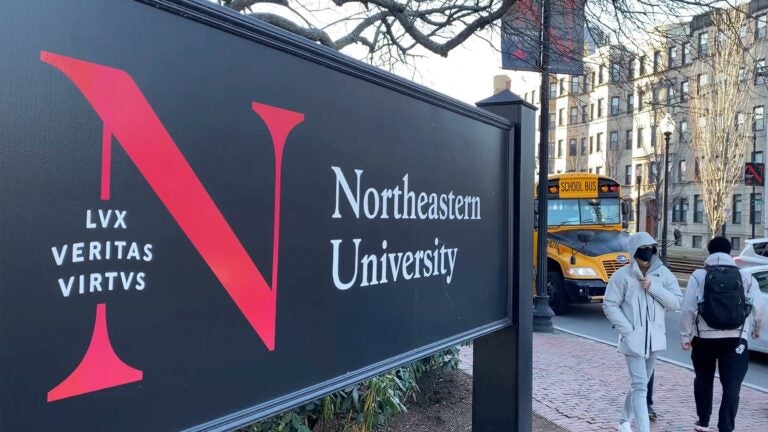
Northeastern University, which had an endowment of over $1 billion as of June 2022, changed its “Office of Diversity, Equity, and Inclusion” website from diversity.northeastern.edu to belonging.northeastern.edu, and altered its language to “Belonging at Northeastern,” Boston.com previously reported.
Despite the changes, Renata Nyul, Northeastern’s vice president for communications, assured that the university’s values would remain intact.
“Northeastern’s commitment to embracing our entire global community remains steadfast,” Nyul wrote in a statement to Boston.com. “While internal structures and approaches may need to be adjusted, the university’s core values don’t change.”
Suzanna Danuta Walters, director of women’s, gender, and sexuality studies at Northeastern, told Boston.com that many universities in the Boston area, including Northeastern, who are afraid of losing federal funding are practicing “anticipatory compliance.”
“The scrubbing of that language sends an ominous message that we — we being an institution — will not necessarily have your back,” Walters said. “That when Trump says jump, we jump.”
Walters said universities are “behaving cowardly” and urged them to push back against the orders. Faculty and students should also be included in conversations about the changes resulting from the orders, Walters said.
“I think part of the reason is that they’re terrified about being able to pay all our salaries and keeping the lights on and being able to provide the services of a university,” Walters said. “I do understand the dilemma, but cowardice will not save us from this kind of an attack on ideas and on truth.”
Paulette Granberry Russell, president and CEO of the National Association of Diversity Officers in Higher Education, said universities should work “closely with legal experts, policymakers, and higher education organizations.”
“Universities must balance their institutional priorities with legal and regulatory requirements, but they should also remember that federal funding supports critical research, financial aid, and workforce development programs that benefit society as a whole,” Granberry Russell told Boston.com.
When asked for comment, most local universities did not disclose specifics about their compliance plans, while some did not respond or declined to comment at all.
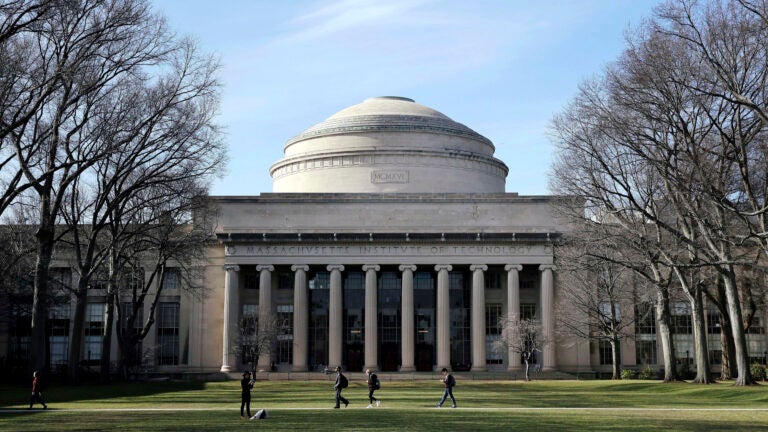
The Massachusetts Institute of Technology, which had an endowment of $24.6 billion as of June 2024, said it is “reviewing the news out of Washington and are working to understand the implications.”
“As with any order, from any administration, we will look through the announcement closely and thoughtfully,” an MIT spokesperson wrote to Boston.com. “MIT is committed to attracting the very best talent, supporting our diverse community, and complying with federal law.”
One of the state’s public universities, University of Massachusetts Amherst, said it is still evaluating the order.
“While we are assessing the implications of the executive order, we remain dedicated to fostering an environment where we celebrate the rich and varied backgrounds and perspectives of our vibrant campus community,” Marsha McGriff, vice chancellor for equity and inclusion, told Boston.com in a statement. “We are committed to ensuring our students and our faculty are positioned for academic and personal success and continue to undertake groundbreaking research and scholarship.”
Following the release of the directives, education officials filed a lawsuit on Monday targeting Trump’s DEI orders.
“In the United States, there is no king,” court documents, filed in the U.S. district court in Maryland, say. “In his crusade to erase diversity, equity, inclusion, and accessibility from our country, President Trump cannot usurp Congress’s exclusive power of the purse, nor can he silence those who disagree with him by threatening them with the loss of federal funds and other enforcement actions.”
Granberry Russell of National Association of Diversity Officers in Higher Education, one of the plaintiffs, said that university leaders have a “responsibility to advocate for the principles that define higher education.”
“Many institutions are already collaborating with peer organizations, legal experts, and advocacy groups to ensure that they can continue fostering diverse and thriving academic communities,” Granberry Russell said. “This is a moment for leadership, and standing together to uphold these values is critical.”
Walters said a statement from a group of university presidents across the country could make a substantial impact.
“I hope that university leadership will recognize this for the attack on the very foundations of critical thought that it is, and begin to organize as leaders of our citadels of higher learning to push back against this,” Walters said.

Get everything you need to know to start your day, delivered right to your inbox every morning.




To comment, please create a screen name in your profile
To comment, please verify your email address
Conversation
This discussion has ended. Please join elsewhere on Boston.com